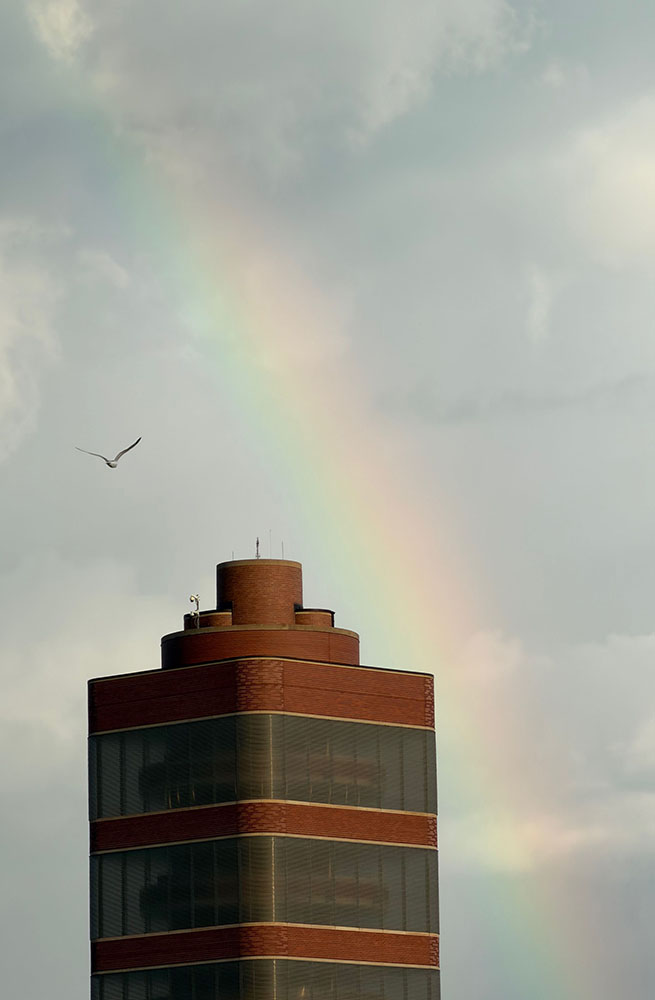
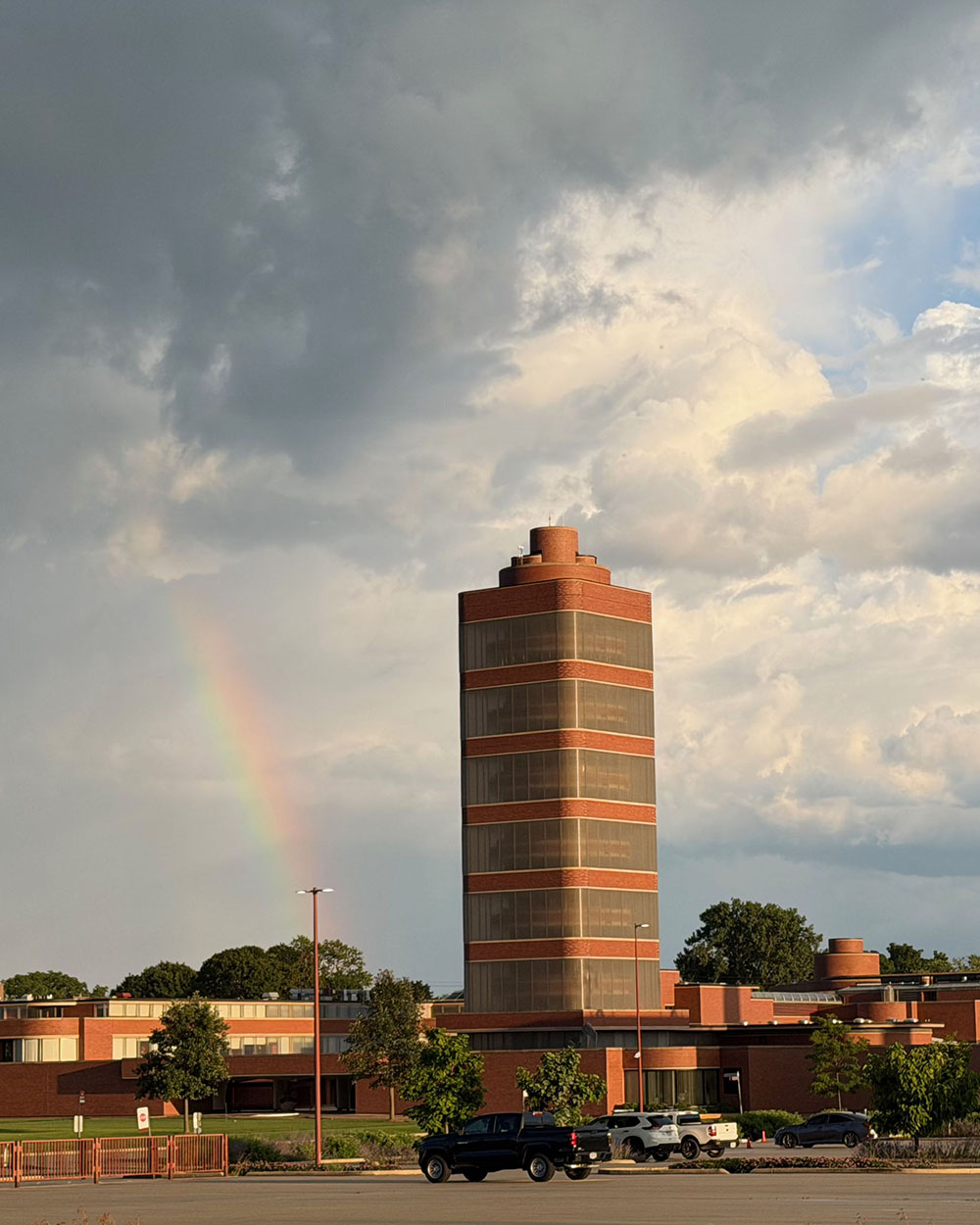
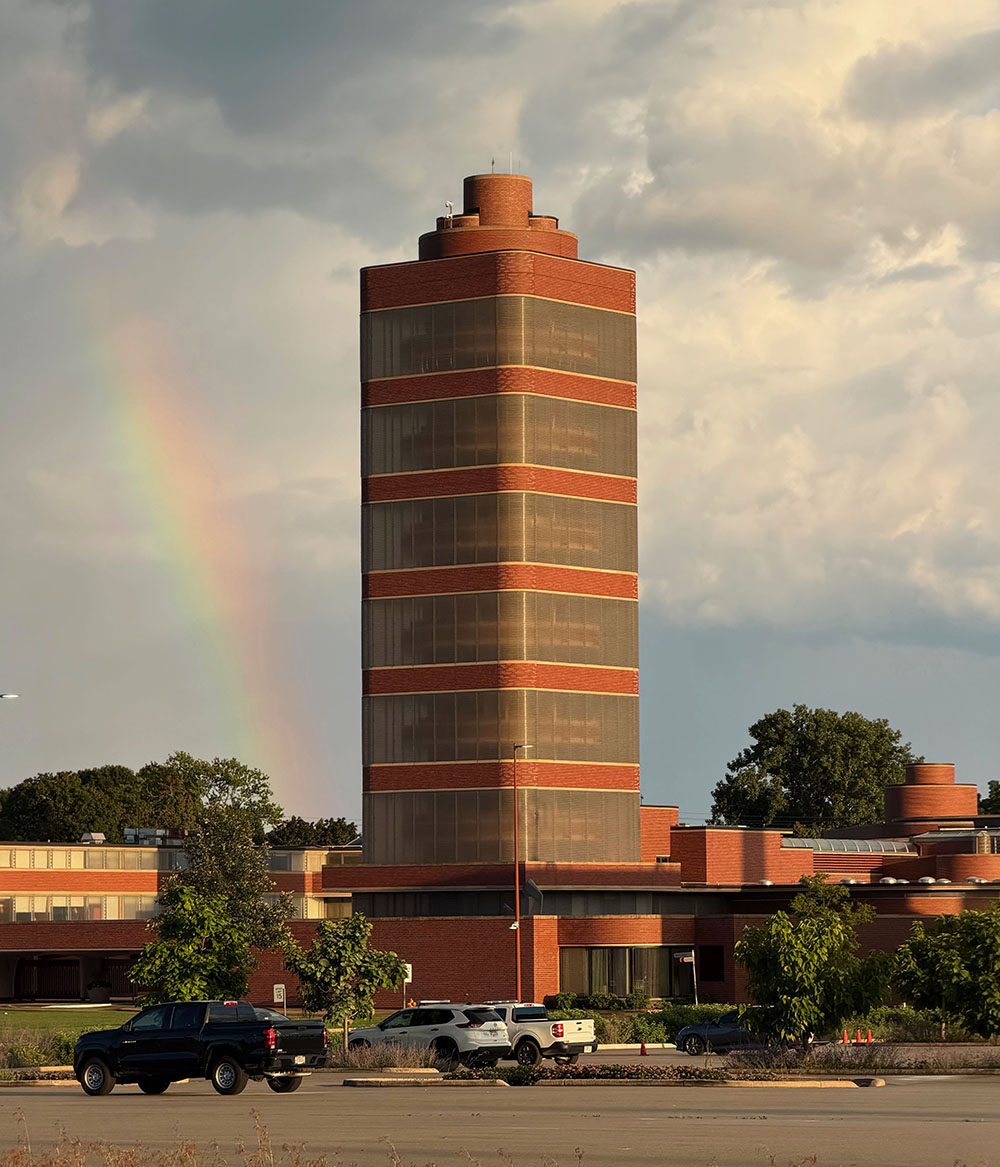
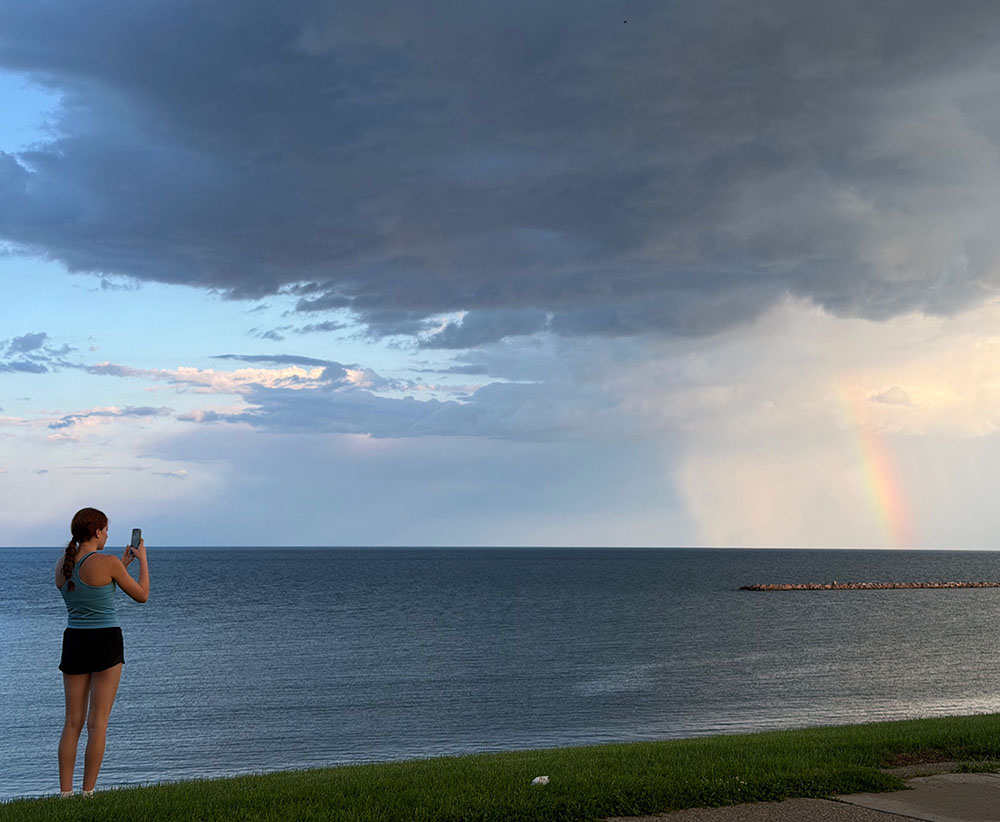
The sun was shining when we went to dinner with our grandchildren. It was sunny when we left the restaurant but the pavement and the cars in the parking lot were wet. Could we find a rainbow? We did. Could “Babo” (my Grandpa name, but that’s story for another time) get a picture with the SC Johnson Research Tower in it before our ice cream stop? The intensity of the rainbow had diminished a bit by the time we got to 14th and Racine streets, but I got some images. The final image is of our granddaughter photographing the rainbow over the Lake Michigan, near the Hardy House.
A rainbow is seen east of the Frank Lloyd Wright – designed SC Johnson Research Tower in Racine, Wisconsin Saturday evening August 22 2026 after an evening shower. Wright designed the facility in 1943 / 1944 and it was constructed between 1947 and 1950.Fortaleza Hall, designed by Lord Norman Foster & Partners is the building on the left. It opened in 2010.
Racine, Wisconsin has a long-hidden architectural secret. I have known this secret for several decades. Now, thanks to the latest OA+D Journal of Organic Architecture + Design, the secret is out in the open.
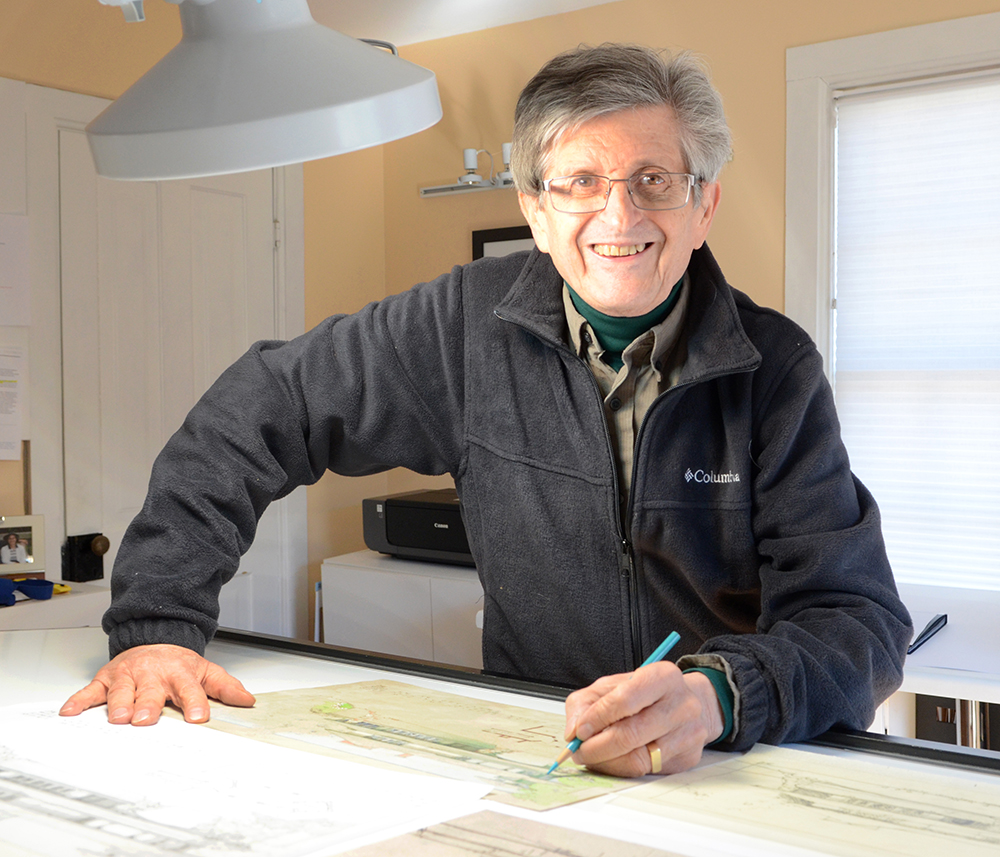
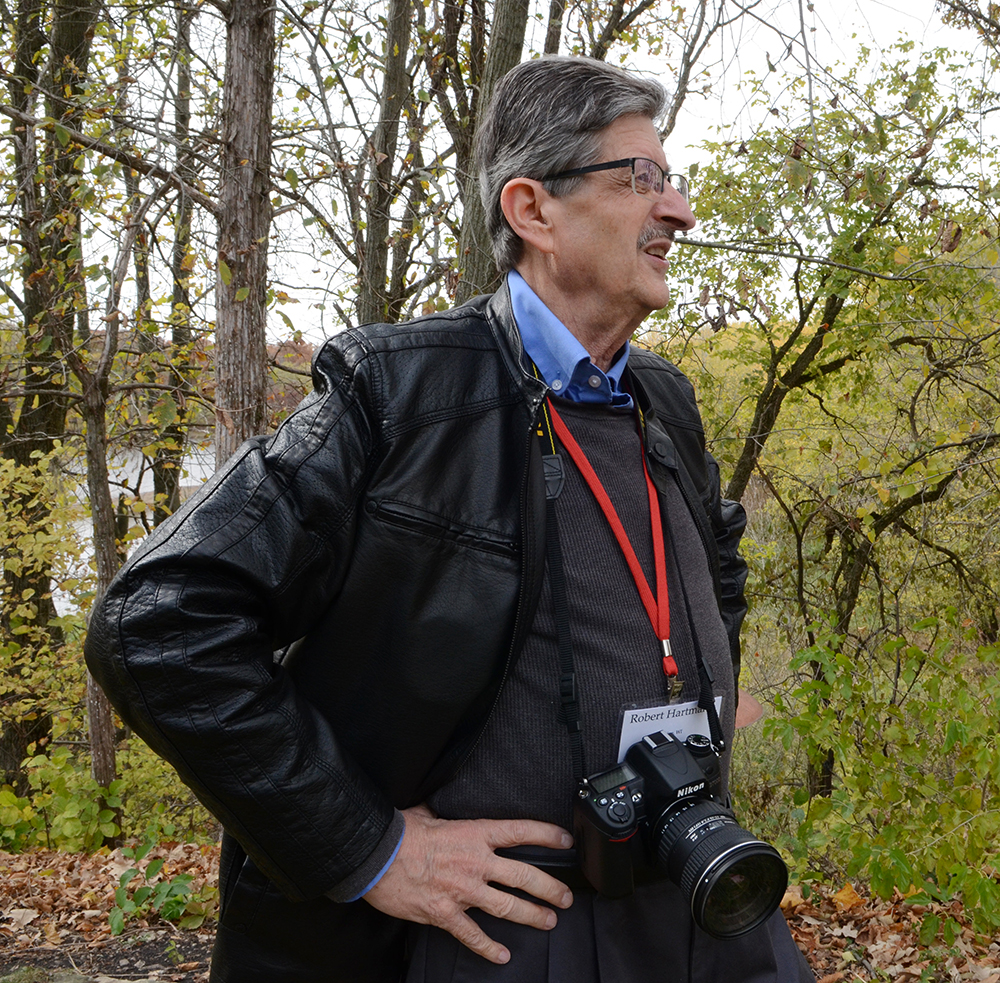
The secret is not an artifact. It is not a drawing. It is not a building. It is a person…the multi-talented Robert Hartmann. Bob is a designer and a photographer. Most important to me, he lives near me and he knows a whale of a lot about architecture and design. He was my sounding board when I wrote my books about Frank Lloyd Wright’s work in southeastern Wisconsin.
Designer Robert Hartmann at his drafting table at his home in Racine, March 17, 2018.
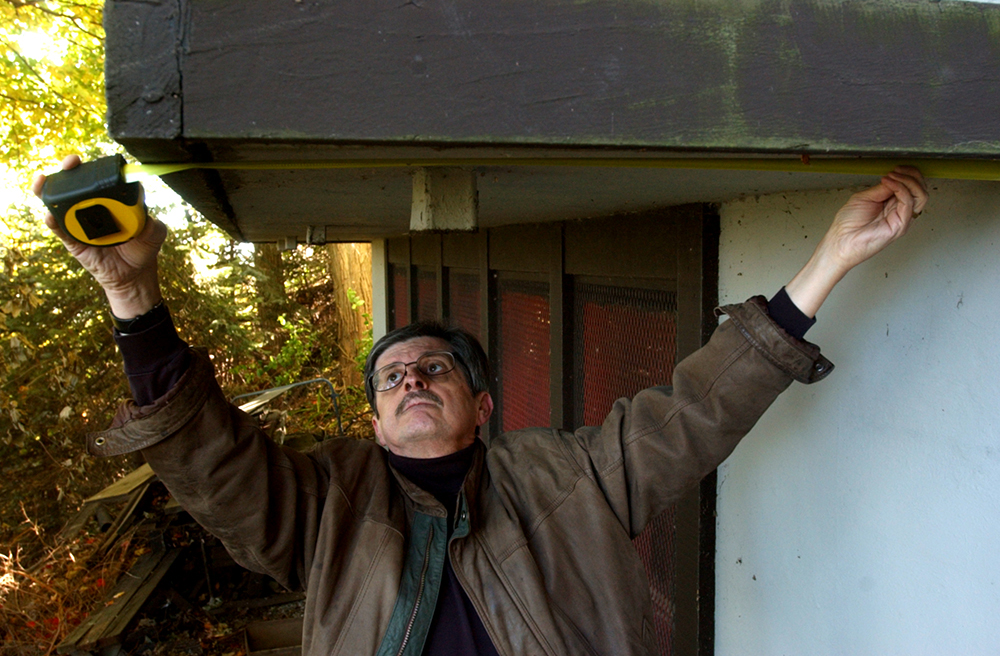
We spent many hours together exploring the Thomas P. Hardy House in Racine, and Penwern, the Fred B. Jones estate on Delavan Lake, Wisconsin. He made numerous observations about this detail or that one, pointing me on different paths of discovery in my research.
Bob measures the cantilever on the post-World War II rebuilt dining room terrace at the Hardy House in 2005.
Bob was first exposed to organic architecture in 1950 when he was eight years old. The family had taken a drive in their black 1948 Buick Roadmaster from their suburban Milwaukee home to Racine, and they saw Frank Lloyd Wright’s new SC Johnson Research Tower. He earned a BA from the Layton School of Art in Milwaukee and his Masters in Environmental Design at the University of Wisconsin, Madison. He served as Assistant Professor in the Department of Landscape Architecture at Wisconsin before moving to Racine and opening his design office in 1976. He designed a number of downtown Racine storefronts.
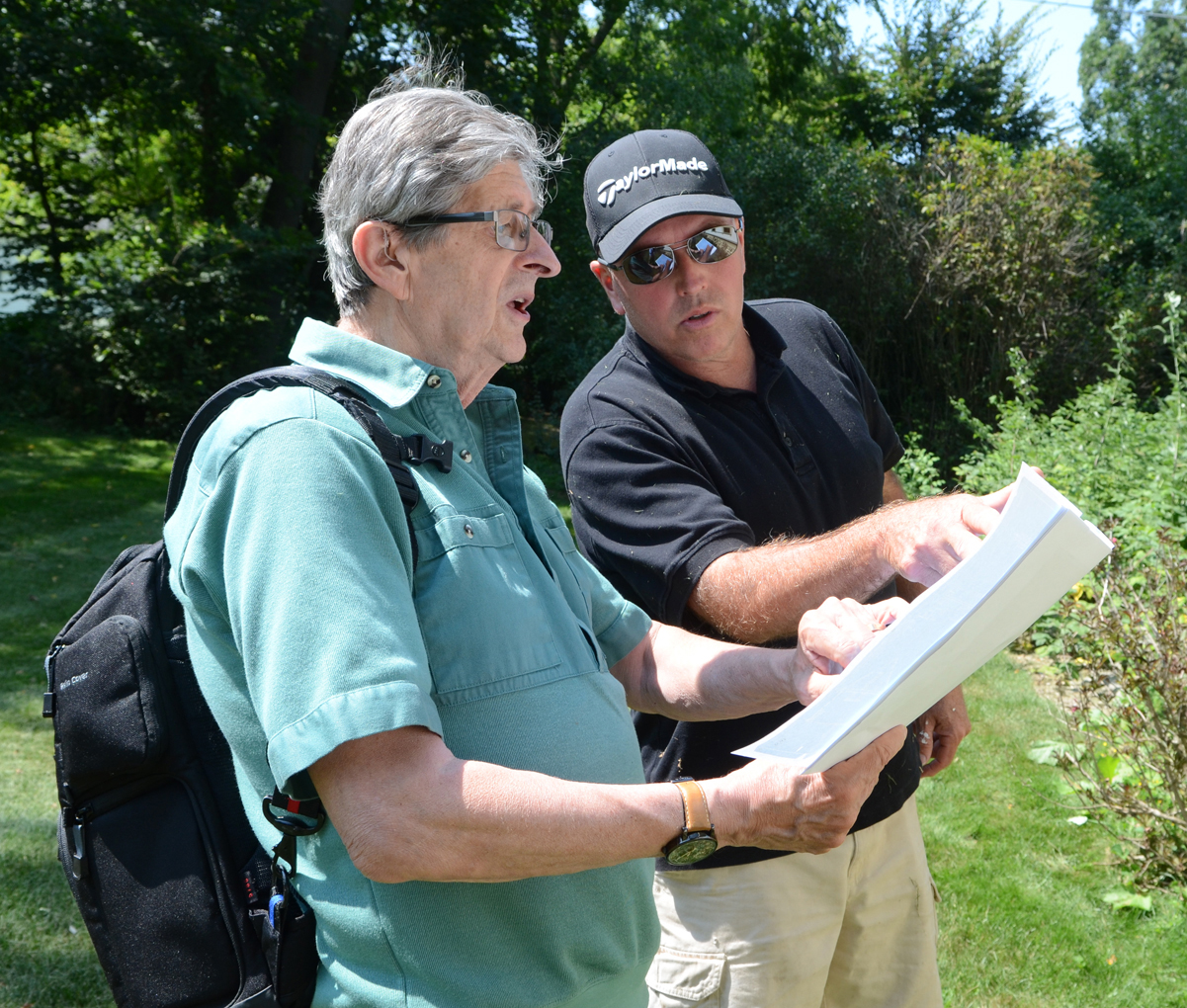
Bob with Bill Orkild, the construction manager at Penwern, in 2017. They are comparing Wright’s drawings for the stable to the extant building.
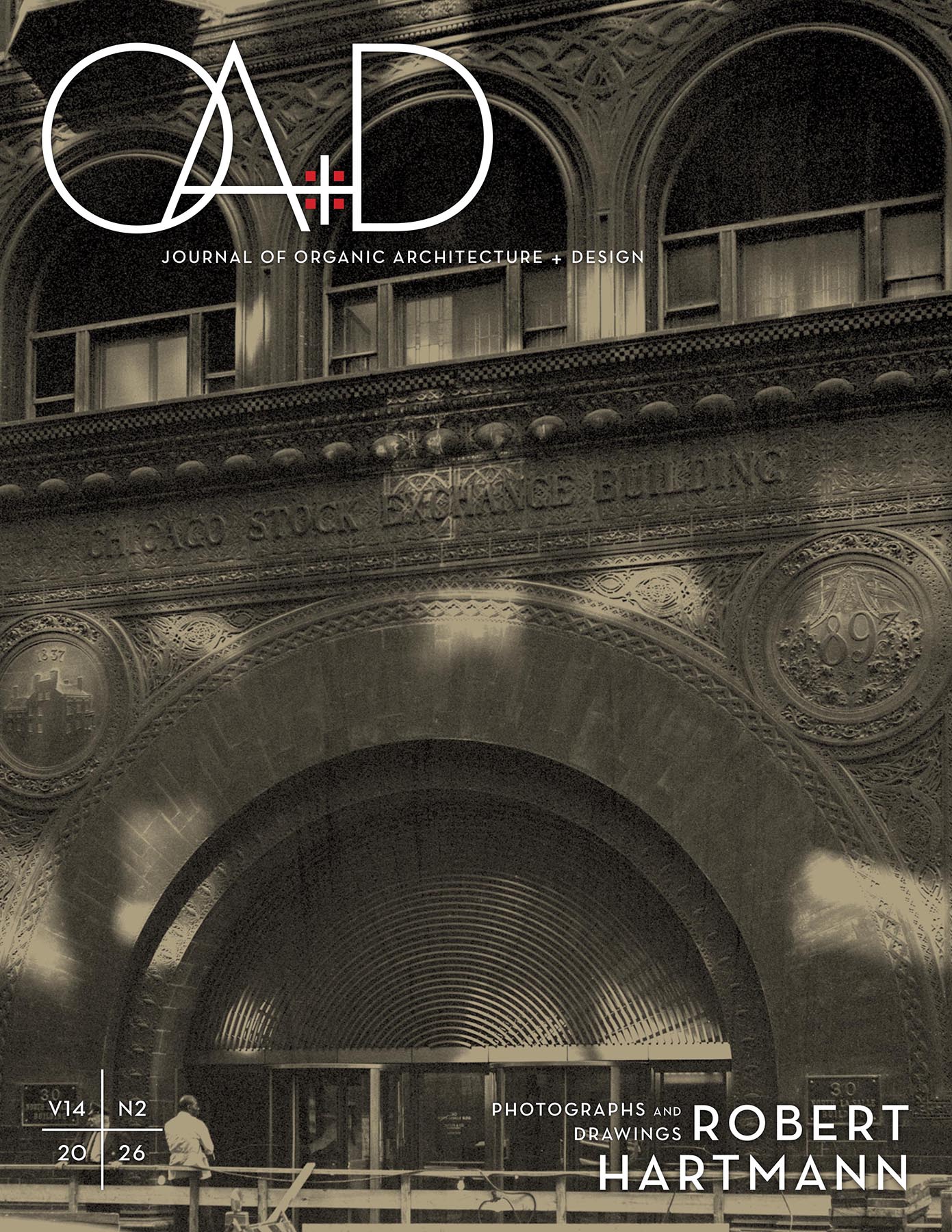
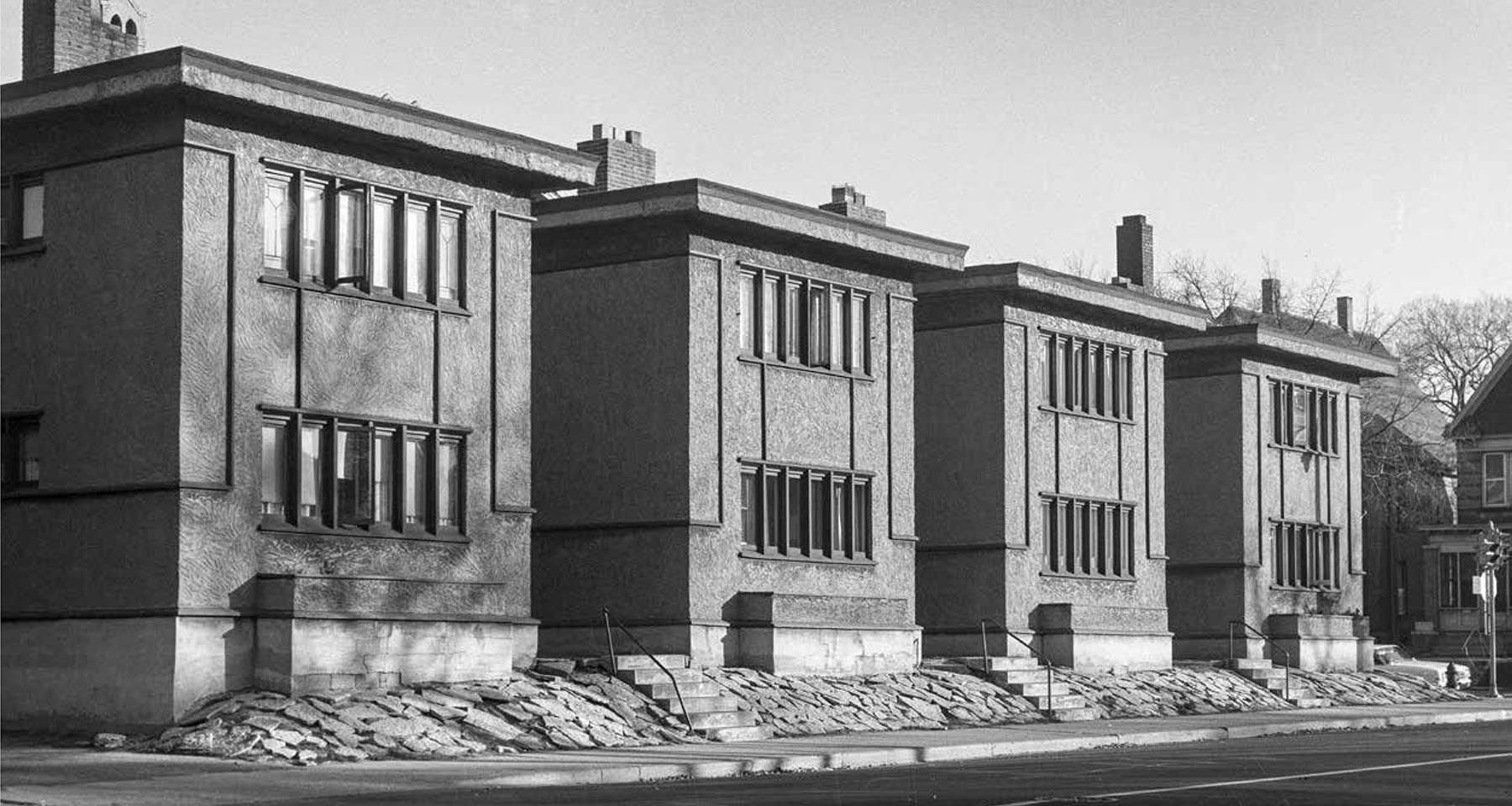
His time in Madison yielded much of the treasure trove of photographs in the Journal. Bob set out in his Sunbeam compact car to document Wright and Louis Sullivan’s work soon after Wright’s death in 1959. Some of those buildings were demolished over the next 15 years. Bob’s crisp black and white photos are some of the only contemporary photographs of such buildings as Wright’s Lake Geneva, Wisconsin Hotel (Demolished in 1970); Wright’s Northome in Wayzata, Minnesota (demolished in 1972); and Wright’s Munkwitz American-System Built apartments in Milwaukee (demolished in 1974). Two of his photographs of Adler & Sullivan’s Chicago Stock Exchange (demolished in 1972) grace the front and back covers of the Journal.
Bob’s photograph of the Munkwitz Apartments in Milwaukee. They were demolished to widen the street.
In 1967 Bob documented the construction of Wright’s Spring Green Restaurant, now the Frank Lloyd Wright Visitor Center. He was Johnny-on-the-spot on March 18, 1972, rushing over to the Harold and Josephine Bradley House in Madison the morning after fire tore through the house which had been designed by Sullivan’s and George Elmslie in 1909, five years before it was sold to the Sigma Phi Fraternity (Sigma Phi restored the house and it was named a National Historic Landmark in 1976).
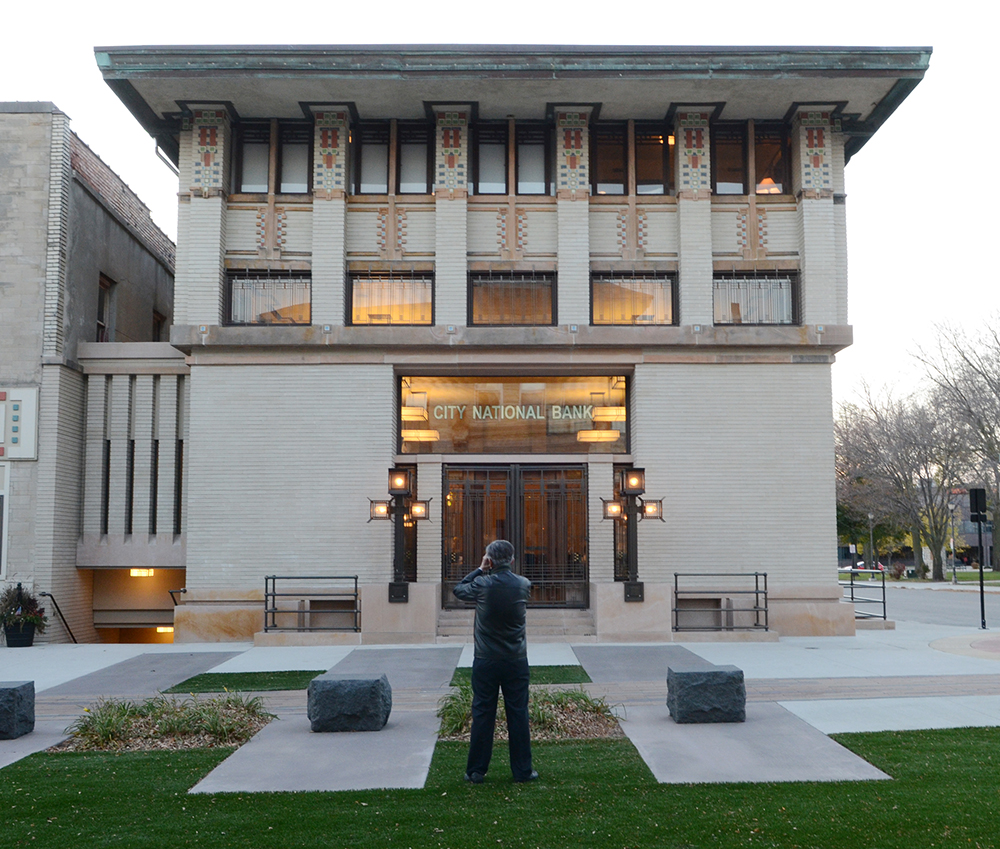
Photographing the City National Bank building in Mason City, 2012.Walter House, Quasqueton, Iowa, October 11, 2012.
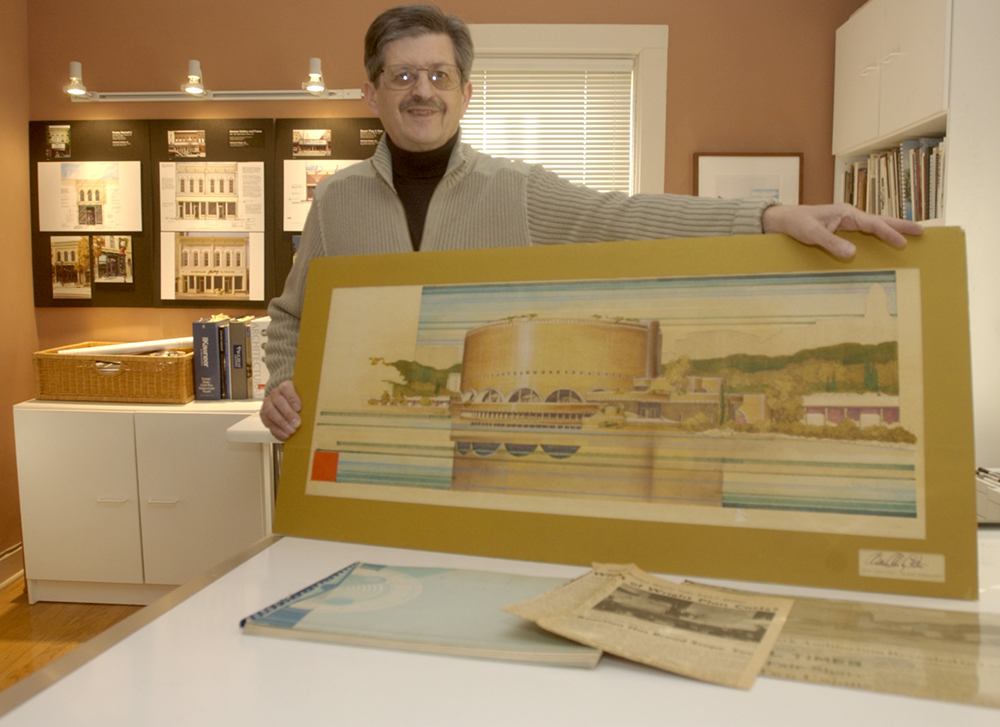
The Journal also features a rich collection of work from Bob’s drafting table. In 1971 Bob volunteered to make a color rendering for William Wesley Peters of his proposal for Wright’s never-realized Monona Terrace project.
Bob with his drawing for Peters of the first phase of the Monona Basin proposal, January 19, 2006.
When I was working on my book about Penwern Bob stared at Wright’s “Wallis Scheme 1” drawing from 1900 for Henry H. Wallis’s summer cottage on Delavan Lake. (Scheme 2 was realized). Faint pencil marks caught Bob’s eye. He enlarged the drawing on his computer. The pencil marks showed a possible tower at the end of the porte-cochère, and a covered walkway above it. Those were both features realized on Wright’s nearby Penwern summer cottage.
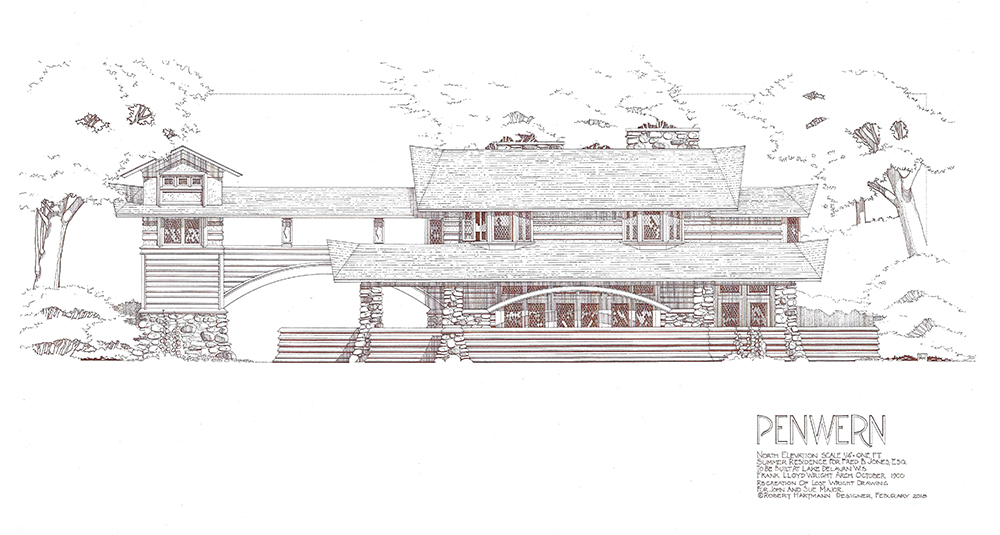
Patrick Mahoney, an architect and well-known Wright scholar from Buffalo then suggested to me that it is possible that rather than proposing those for Wallis, Wright may have used the Wallis drawing to sketch out preliminary ideas for Penwern. We will, of course, never know for certain, but it is thanks to Bob that we can discuss the question. He took Wright’s drawing and finished it to show what Wallis it would have looked with those features. Two of Wright’s elevation drawings of Penwern have been lost; Bob gave the stewards of Penwern his rendition of what they would have looked like.
Bob was commissioned to design a logo and homes for a housing project near the SC Johnson campus in Racine in the early 2000s. The project was never realized
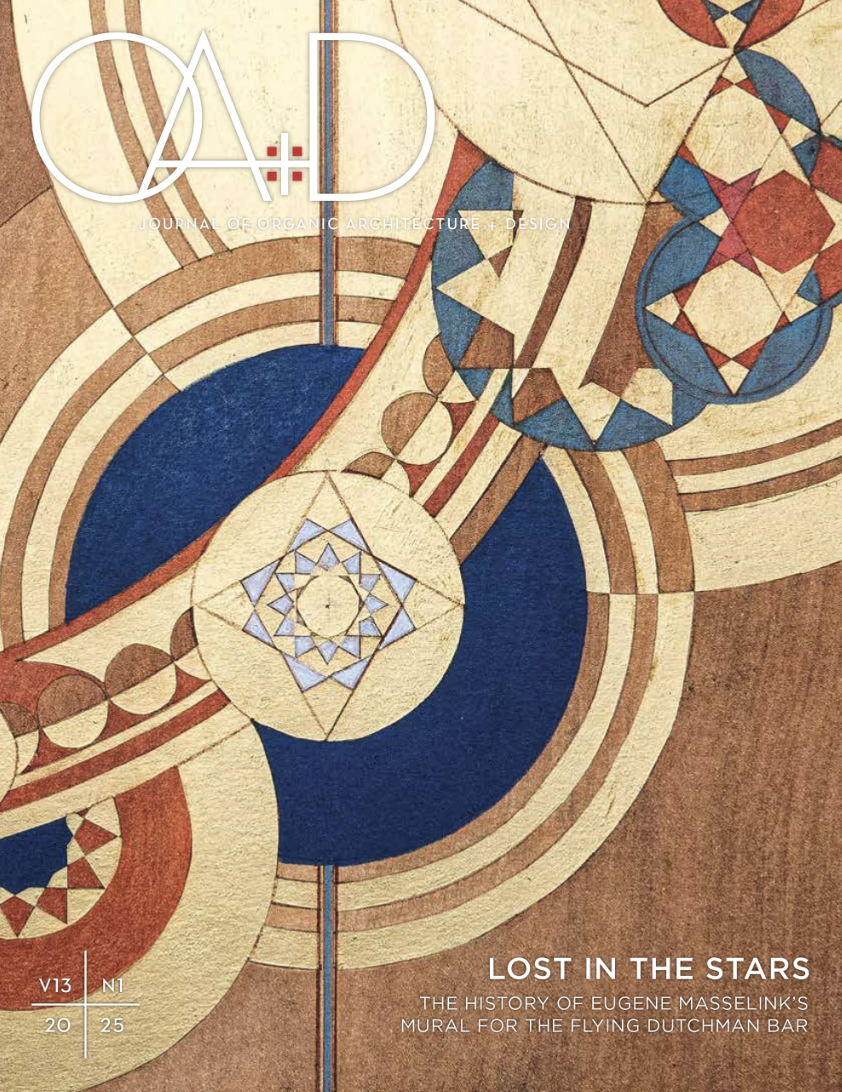
Bob’s drawings are also an integral part of the story of Eugene Masselink‘s wall mural, “Heavenly Spheres,” originally located in the Flying Dutchman Bar in Spring Green, the subject of another issue of the Journal. The mural was donated to OA+D by the Frank Lloyd Wright Foundation in 2022 so it could be restored (the bar burned in 2004).
It is an understatement to characterize Bob as inquisitive and meticulous. Quickly turning around work, well, maybe not so much. He is a perfectionist, and is too precise to push something half-baked out the door. Almost every phone conversation I’ve had with Bob the last few years has included his lament, “You know, I’ve still got to get those photographs to Eric (O’Malley, President of OA+D).” Bob, I’m glad you finally did. You have enriched us with your talents.
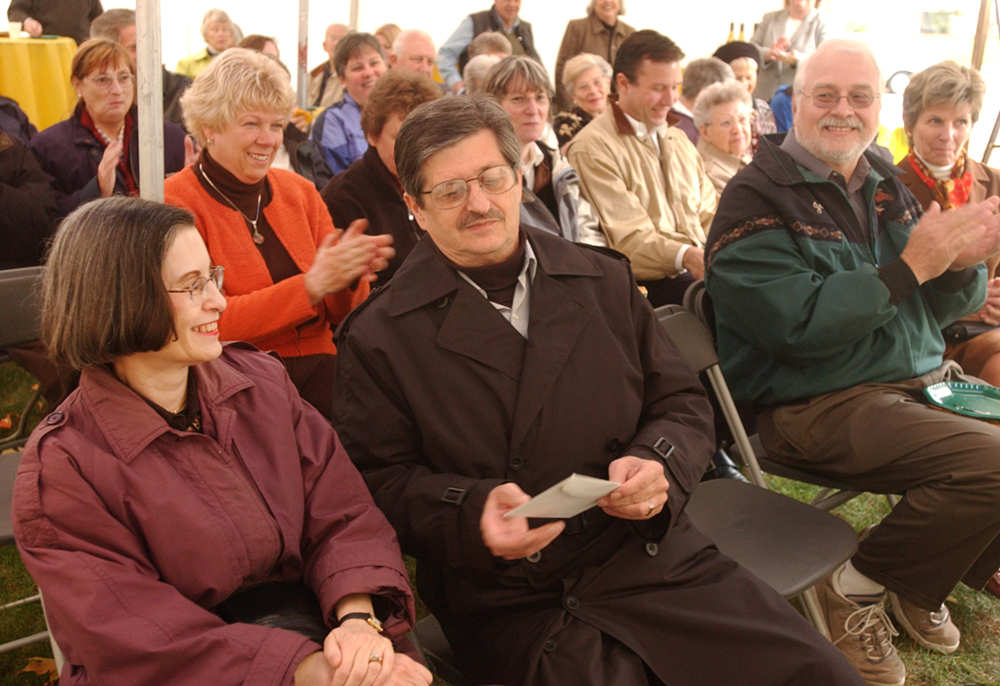
Bob was honored by Preservation Racine October 23, 2005. His wife, Jill, is next to him.Bob in the front hallway of Wright’s Hardy House, September 7, 2024.
Please scroll down for previous posts on this website.
Follow the link below to buy the Hartmann, Masselink, and other copies of the Journal:
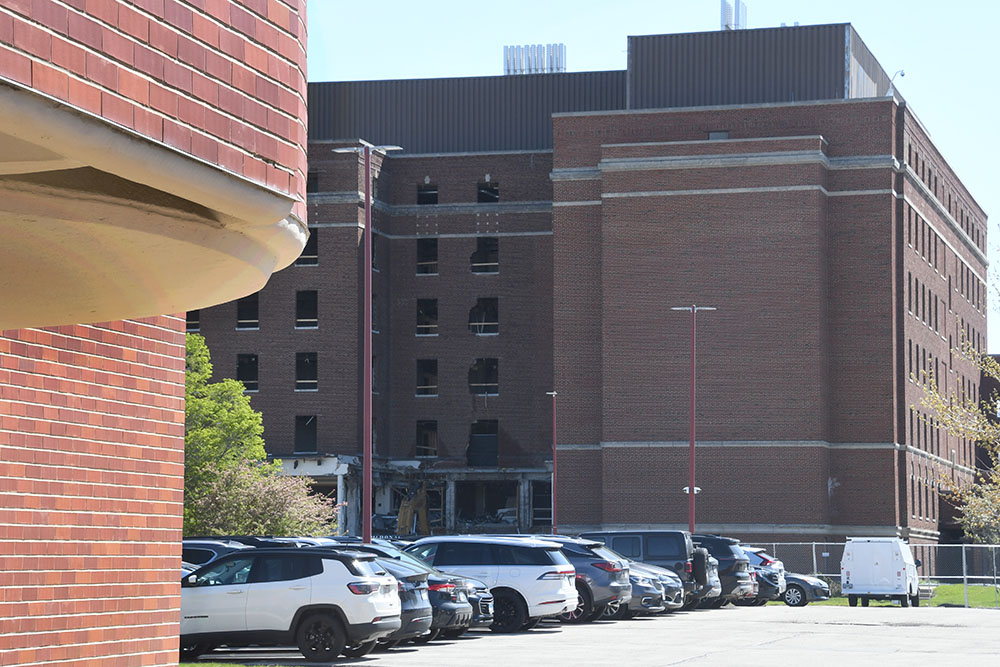
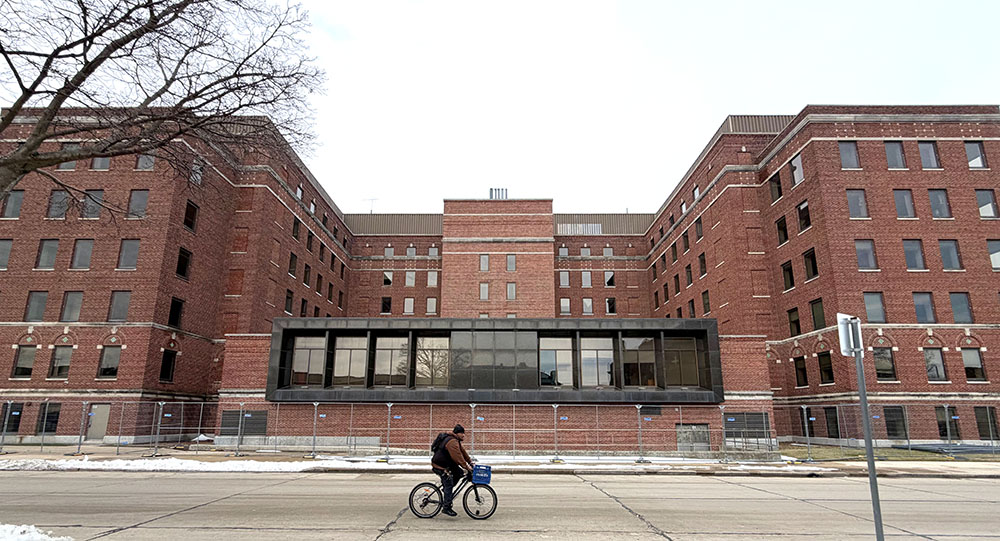
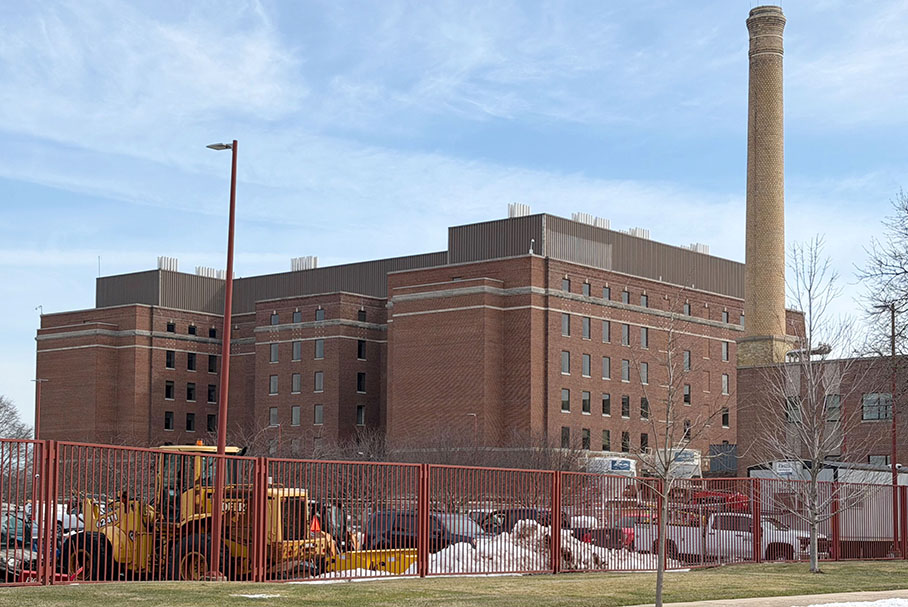
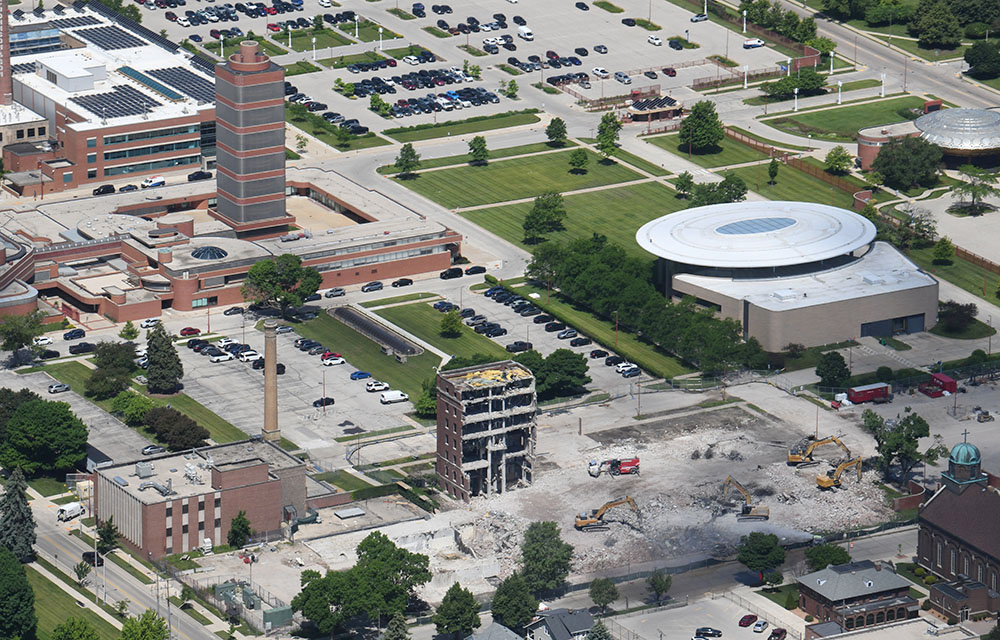
SC Johnson is almost finished demolishing the former St. Mary’s Hospital building (1933) on their campus in Racine. Why take up space on a Frank Lloyd Wright site about the demolition of a building that Wright had absolutely nothing to do with?
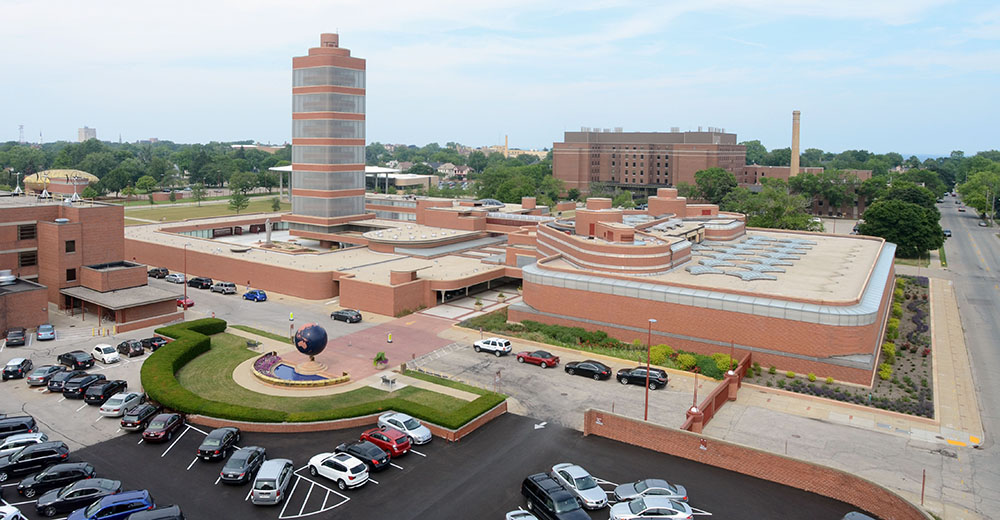
The former St. Mary’s Hospital building, repurposed as SC Johnson’s Louis Laboratories, on the east edge of the company campus, next to the smokestack, Tuesday July 28, 2015.
The answer is that there is a direct connection between the hospital building and Wright’s SC Johnson Research Tower, which was designed in 1943/44 and opened in November 1950.
When Dr. J.V. Steinle, the company’s research and development director proposed in 1943 that the company build a new R&D facility after the war, his site sketch included dotted lines marked “Future Expansion.” H.F. Johnson Jr. balked at giving Wright the commission even though it would be next to Wright’s landmark SC Johnson Administration Building. Wright eventually won Johnson over (the story of the commission is in both Jonathan Lipman’s book “Frank Lloyd Wright and the Johnson Wax Buildings” and my “Frank Lloyd Wright’s SC Johnson Research Tower.”). Wright’s dramatic design lacked that critical room for “Future Expansion” and was designed for only 50 chemists. The company began to outgrow it by 1957 and opened “carport labs” below the soaring structure. St. Mary’s sold the hospital building to SC Johnson in 1977 after moving to a new campus on the west side of Racine. SC Johnson repurposed the old hospital as their new R&D facility and closed the Research Tower in 1981. The new labs bore the name of the Louis Laboratories.
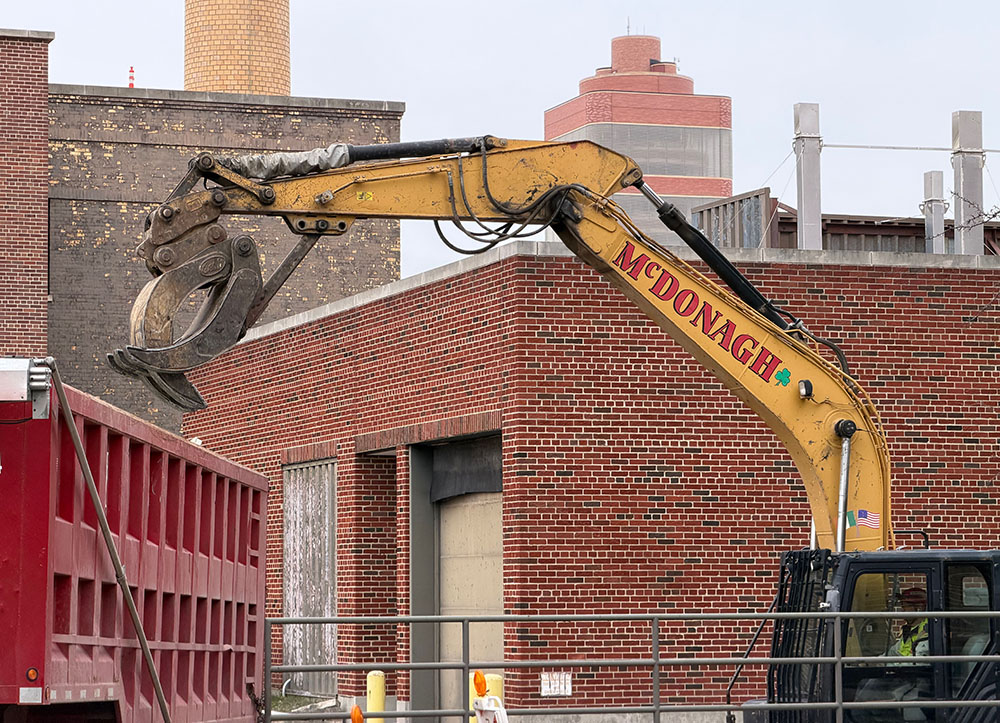
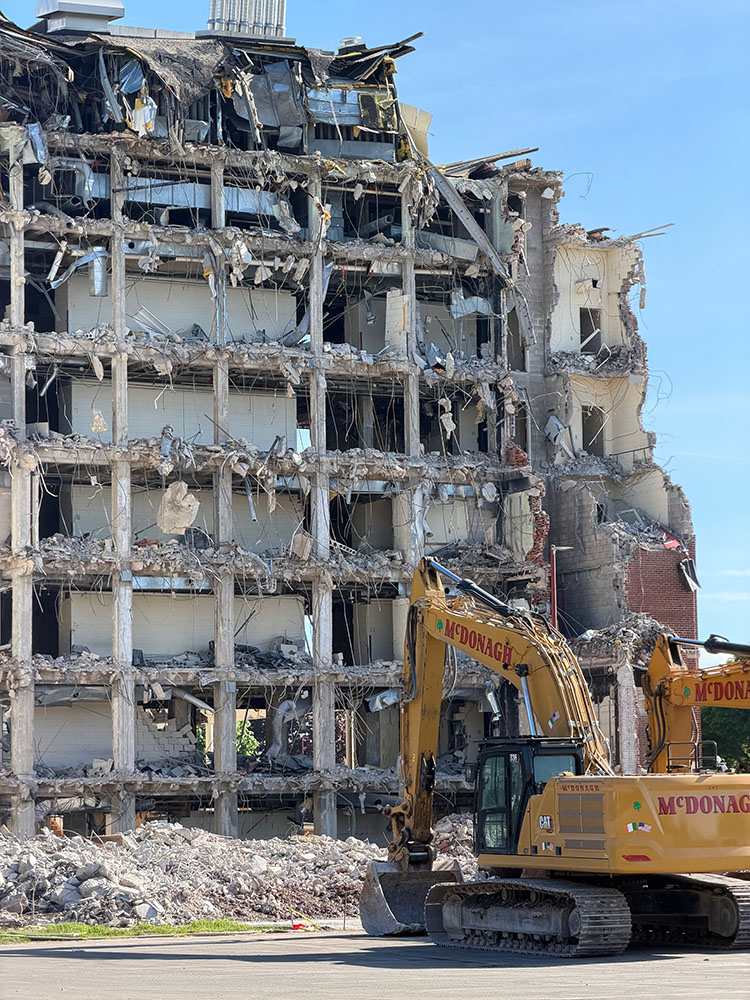
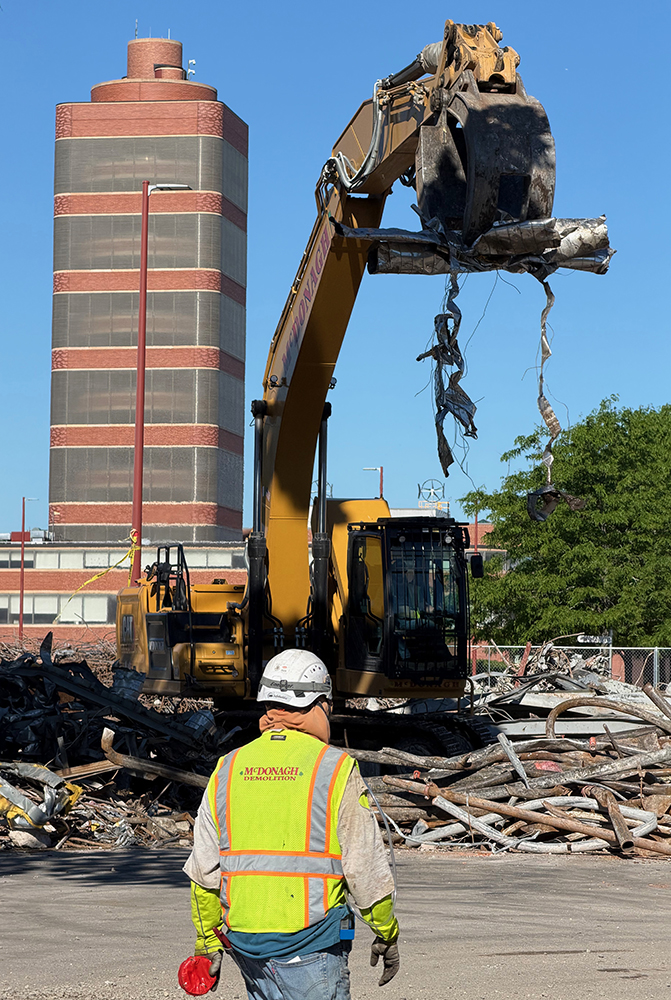
The Tower stood unused until 2014 when two floors were restored after the company got permission to bring tours there. Fortunately the company is privately held, because one can imagine how many publicly held companies would have demolished an unused building in spite of its architectural significance and its place in the company’s DNA as a symbol of creativity. By 2019 another company building close to Waxdale, the company’s manufacturing complex west of town became their new R&D facility, and it was St. Mary’s turn to stand empty. With high costs to maintain the empty building which had no foreseeable use to the company, demolition began in March.
There are no immediate plans for the site.
The former St. Mary’s Hospital building is almost completely reduced to rubble in this photo taken June 19.
As a sidelight, some years ago I profiled Ken Dahlin, a well-known contemporary architect (Genesis Architecture). I wrote that he must have been pre-destined in his career because he was born in the old hospital, overlooking Wright’s landmark buildings.
Please scroll down to read earlier posts on this website.
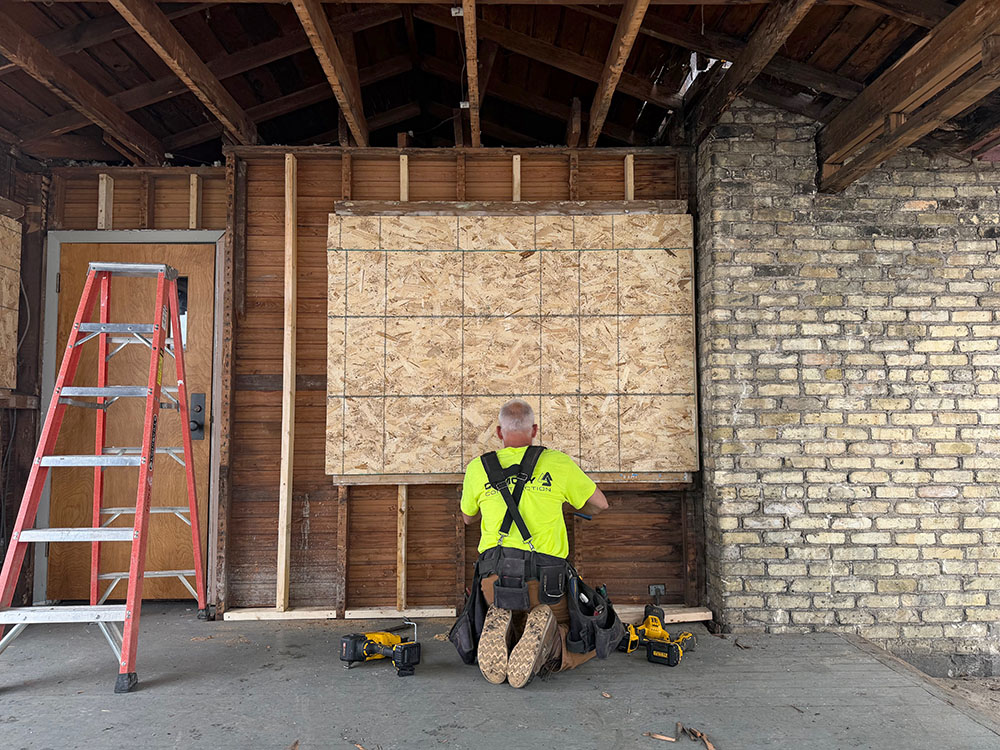
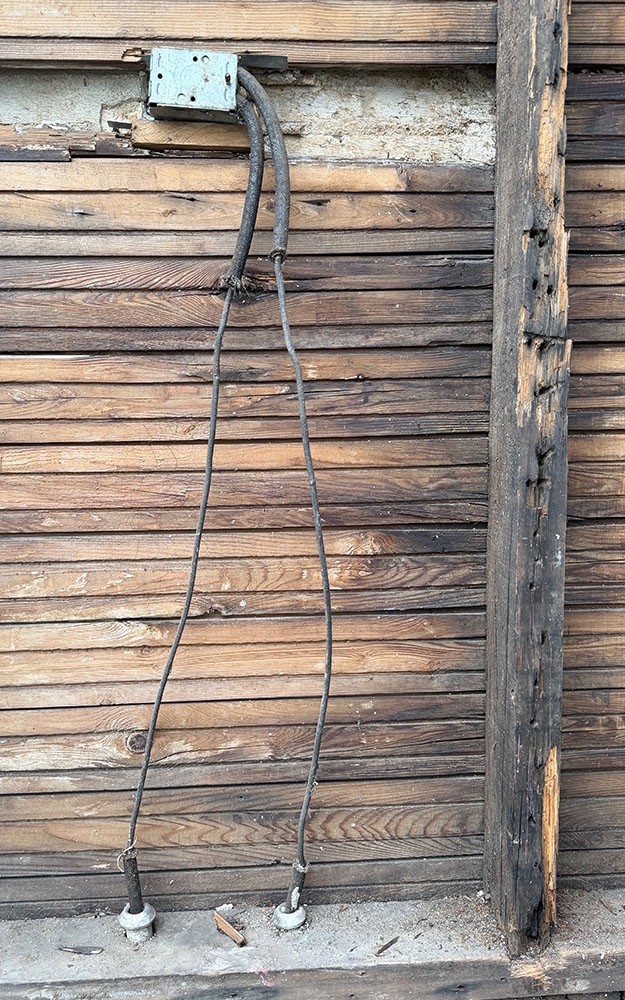
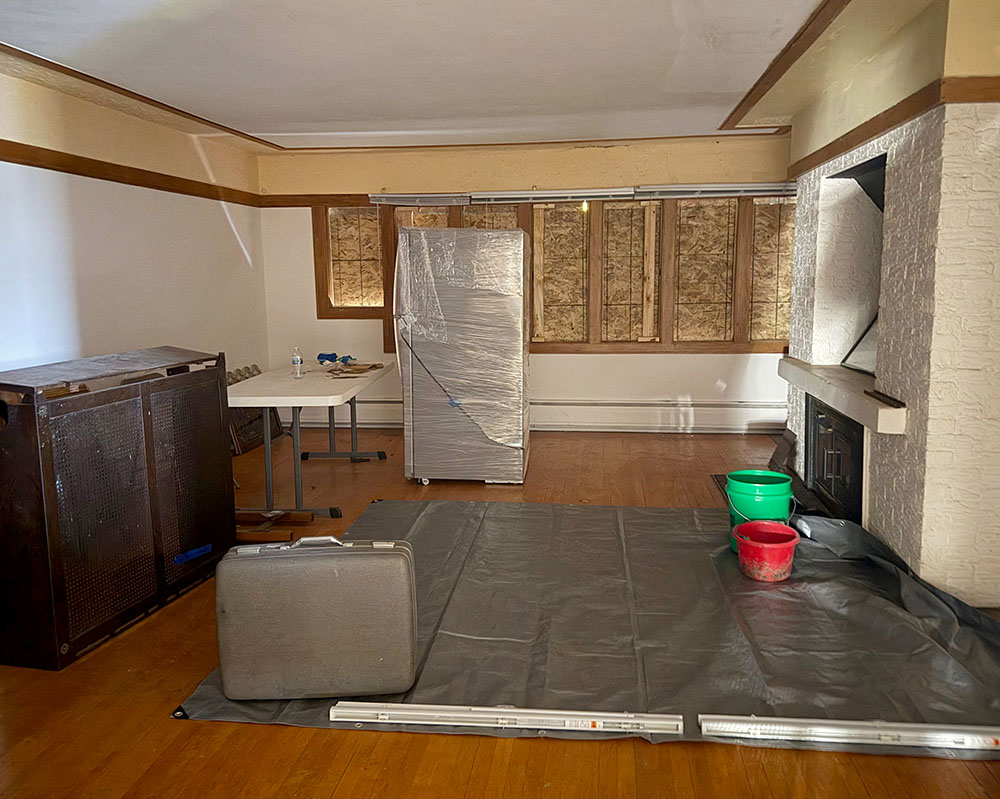
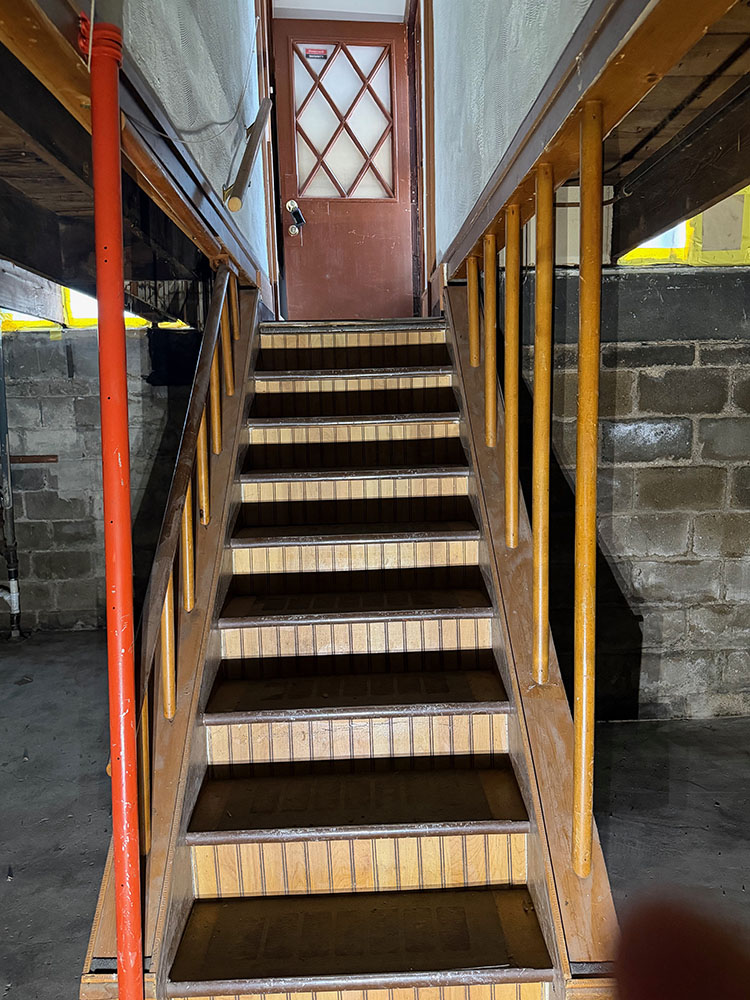
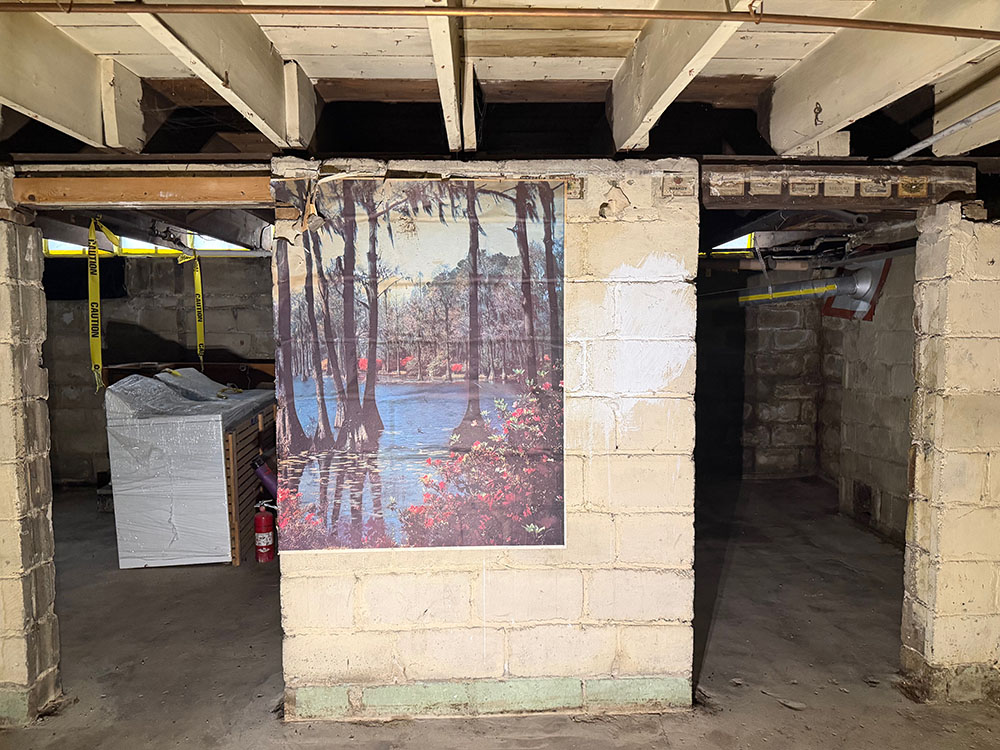
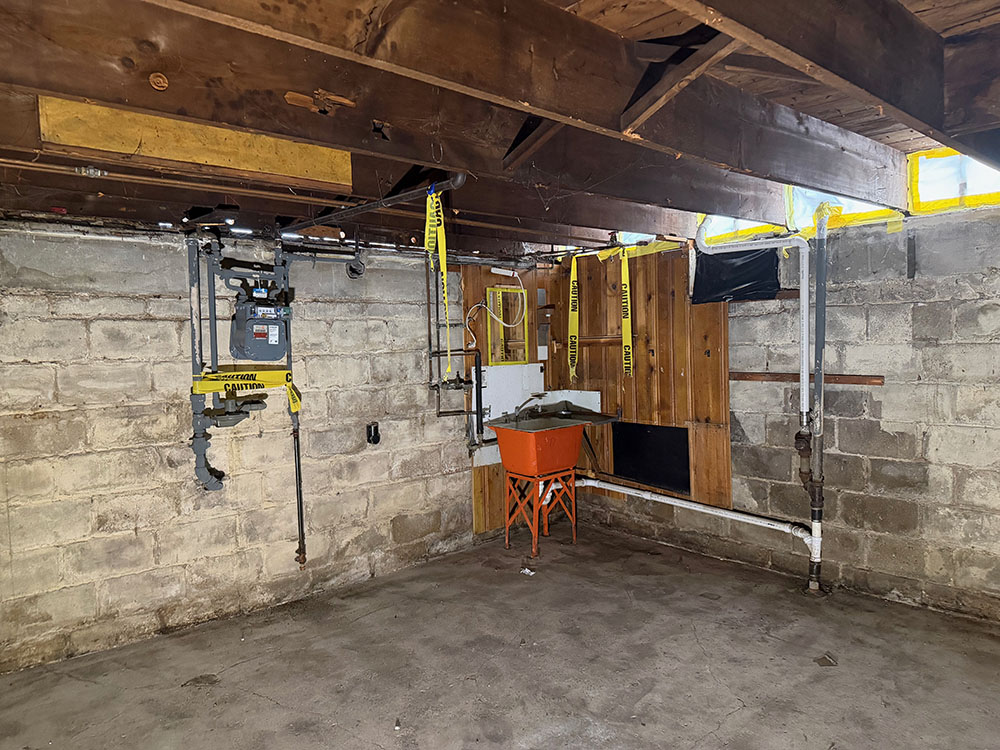
I had an unexpected chance to again visit the site of the restoration of Frank Lloyd Wright’s American System-Built Model C3 house on the Burnham Block in Milwaukee last week. The windows have been boarded up since my visit only a couple of weeks earlier, and I had a chance to see the basement. My last post, from May 28, also has links to the first two updates, beginning in November:
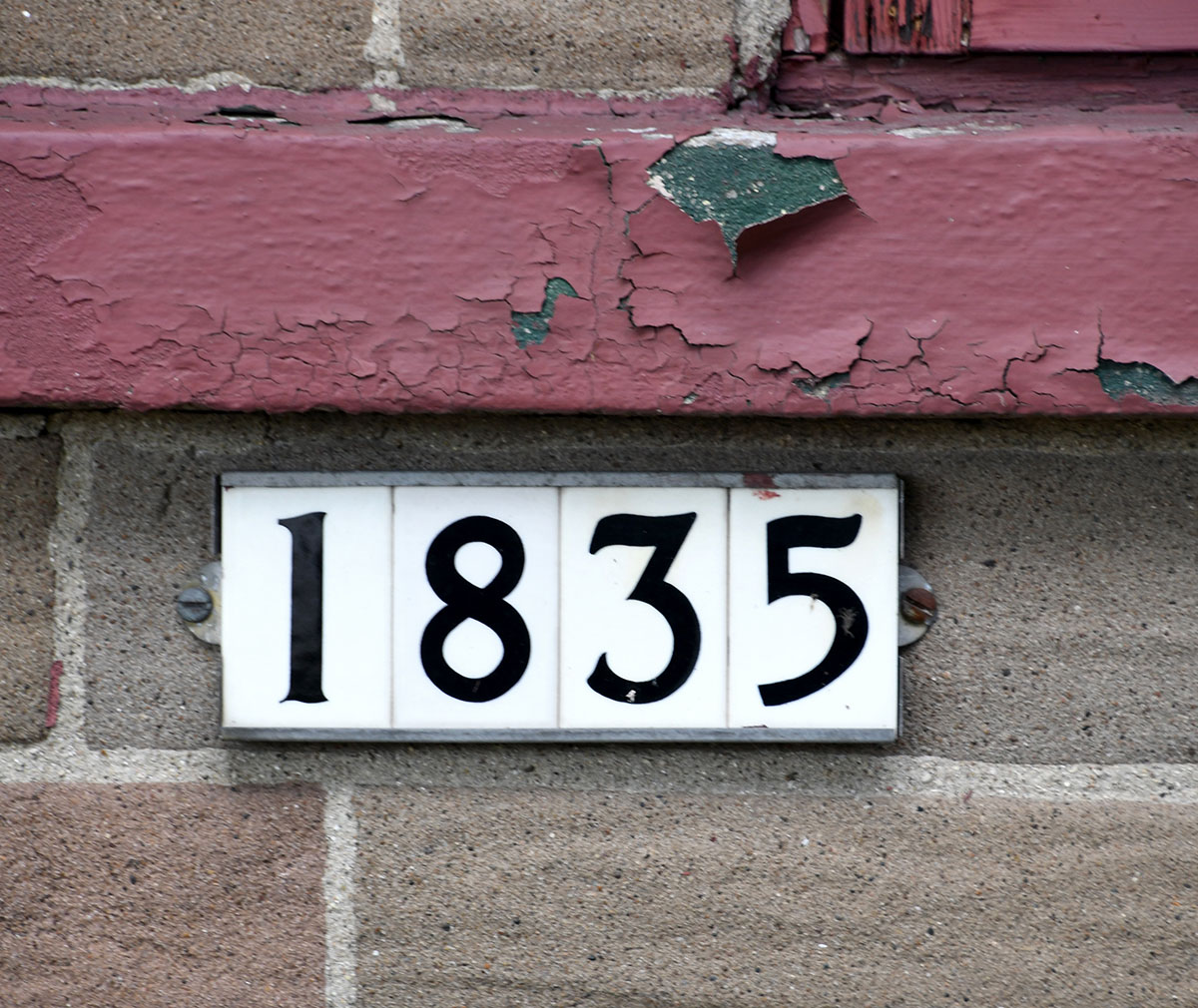
Frank Lloyd Wright American System-Built house Model C3, 1835 N. Layton, Milwaukee, WisconsinMay 28, 2026
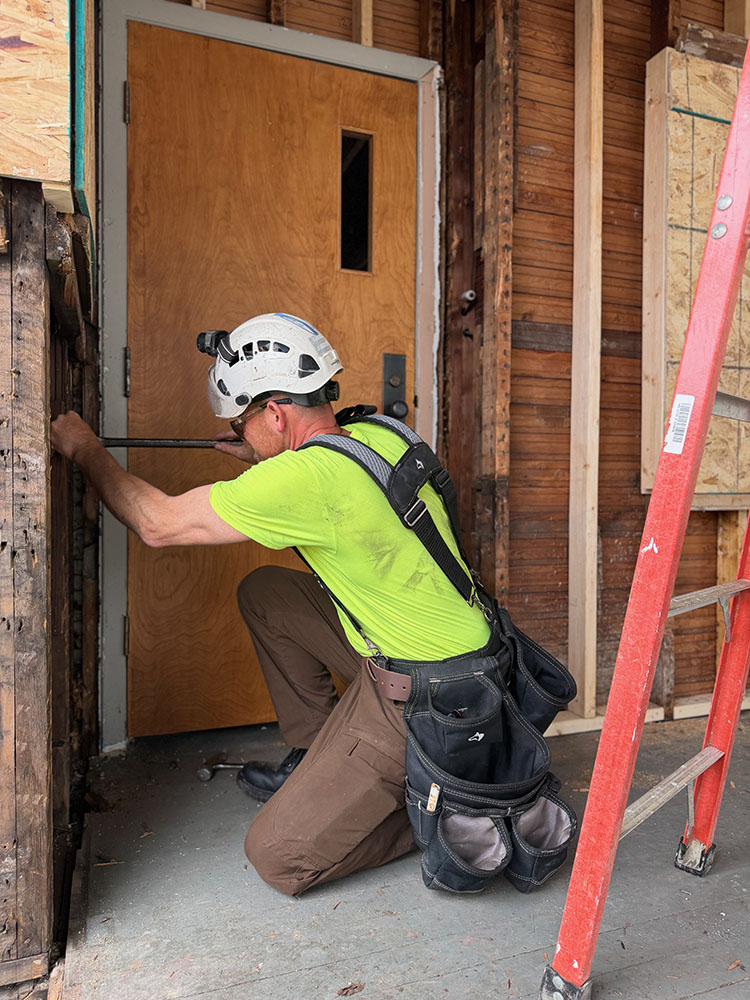
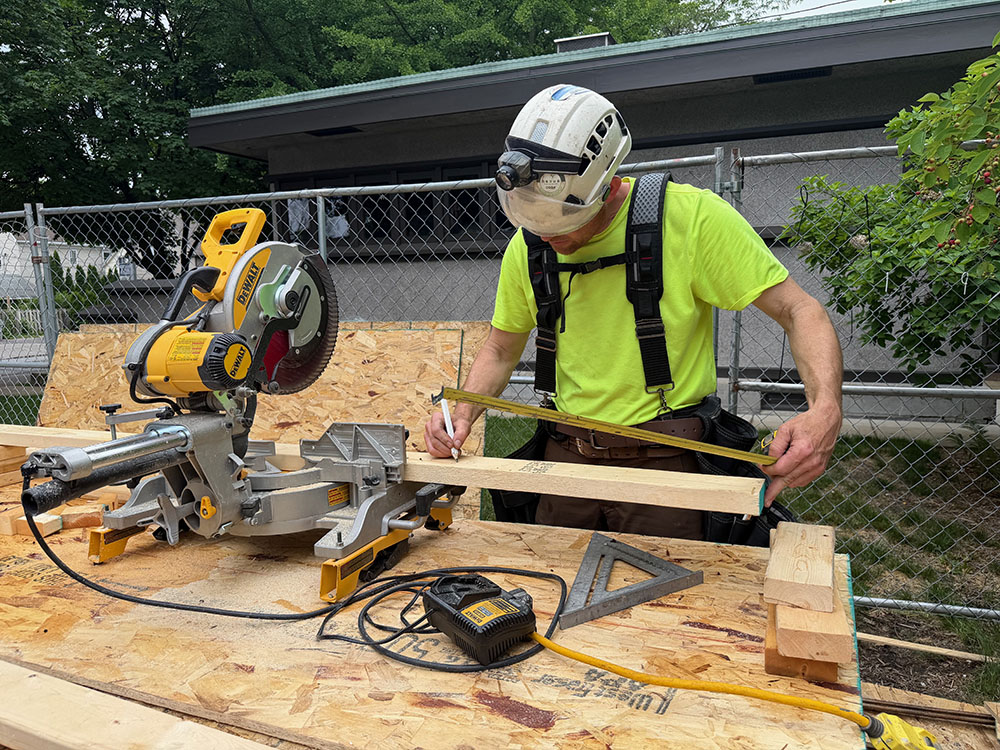
Restoration of Frank Lloyd Wright’s American System-Built Model C3 house at 1835 N. Layton Boulevard in Milwaukee is well underway. Frank Lloyd Wright’s Burnham Block, which is steward of five of the six ASB structures on the block, gained its third (!) Save Americas Treasures grant for the work. The first grant was for restoration of the Model B1 Richards Small House next door at 2714 W. Burnham Street, and the second one was for the ongoing restoration of the Two Flat “Model C” at 2732-34 West Burnham, one of the four duplexes on the block.
I was accorded the privilege of photographing inside the C3 today, May 28. Links to two previous posts about the project, including photos of the interior before restoration began, are given after the photos from today:
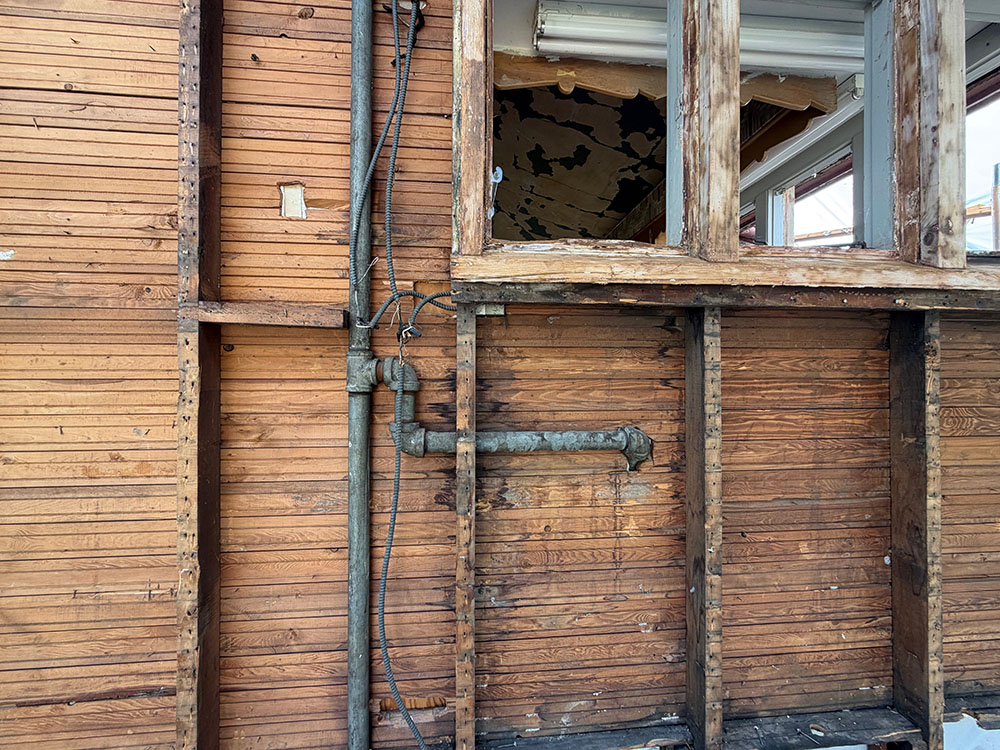
One of the clues to documenting whether of not a home is an American System-Built or not is that they were built on a 24″ grid, rather than having the studs 16″ on center.
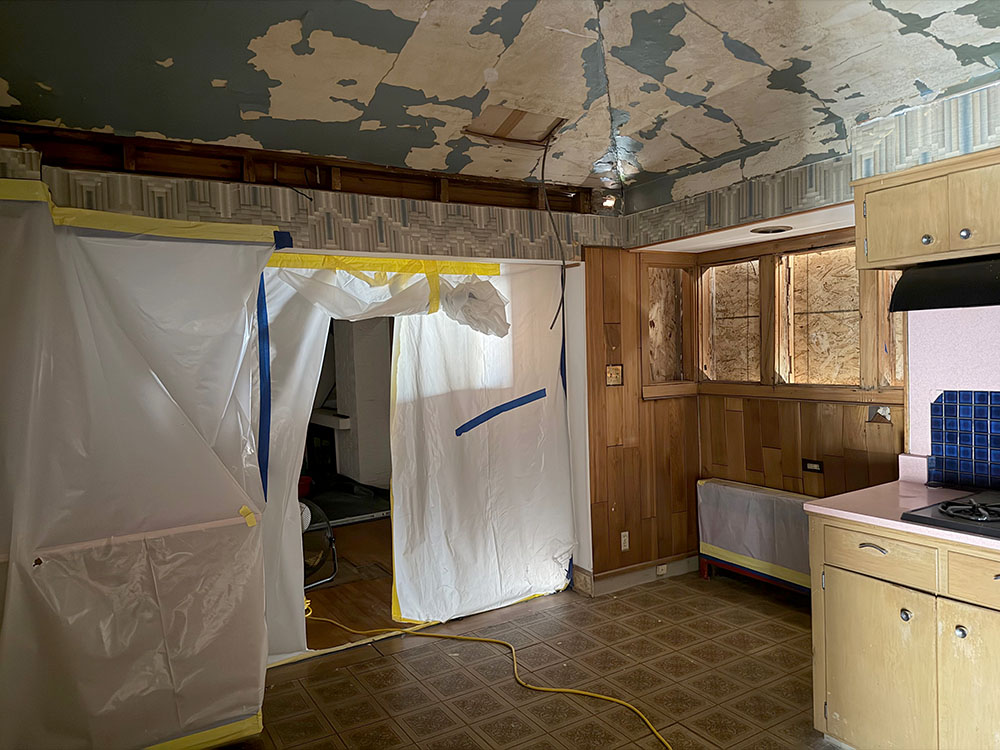
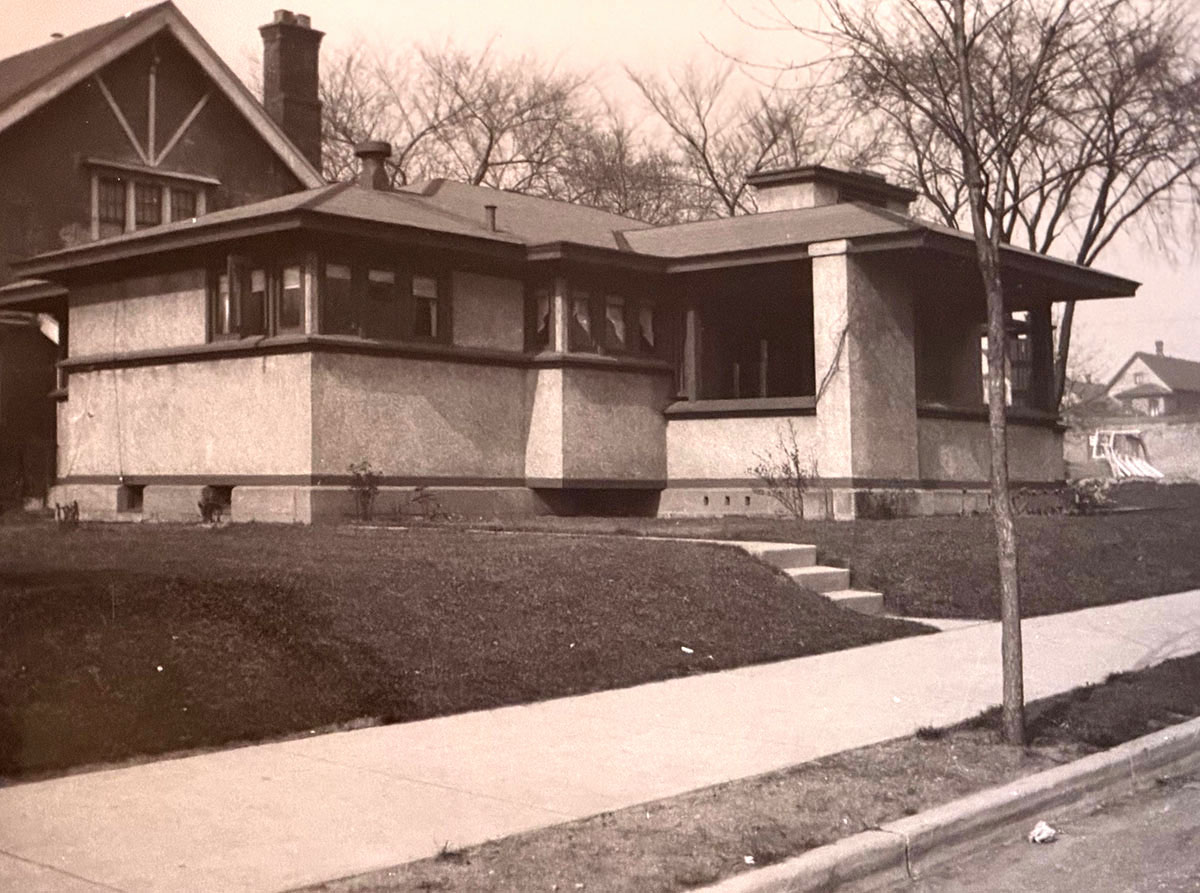
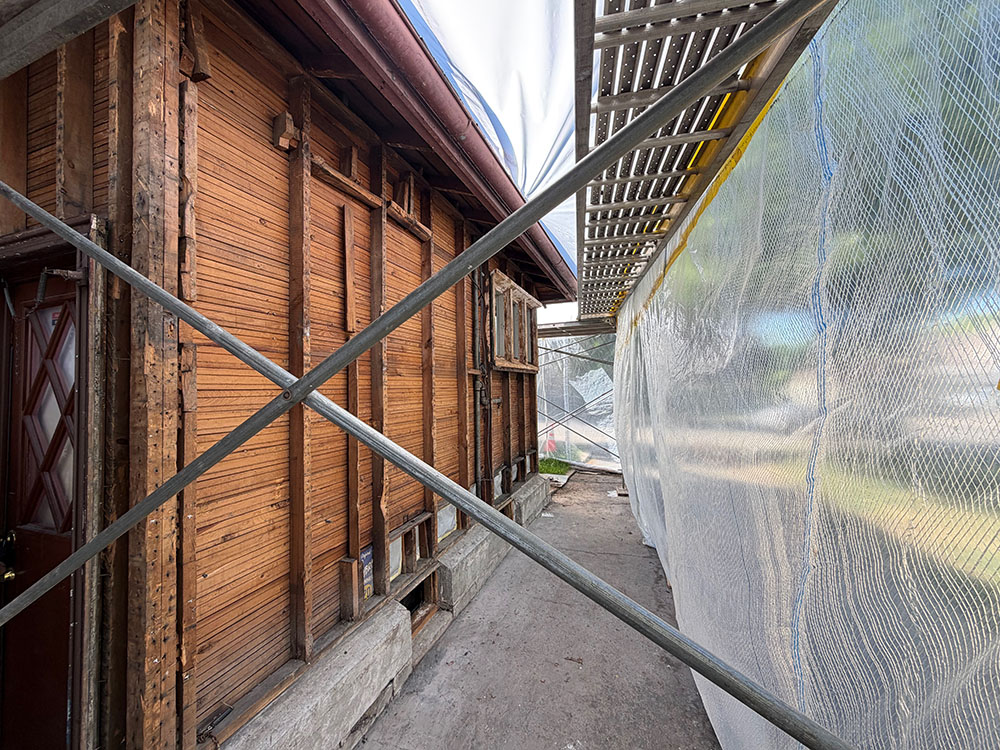
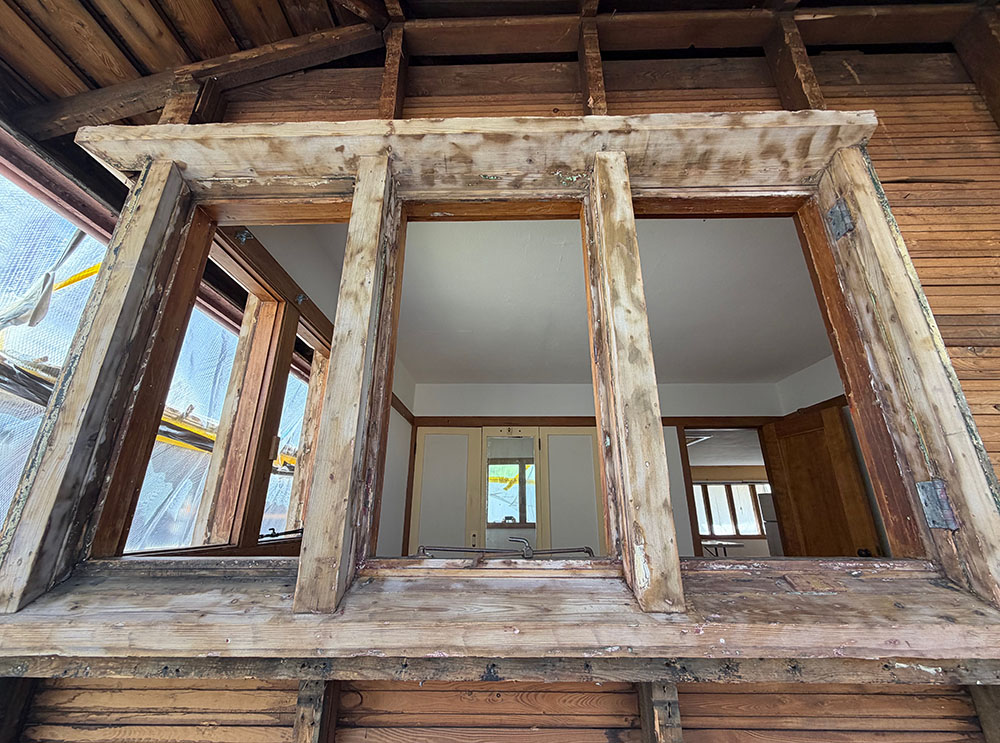
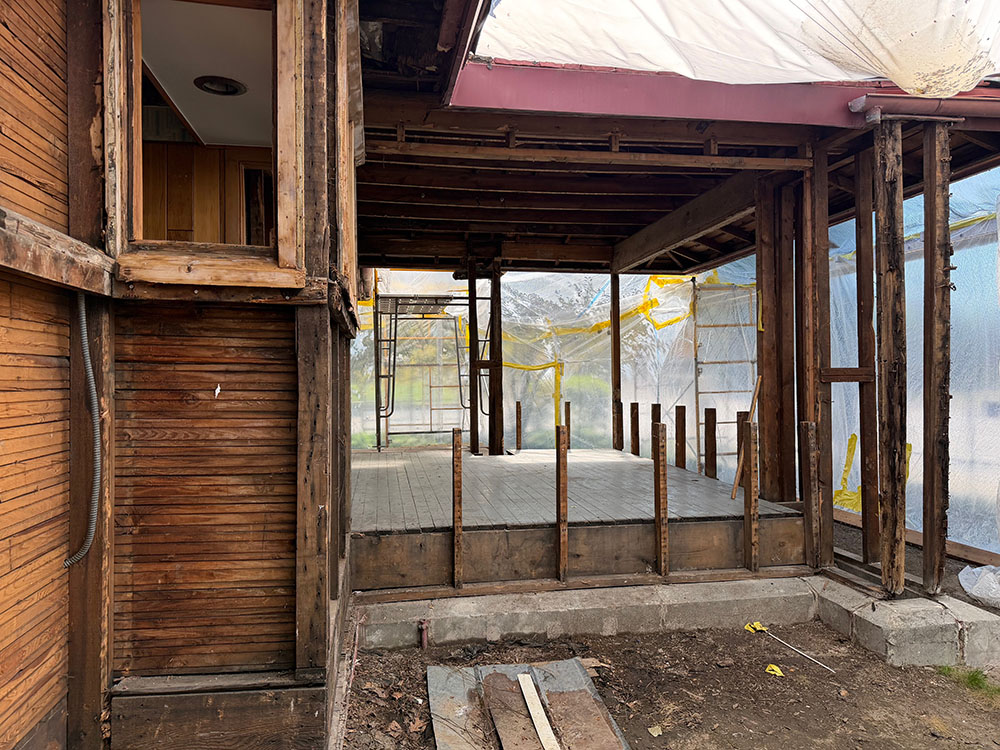
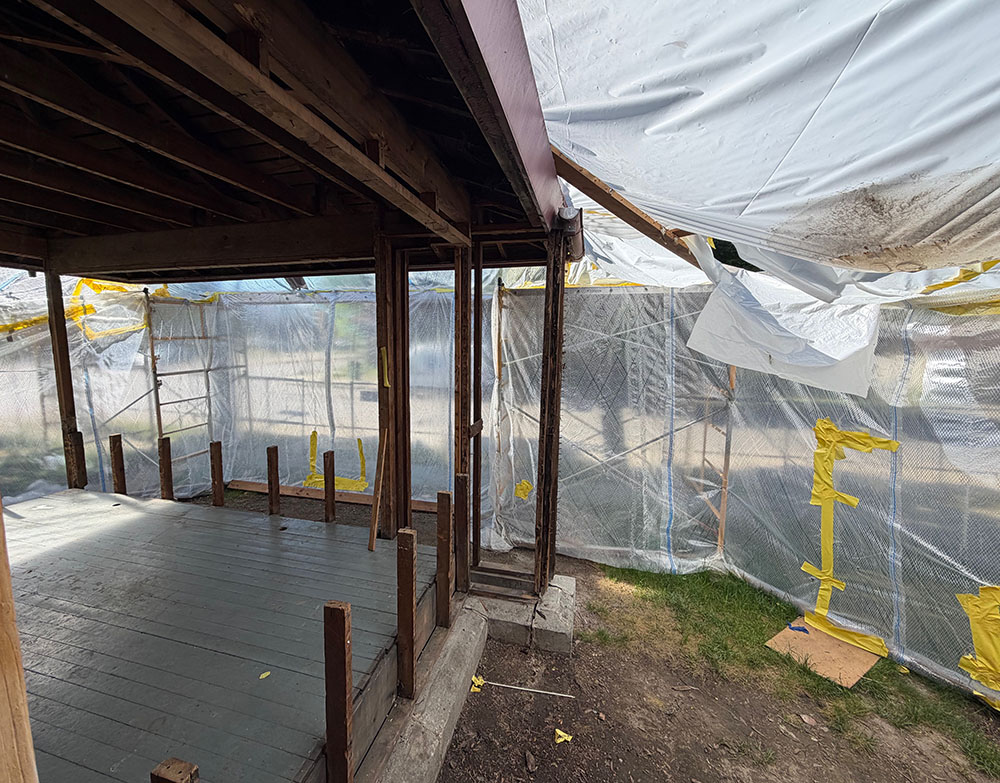
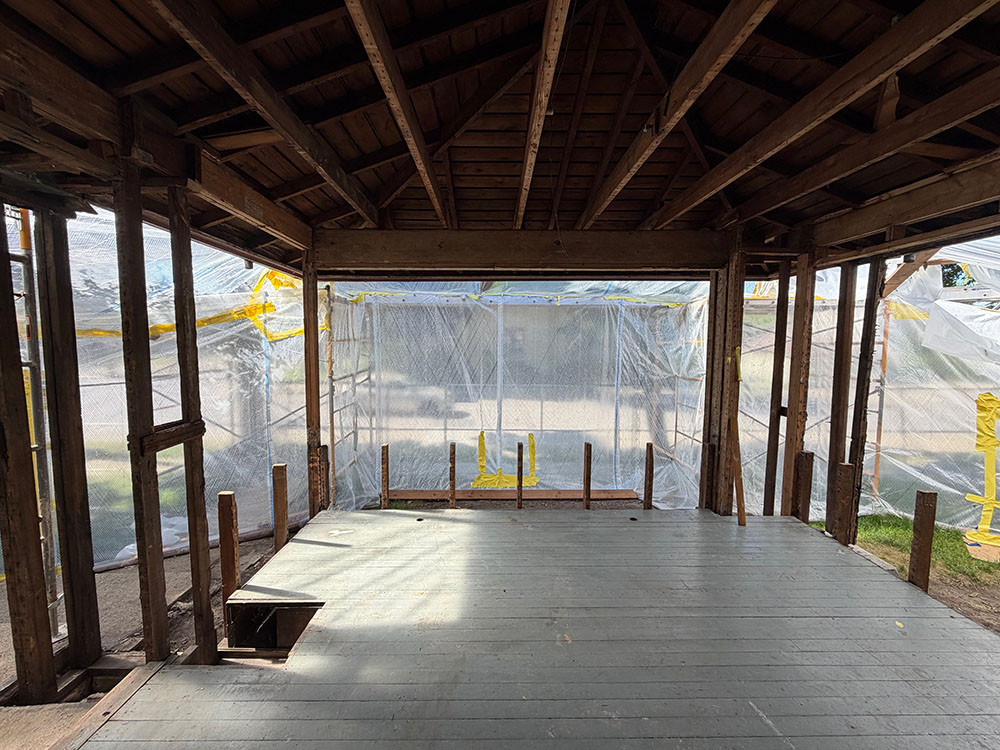
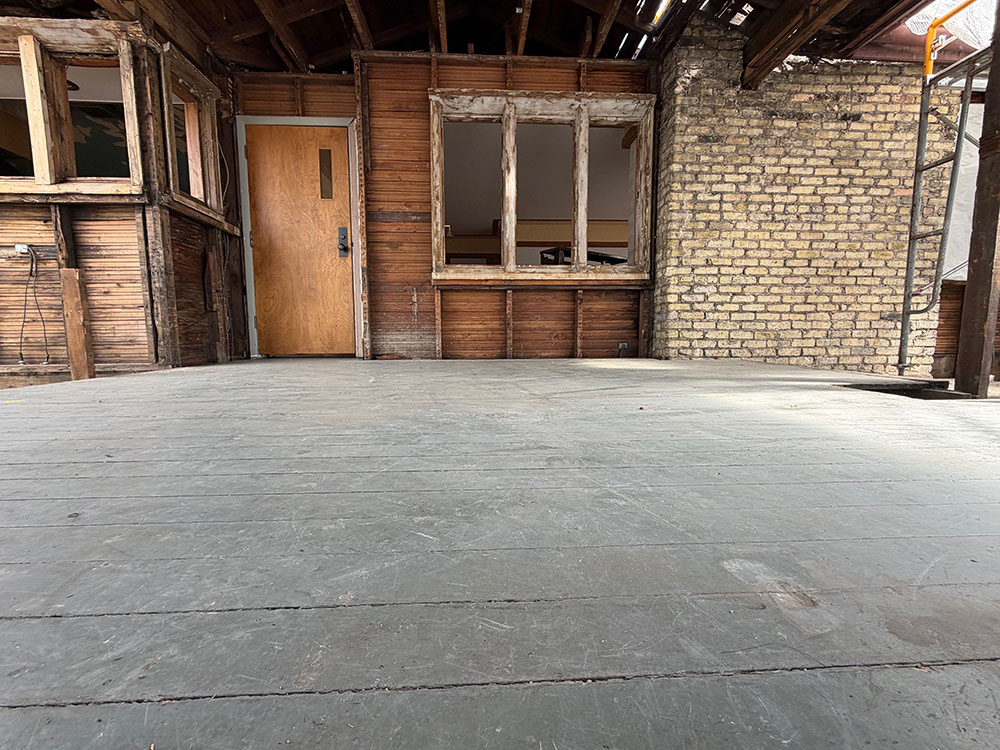
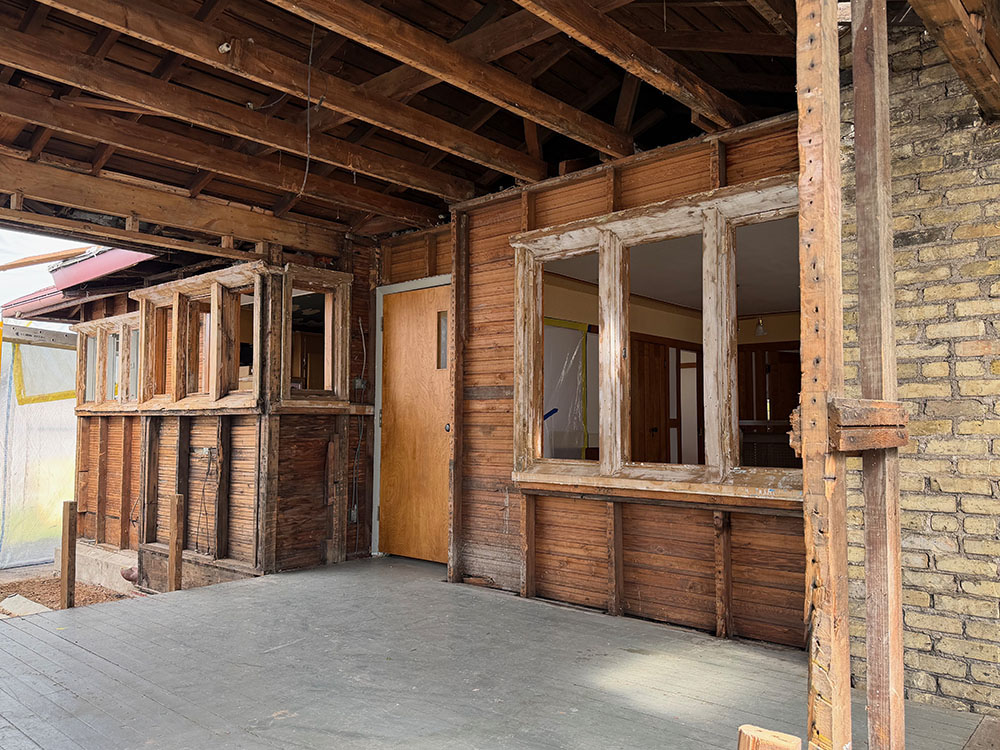
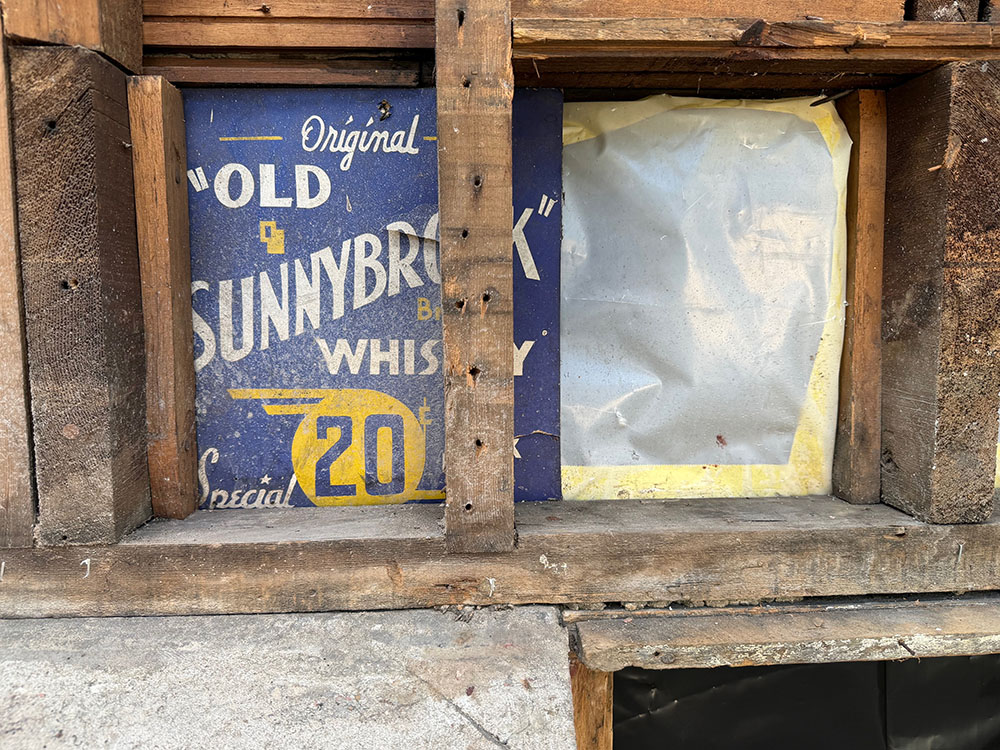
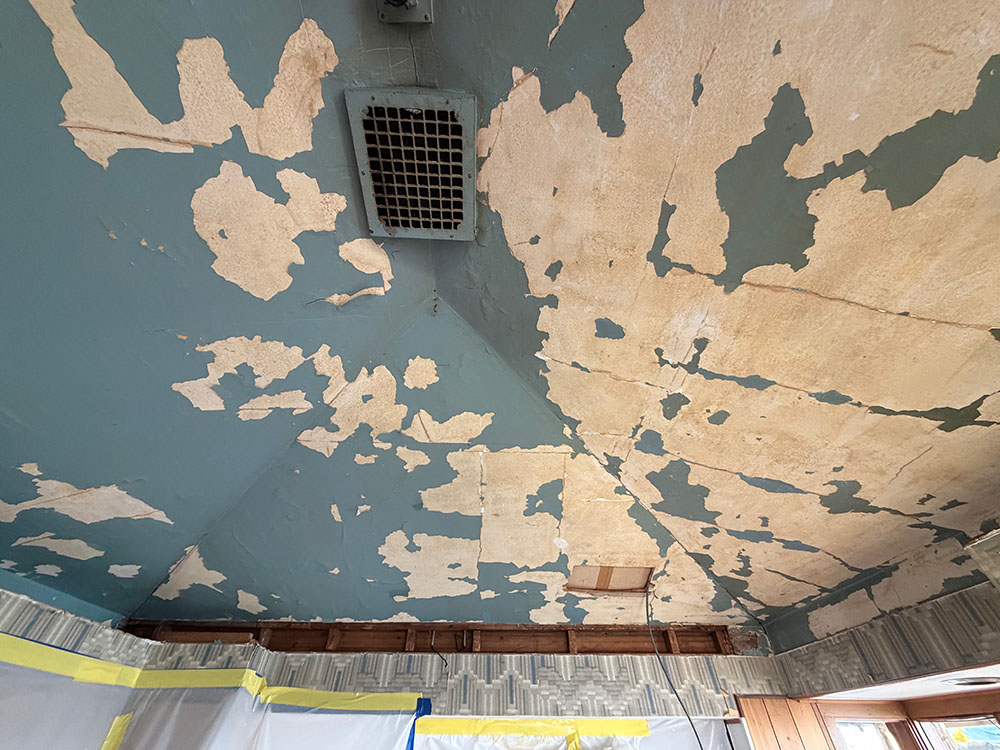
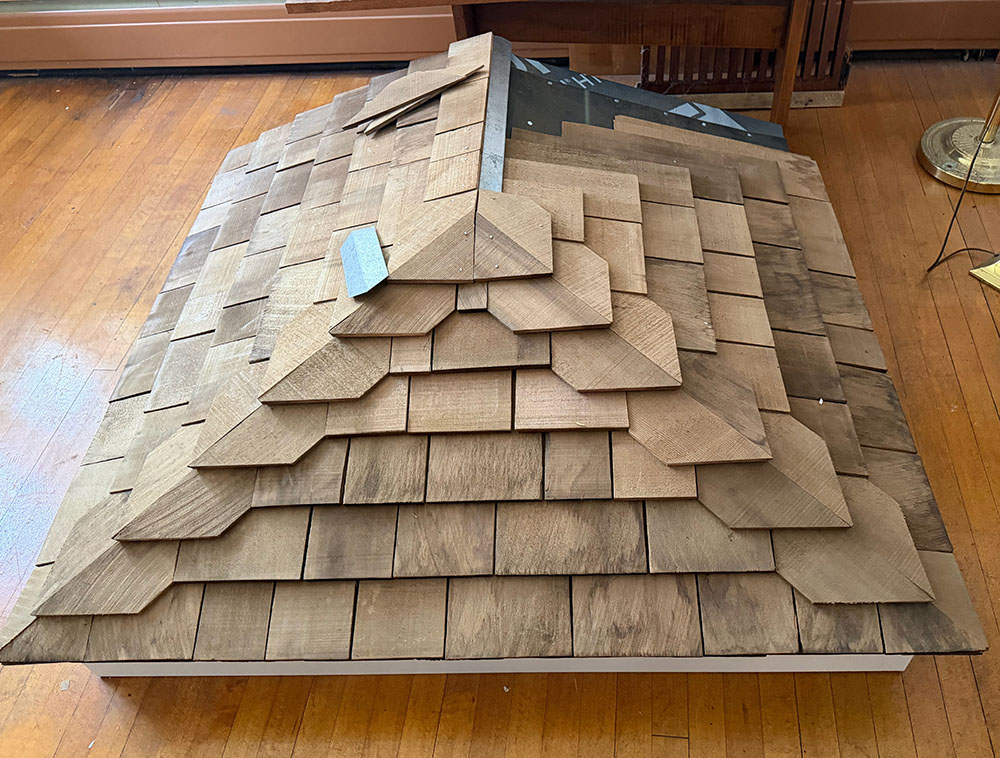
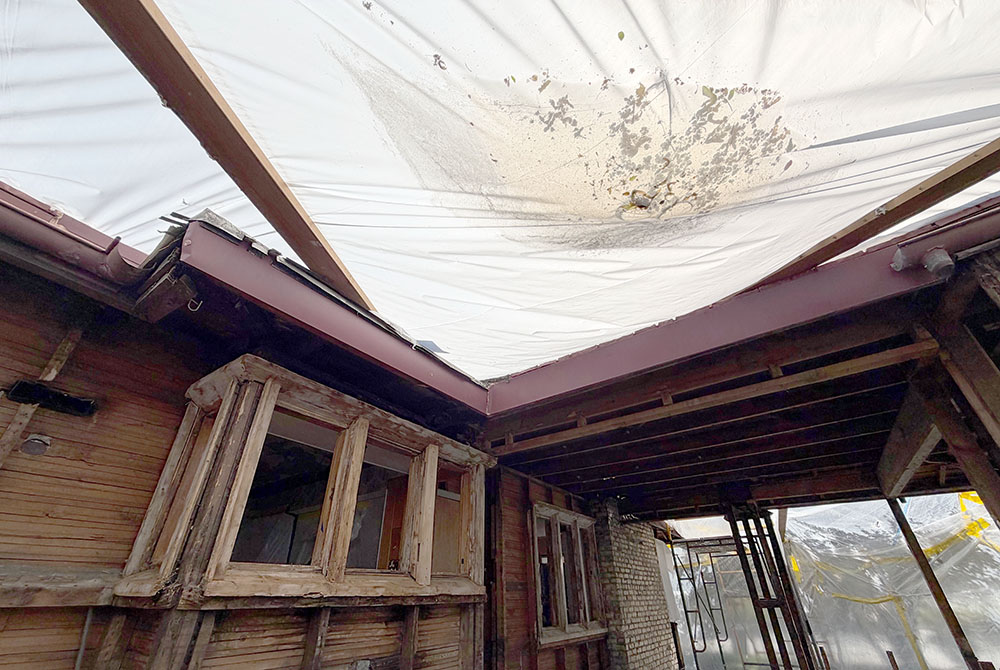
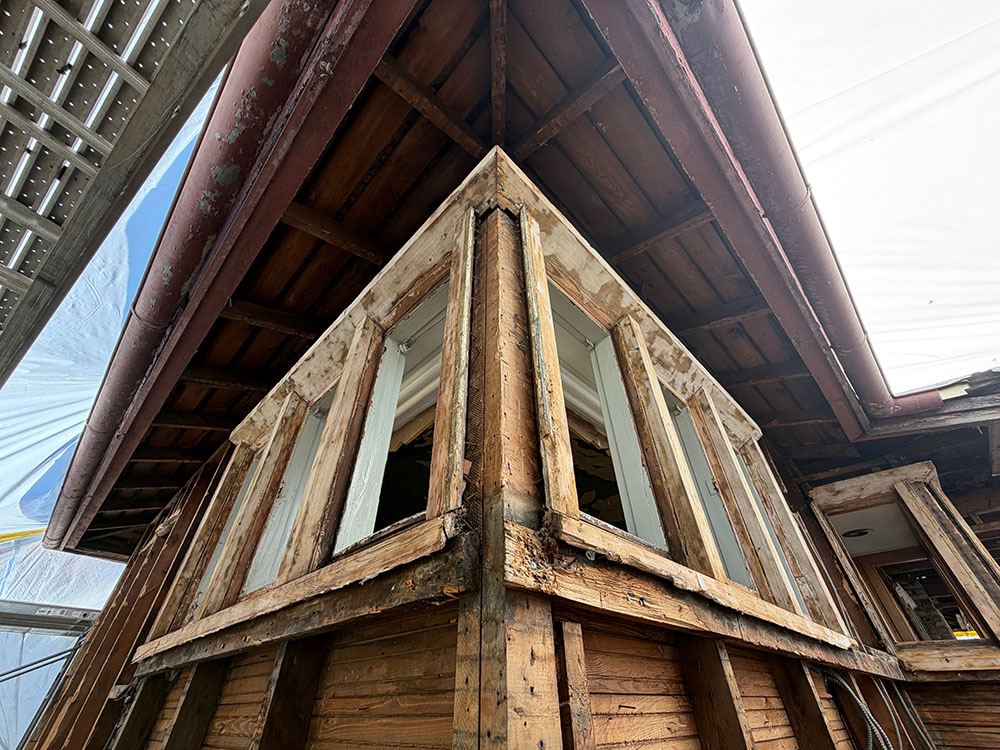
The porch, which was fully enclosed during a remodeling, will be rebuilt with half walls, as shown in the photo of the original construction, at the top of the article.This is the original porch floorThe house has a hip roof. The original kitchen ceiling was found above the dropped ceiling from a remodeling. This is a model of what the roof will look like after the restoration of the house.
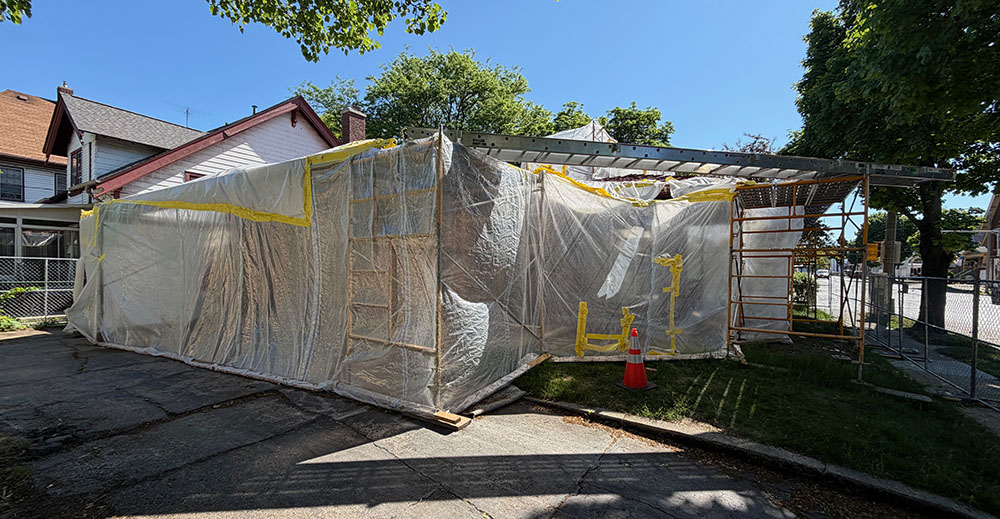
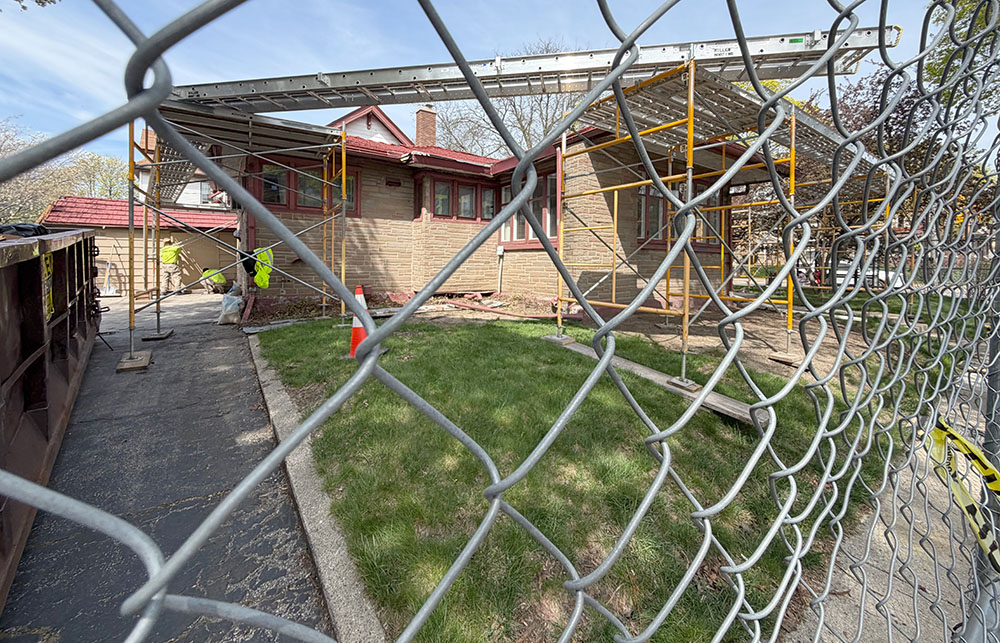
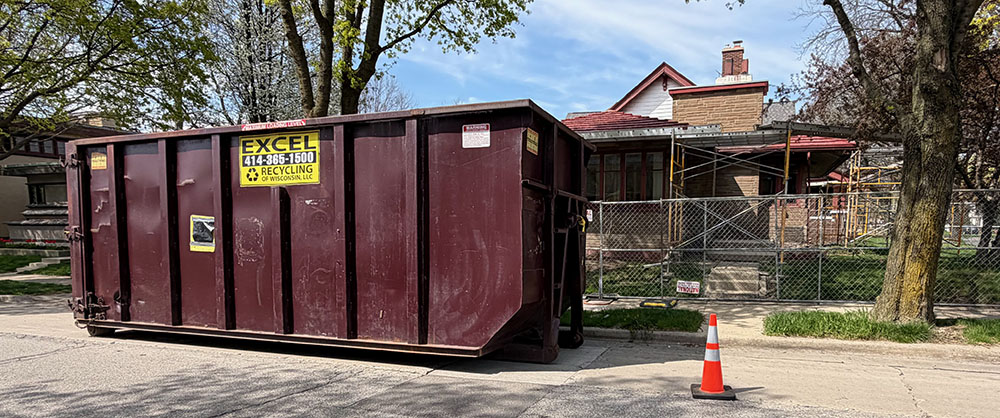
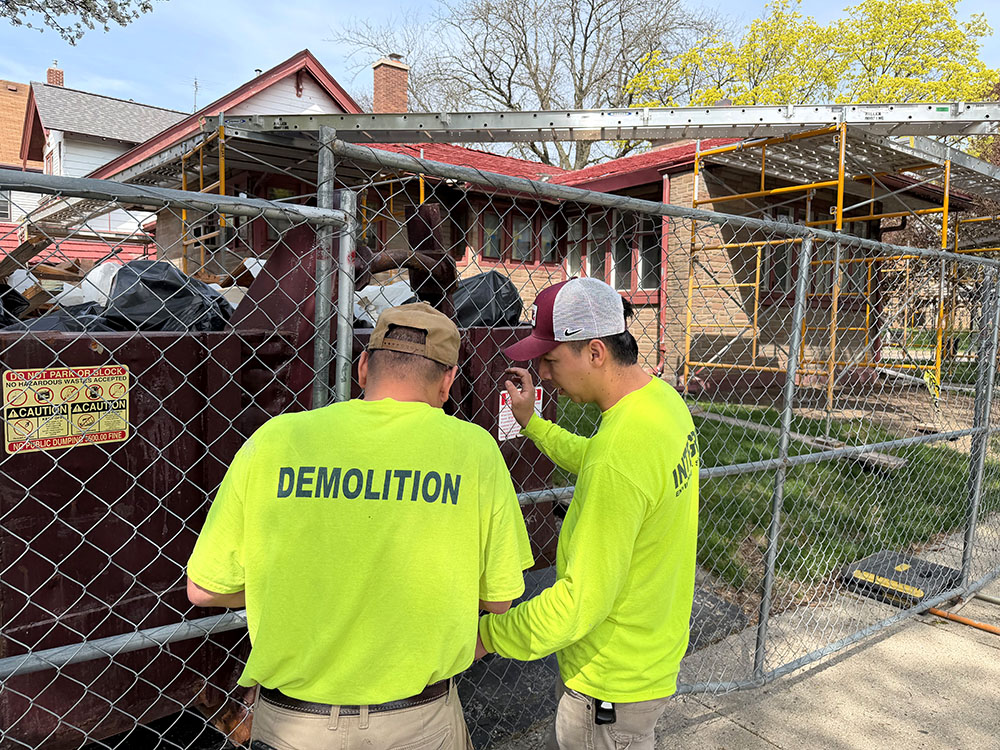
The gift wrap at Frank Lloyd Wright’s American System-Built (ASB) Model C3 house at 1835 N. Layton Boulevard in Milwaukee takes the form of metal fencing around the property. The long-await restoration of the house is underway.
It wasn’t enough that Wright in Wisconsin, the precursor to today’s Frank Lloyd Wright’s Burnham Block, got one Save America’s Treasures grant to restore the house next door at 2714 W. Burnham Street, and then got a second hard-to-get SAT grant to restore the ASB duplex at the end of the block. No, they had to go out and achieve yet a third SAT grant to finally restore the “Pizza Hut” house that anchors the east end of the block.
The Burnham Block has six Wright ASB structures: the two single-family homes and four duplexes (one of which is now a VRBO single family home). All but the latter are owned by the Burnham Block organization. The house at 1835 has the “Pizza Hut” moniker because the mansard roof which came from two Pizza Hut restaurants in the 1970s. The stucco was covered with a “Perma-Stone” veneer in 1958, and the open porch was enclosed. All that will be gone, thanks to the SAT grant.
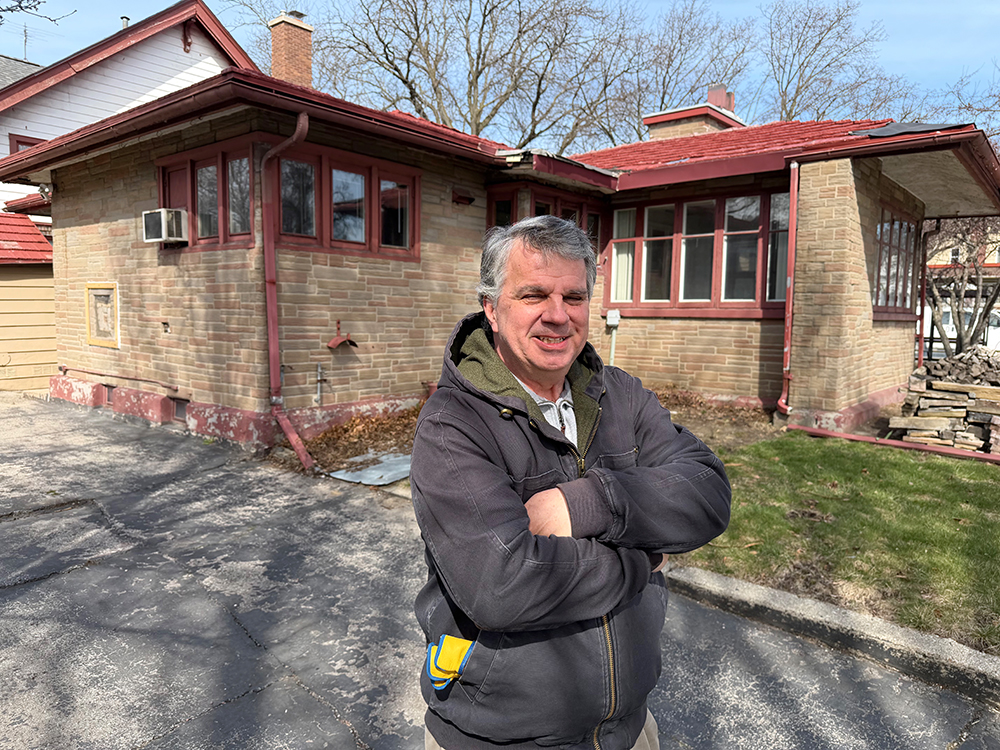
Mike Lilek has stewarded the Burnham Block projects since Wright in Wisconsin dipped its toes in the water in 2004 with the purchase of 2714, or the Richards Small House, next door to 1835 N. Layton, and restored it.
When the restoration is finished the enclosed porch at the right of the photo above will again be open, the veneer will be gone, as will the Pizza Hut roof. The background of the project, is in a piece I posted in November. The post includes a plethora of photos inside the house:
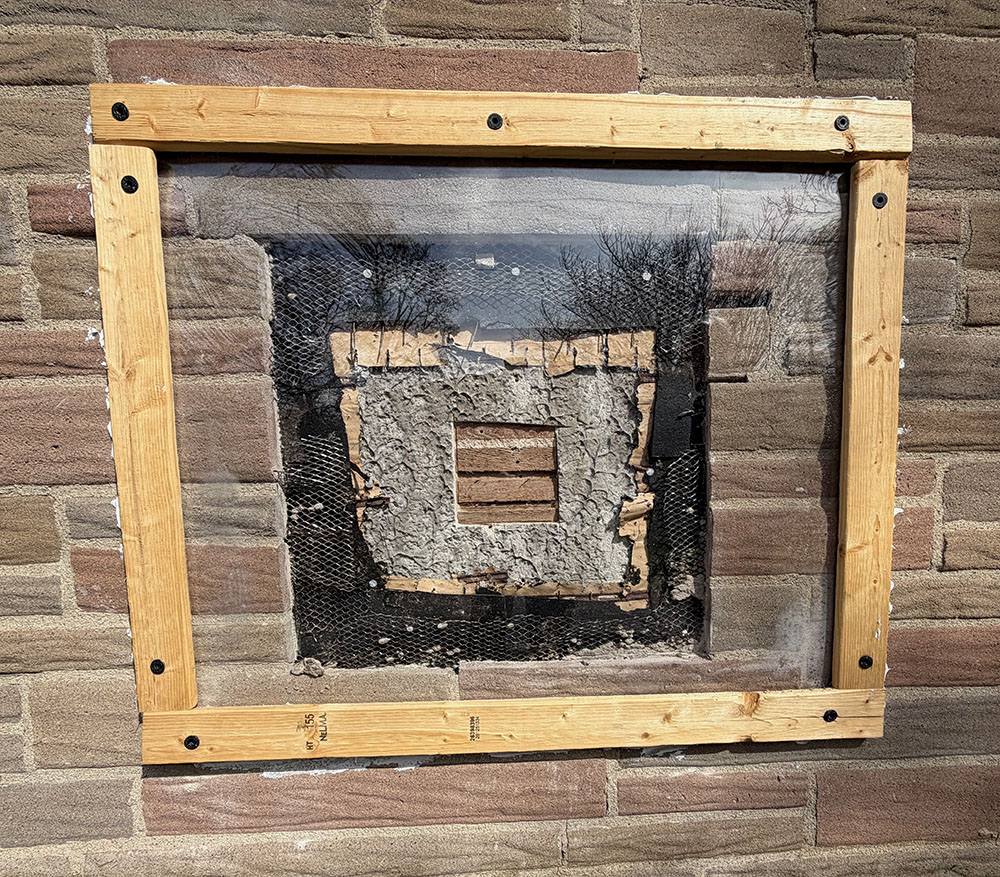
A glimpse of the what lies under the veneer is visible on the west side of the house.
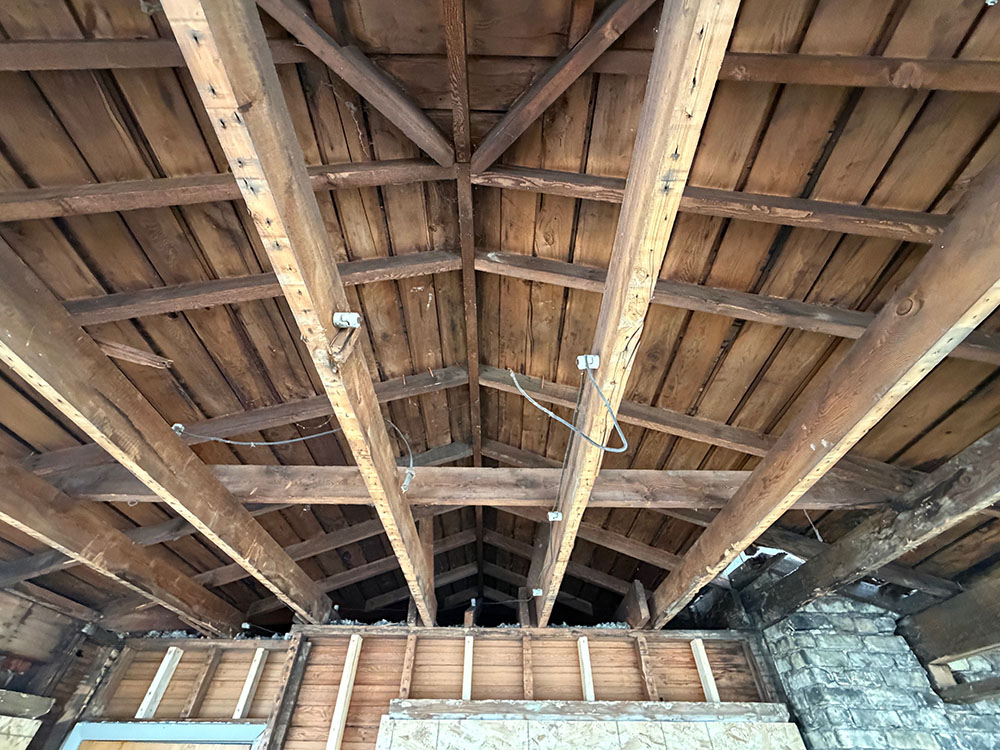
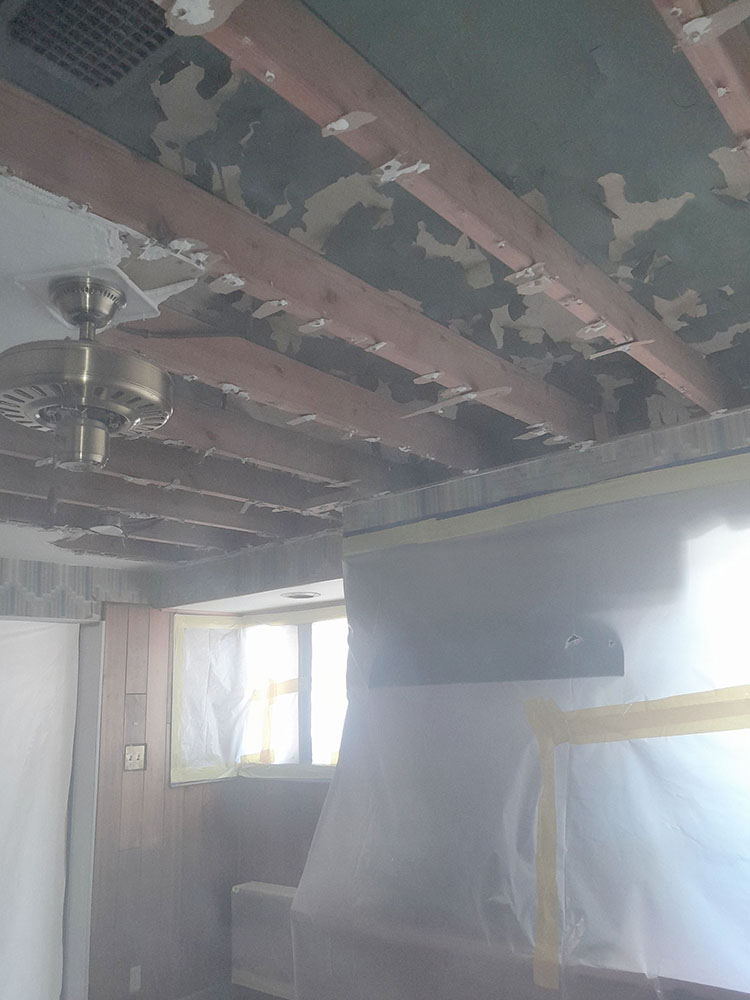
Lilek sent me two photos taken by workers:“This photo is from the kitchen showing the ceiling demolition in progress. The 1916 ceiling is intact – above the joists visible in the photo. The ceiling being demolished was added in the 1950’s.”
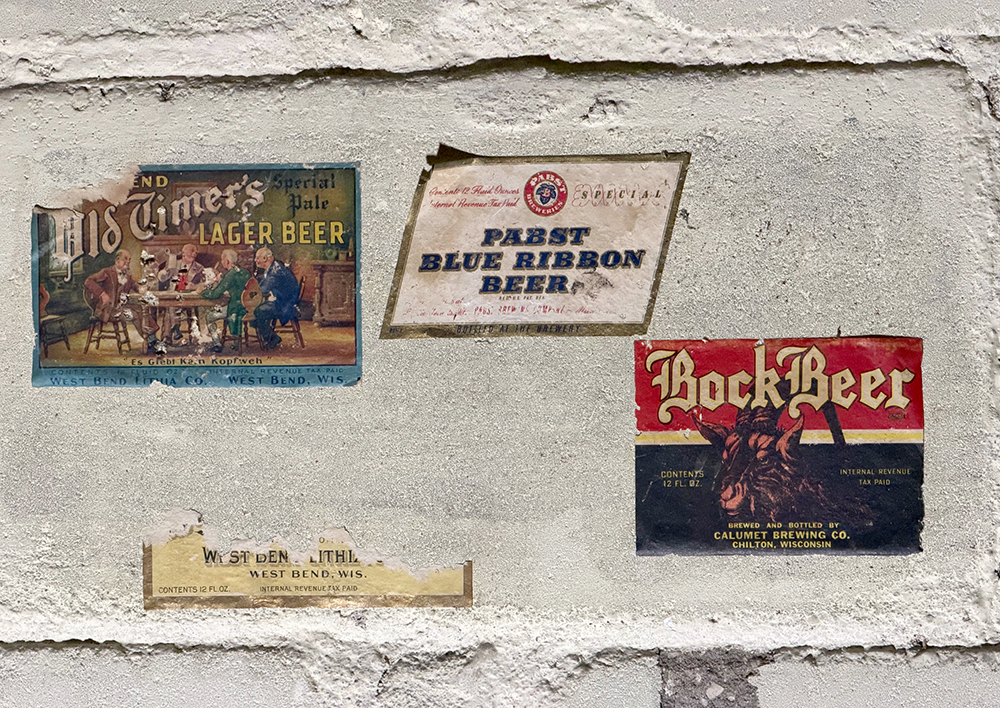
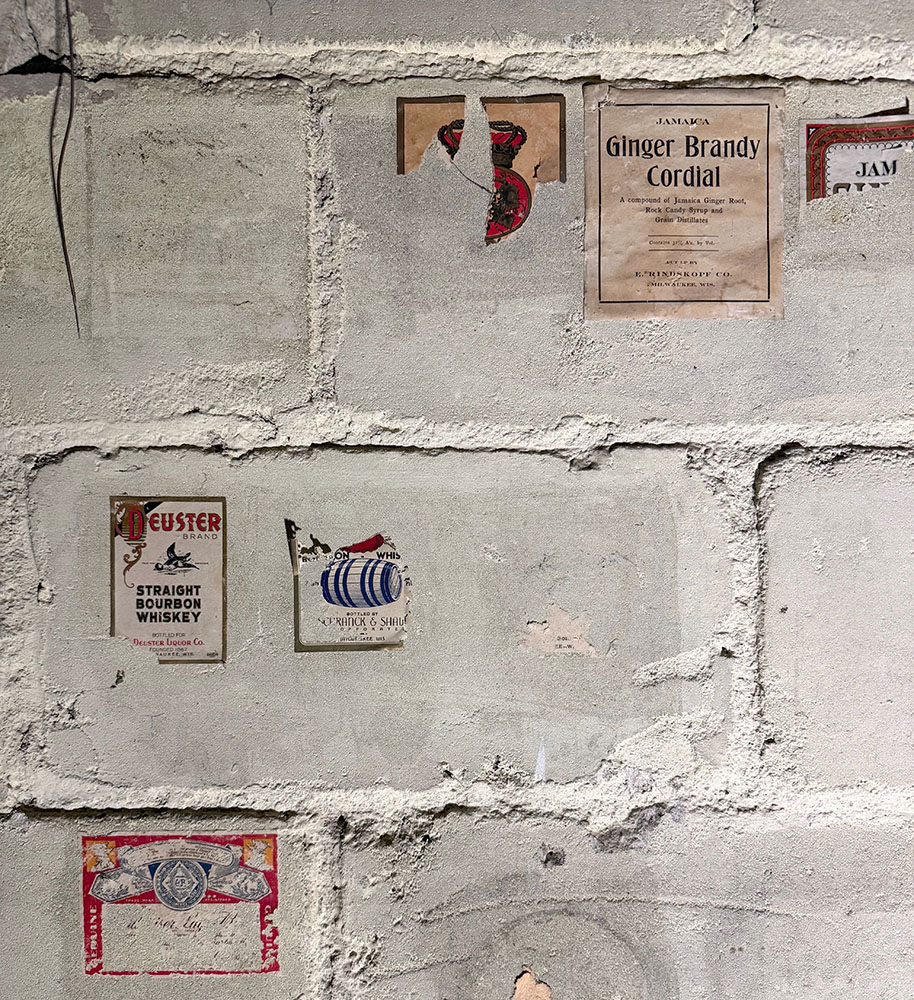
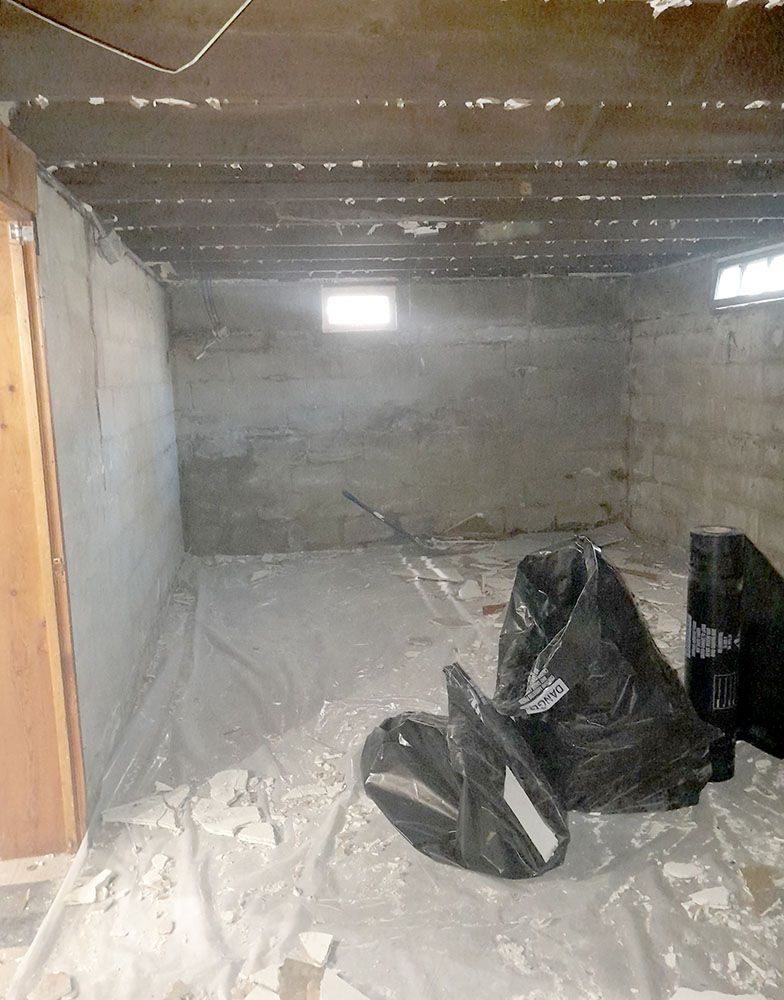
This is the northeast room in the basement.
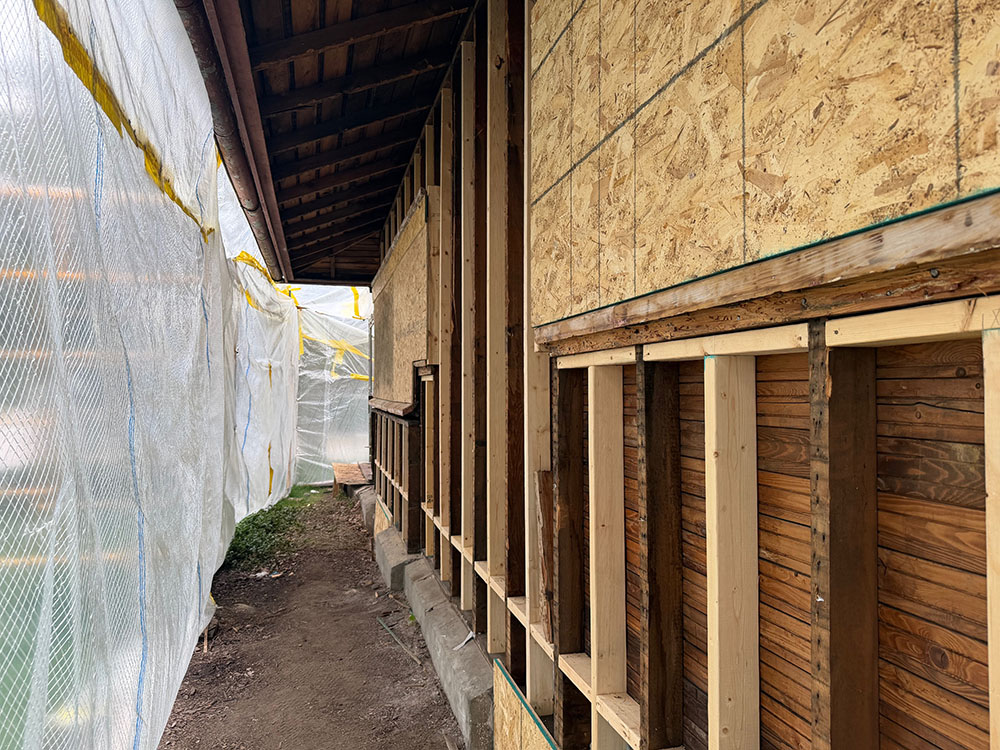
The end of another work day
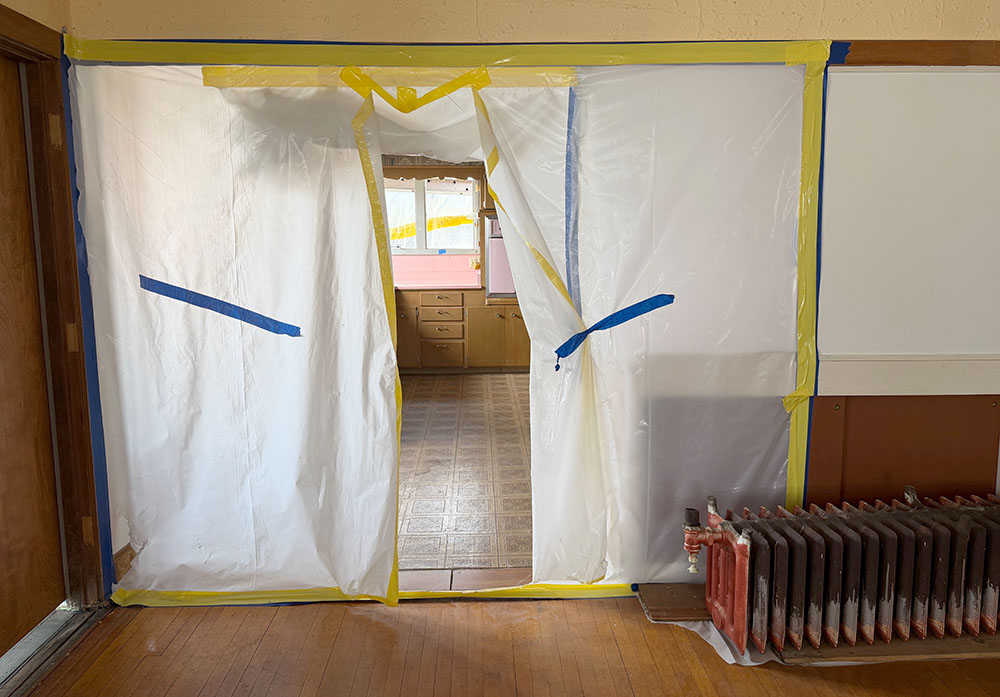
(Access inside is limited to workers in protective clothing).
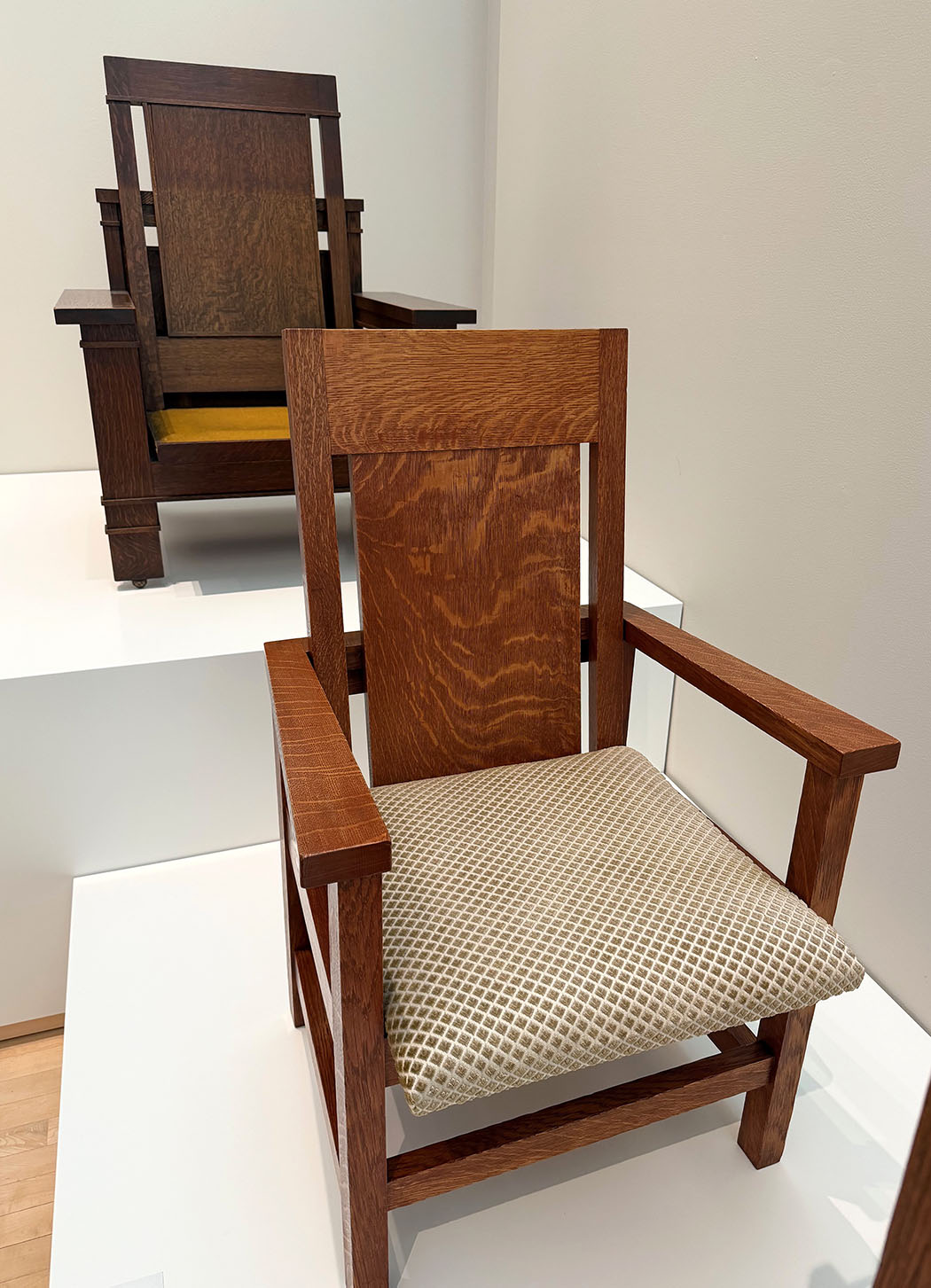
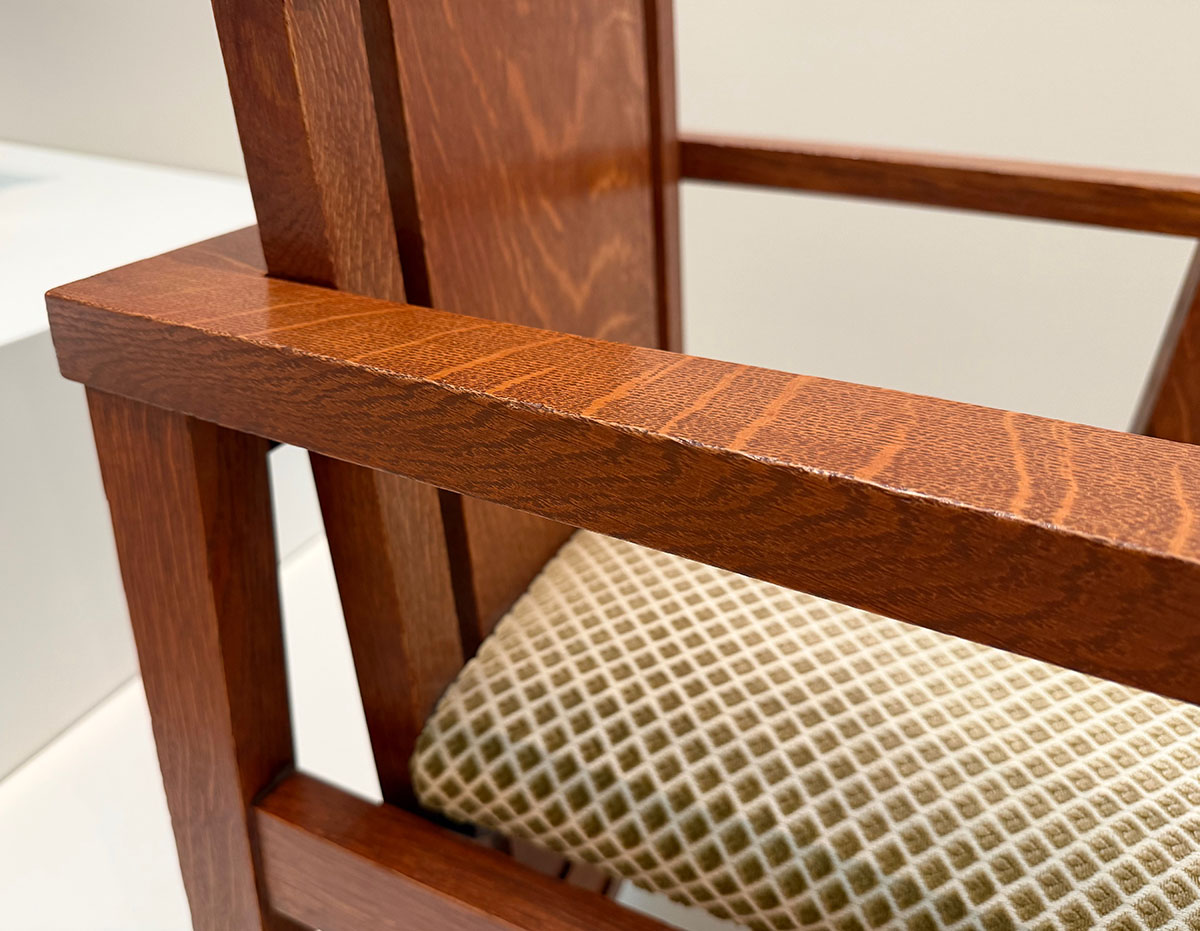
A quick test: think “Frank Lloyd Wright.” Chances are that images of Fallingwater, the Robie House, the SC Johnson Administration Building or other structures came to mind. It is a safe bet that you did not visualize any of his furniture. It has oft been written that Wright was concerned about the whole of his commissions…designing furnishings (and sometimes even clothing) for his clients, rather than only their home or public building. Yet, relatively scant attention has focused on his furniture en toto.
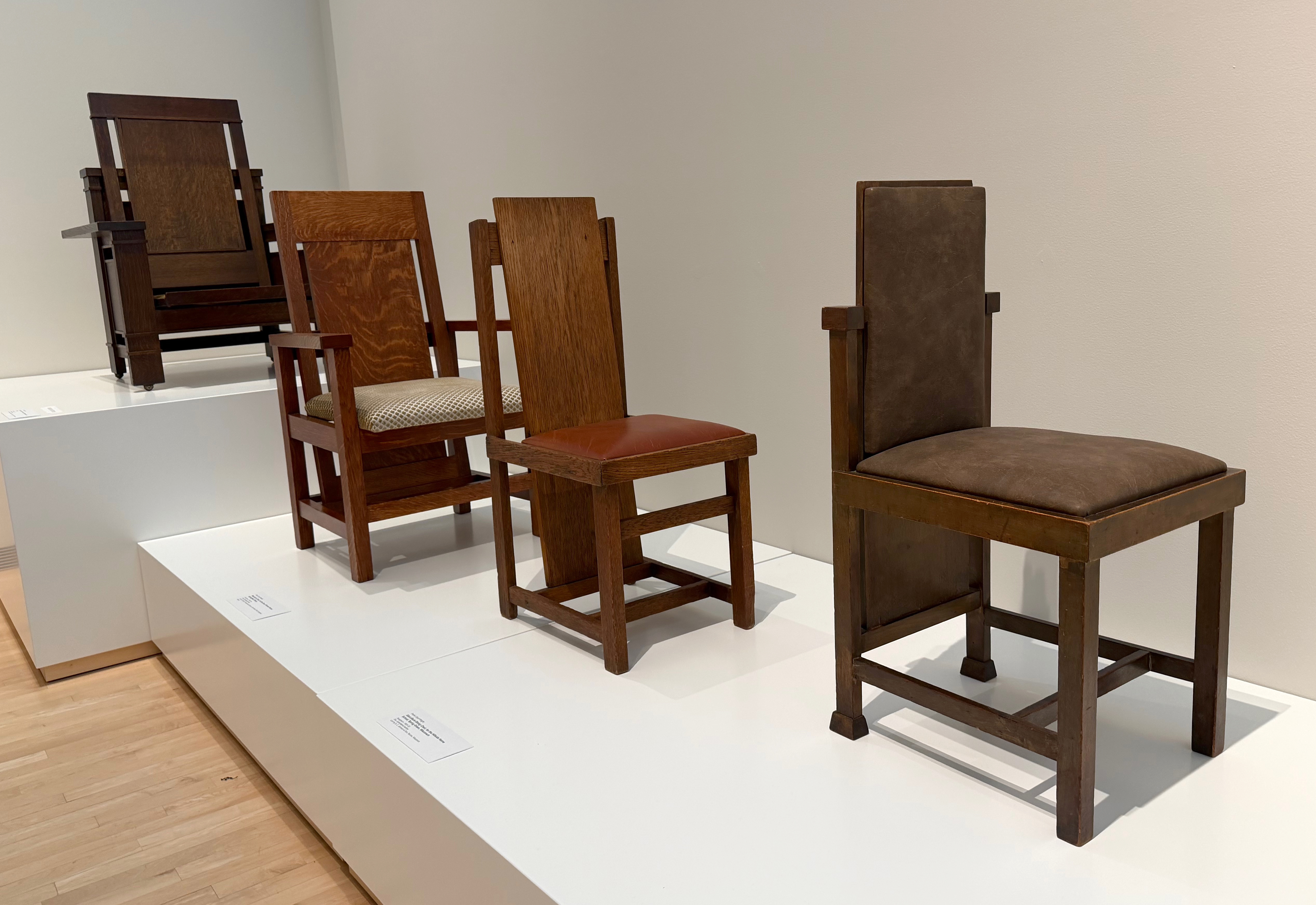
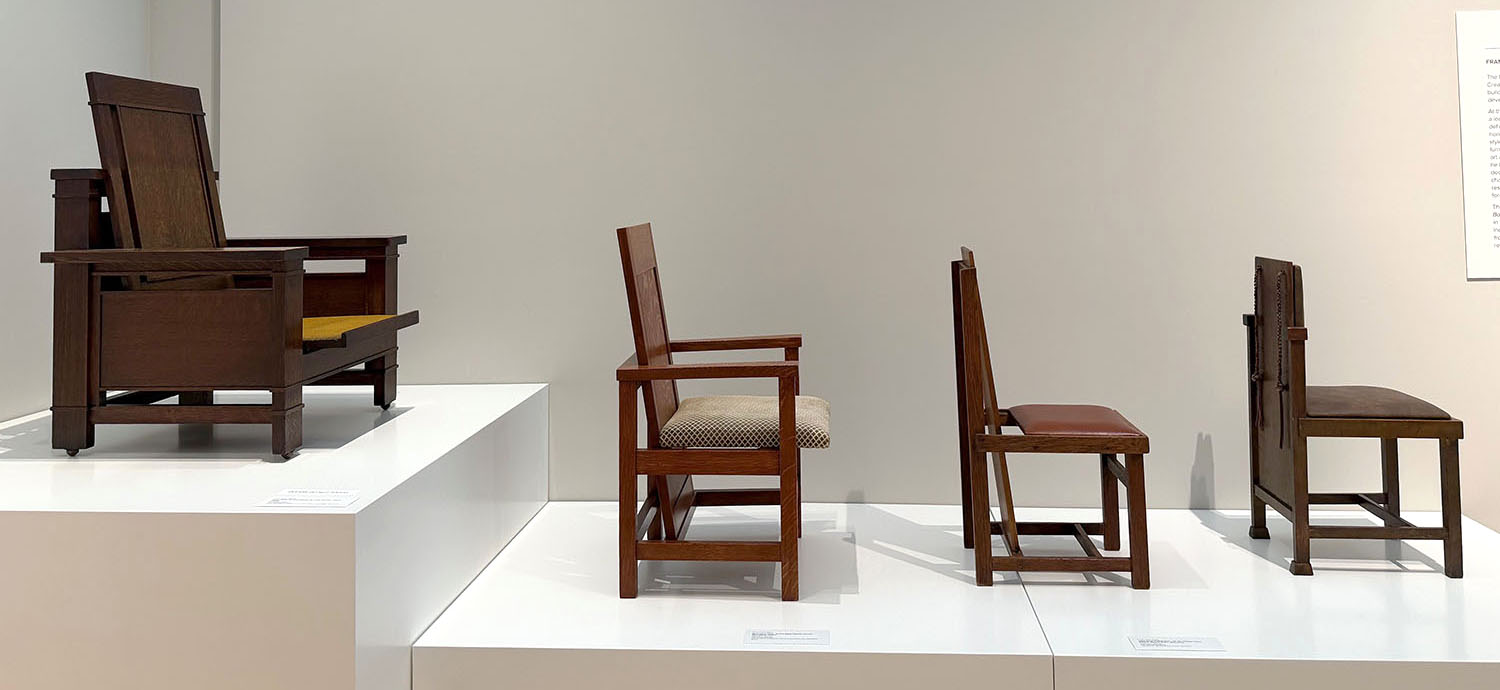
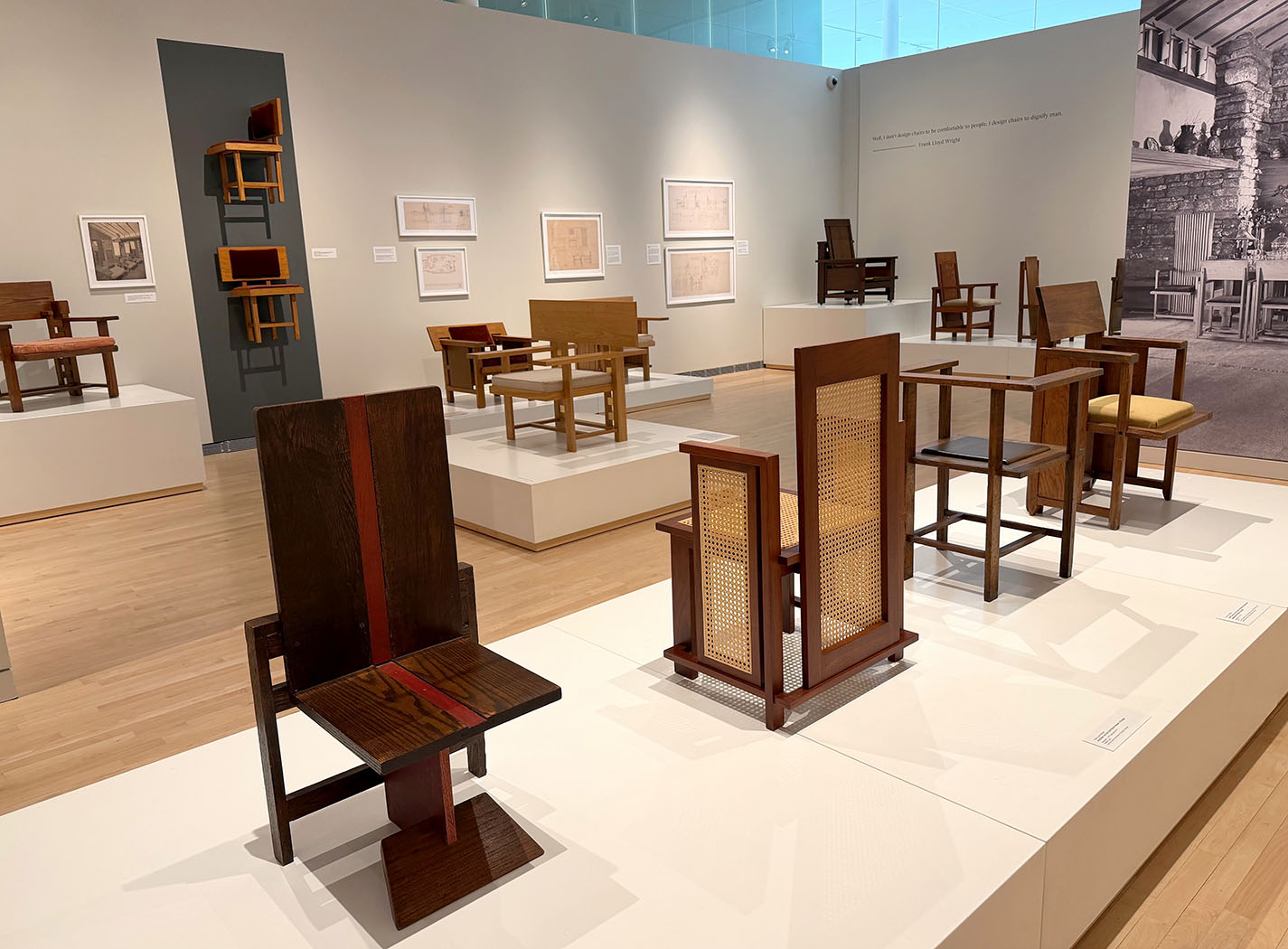
The four pieces at the entry to the show below the quotation from Wright are, from left to right: Easy Chair for Francis W. Little House, Peoria, c. 1903; Musician’s Chair for the Dana-Thomas House, Springfield, c. 1903-1904; Slant Back Chair for the Hillside Home School, Spring Green, c. 1902-1903; and Side Chair for the Avery Coonley Playhouse, Riverside, c. 1912.
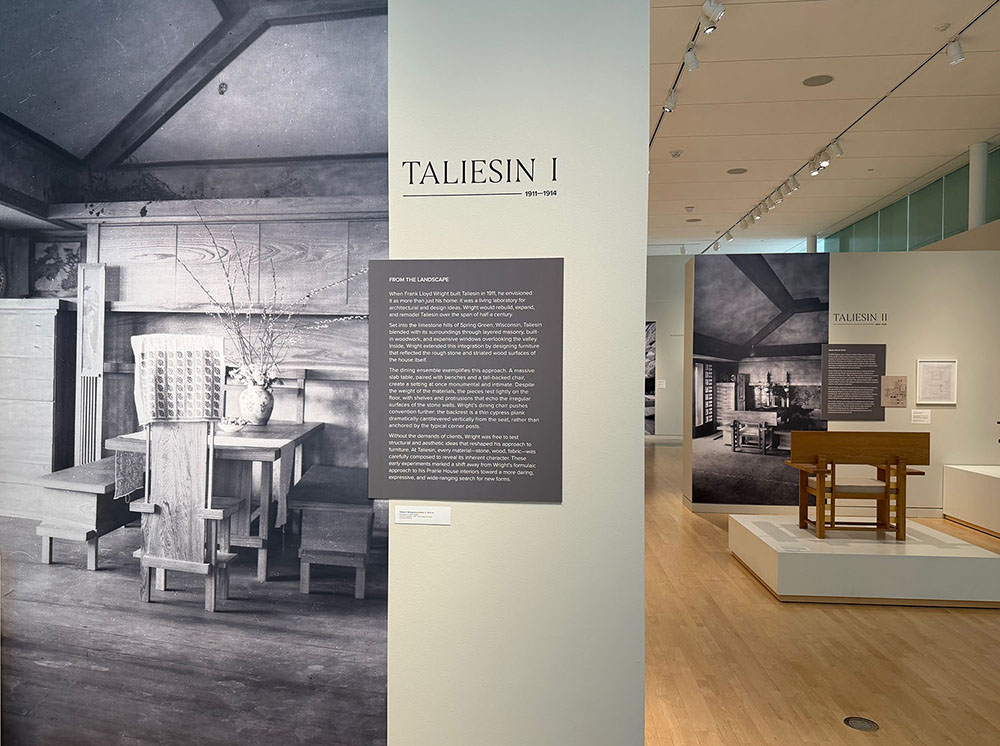
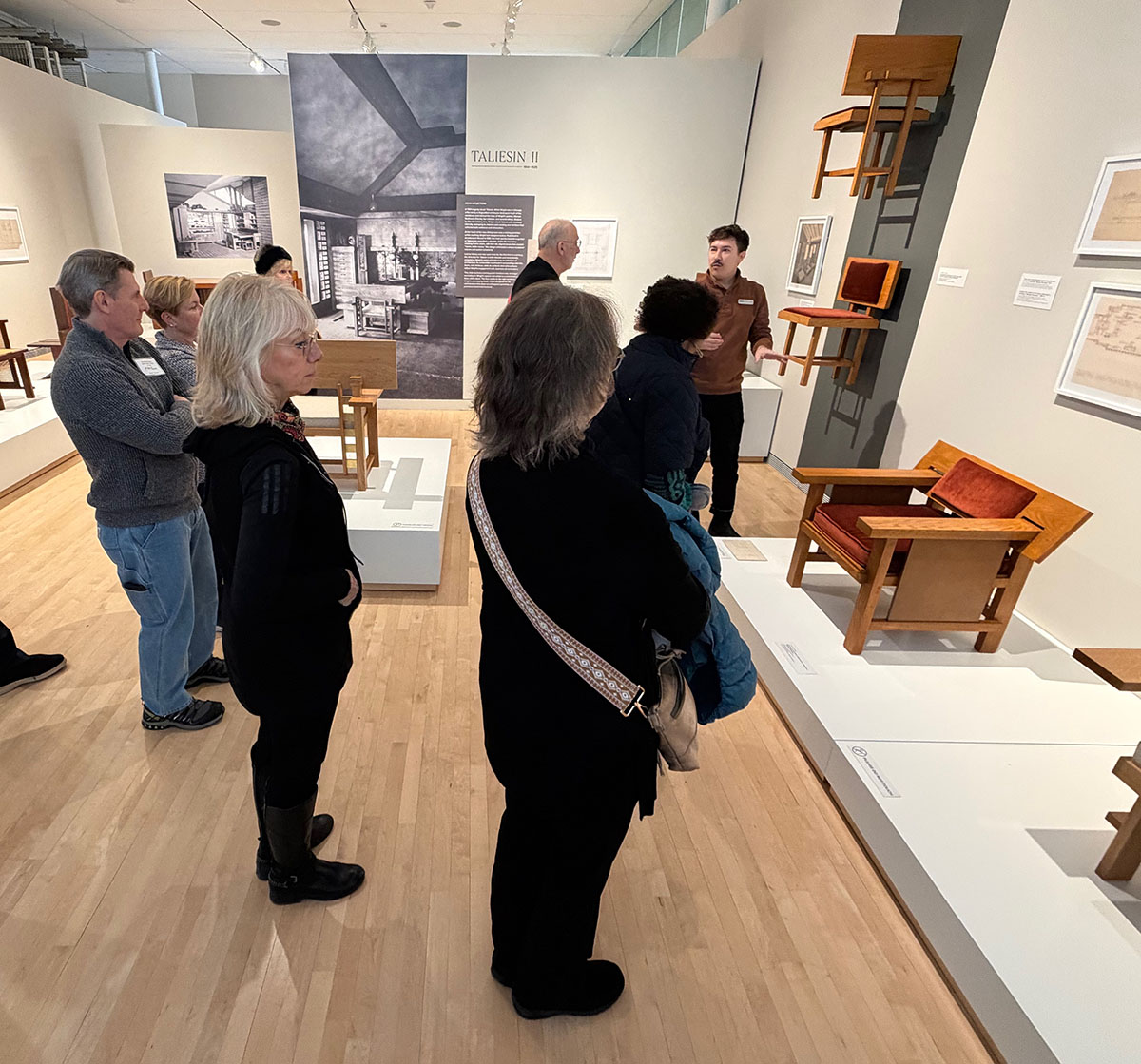
There have been only three research-based books on the subject – three out of how many hundred books about Wright? That was the impetus for the “Frank Lloyd Wright- Modern Chair Design” exhibition at the Museum of Wisconsin art (MOWA) in West Bend, Wisconsin. The exhibit ran from October – January.
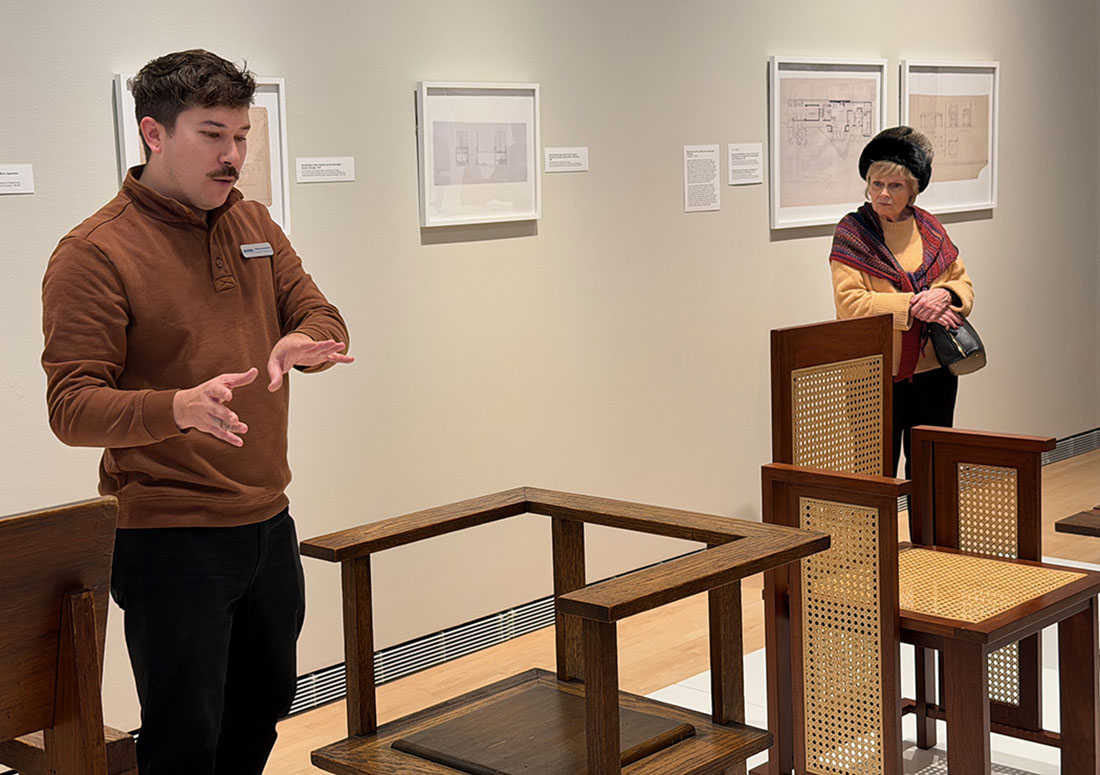
Thomas Szolwinski, MOWA’s Curator of Architecture and Design told guests during a curated tour in January that Wright designed more than 800 pieces of furniture. Some clients elected not to have the furniture built, and some pieces no longer exist. Wright designed “different chairs for different purposes,” noted co-curator Eric Vogel. “Wright was dismissive of his furniture,” and “Wasmuth was not interested in his interiors” for the famous portfolio.
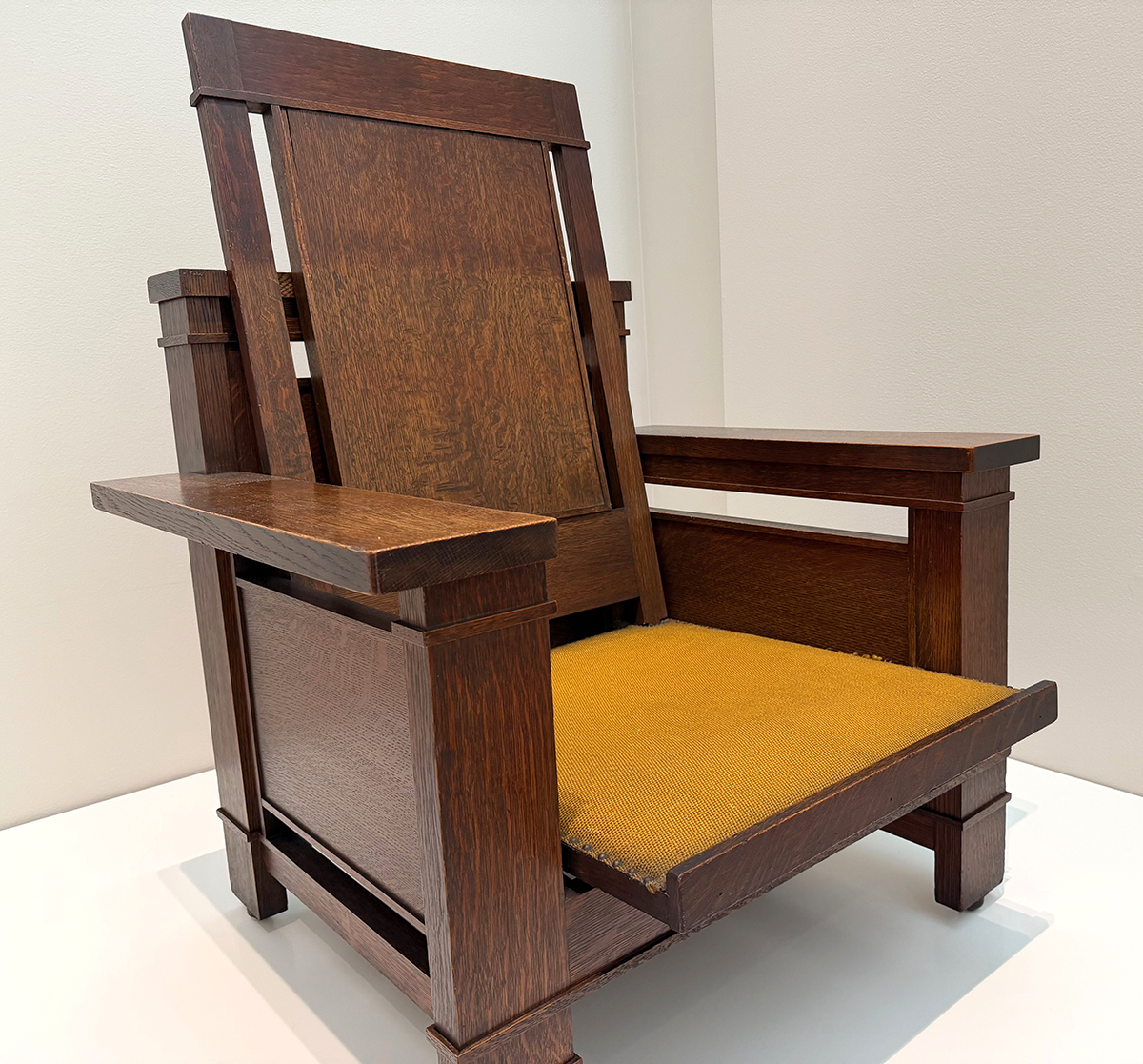
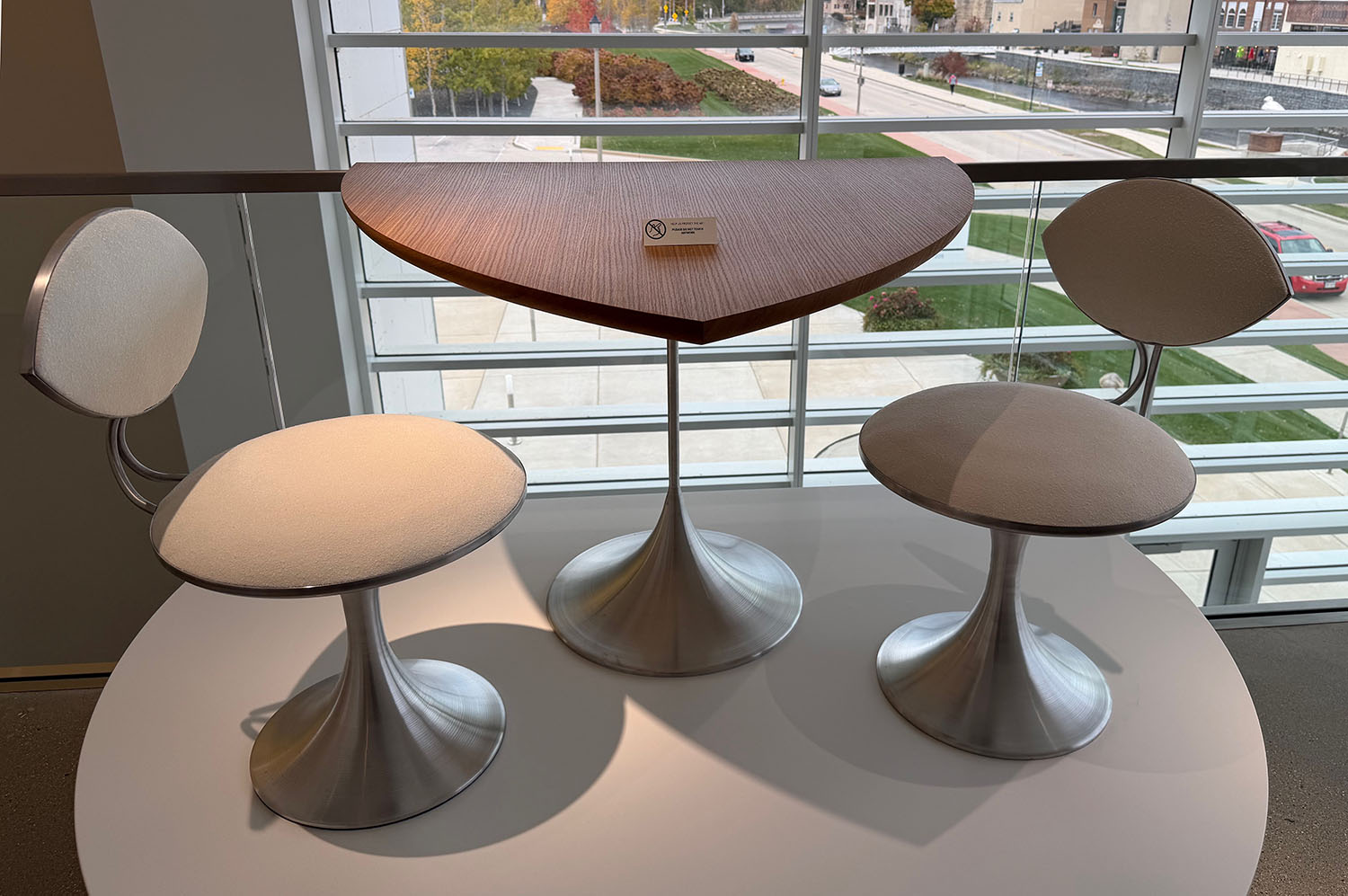
Vogel has examined every one of the Wright furniture drawings. Vogel and Szowinski selected 42 pieces to exhibit. Thirty were located and lent to MOWA. The other dozen were built for the exhibition, meticulously following Wright’s drawings by Current Projects, by Wright’s great grandson S. Lloyd Natof, and by Stafford Norris III, whose mother and step-father are stewards of Wright’s Malcolm and Nancy Willey House in Minneapolis. They used the drawings to make computer models before making wood models of the pieces. The upholsterer was Chad Alexander Matha. The spun aluminum pieces designed for the Guggenheim Museum were fabricated by Butler Metal Spinning Corp.
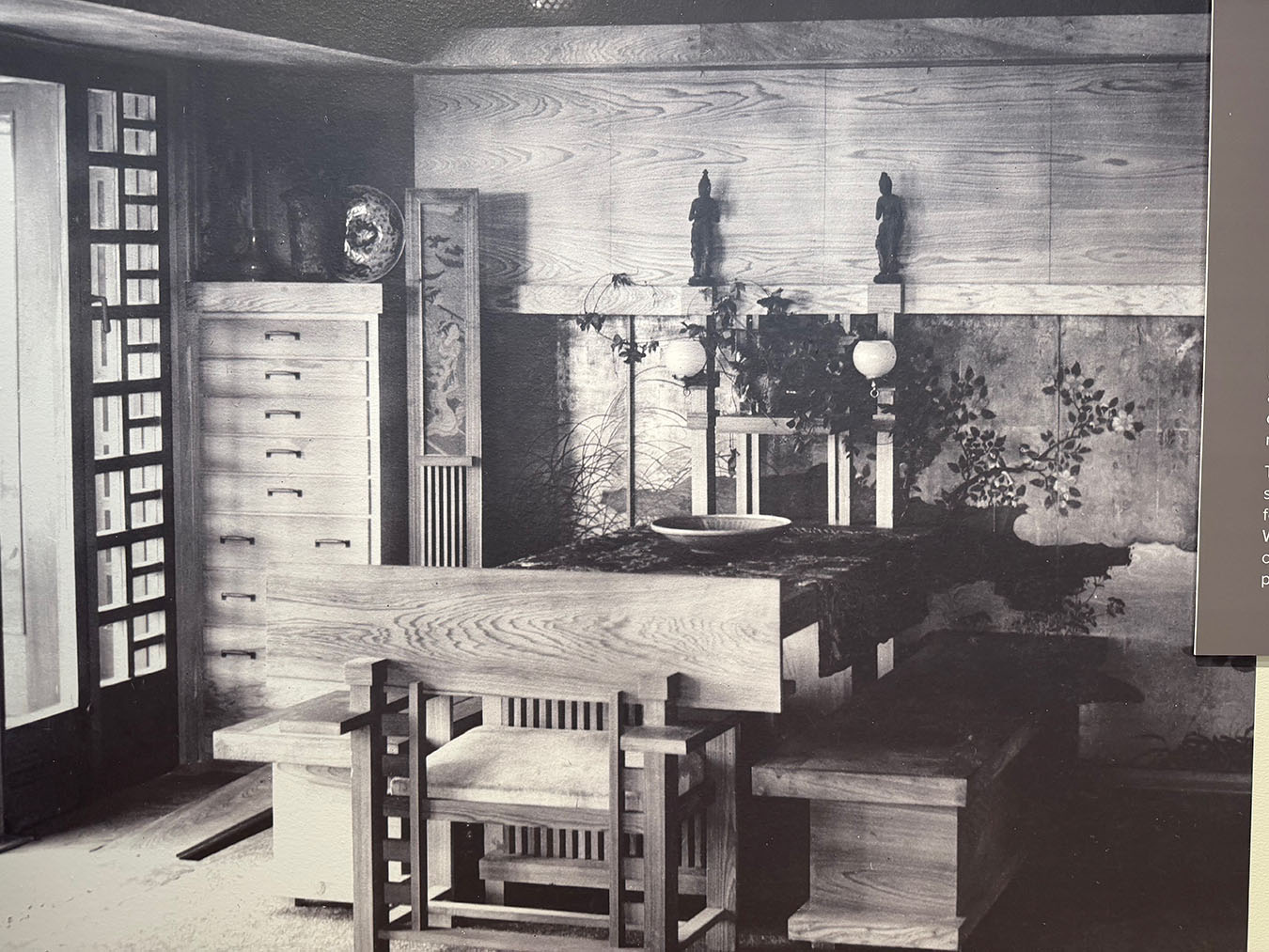
The dining room set from the Malcolm and Nancy Willey House in Minneapolis
Above: Dining Chair for the Emil Bach House, Chicago, c. 1913
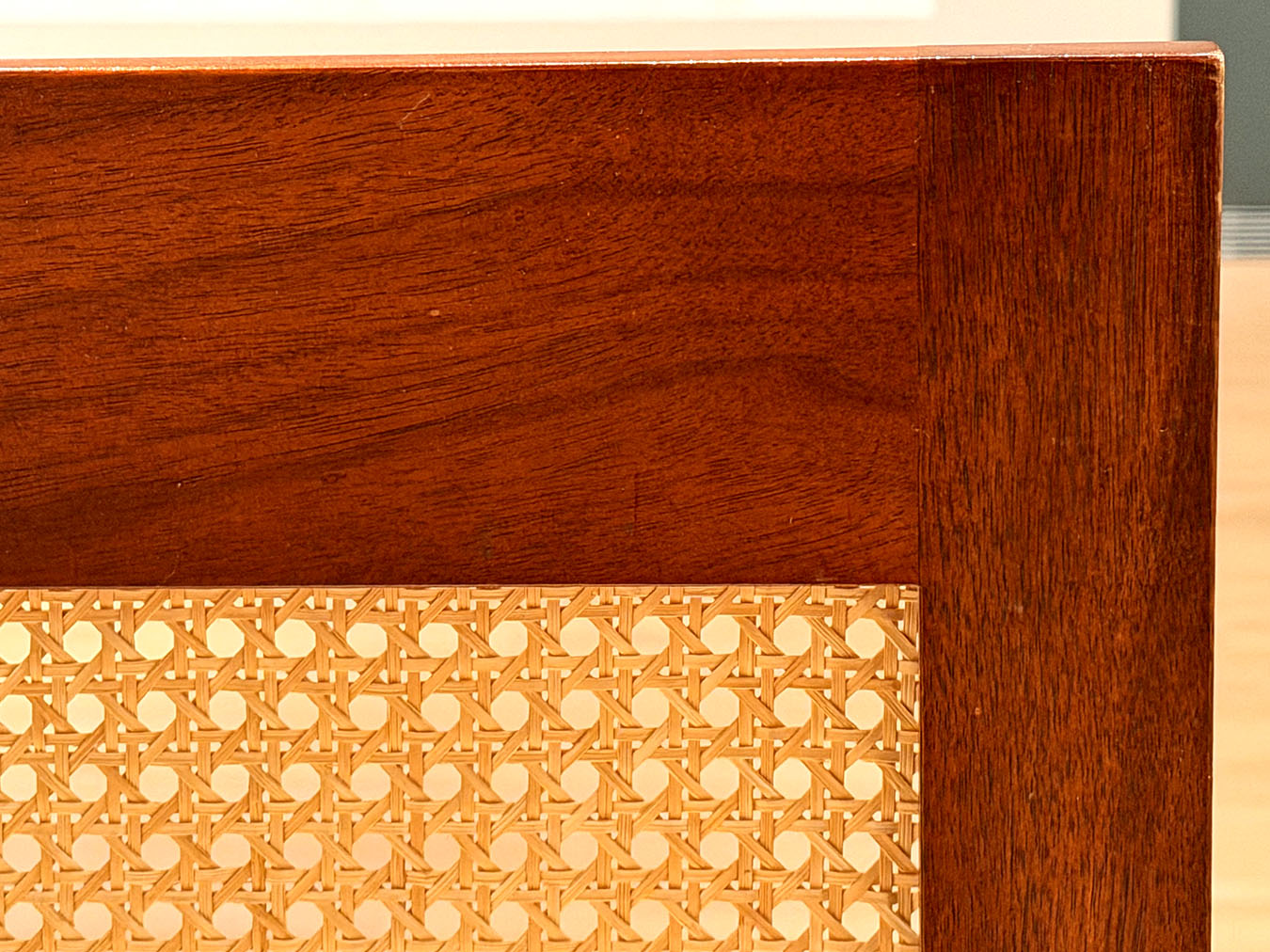
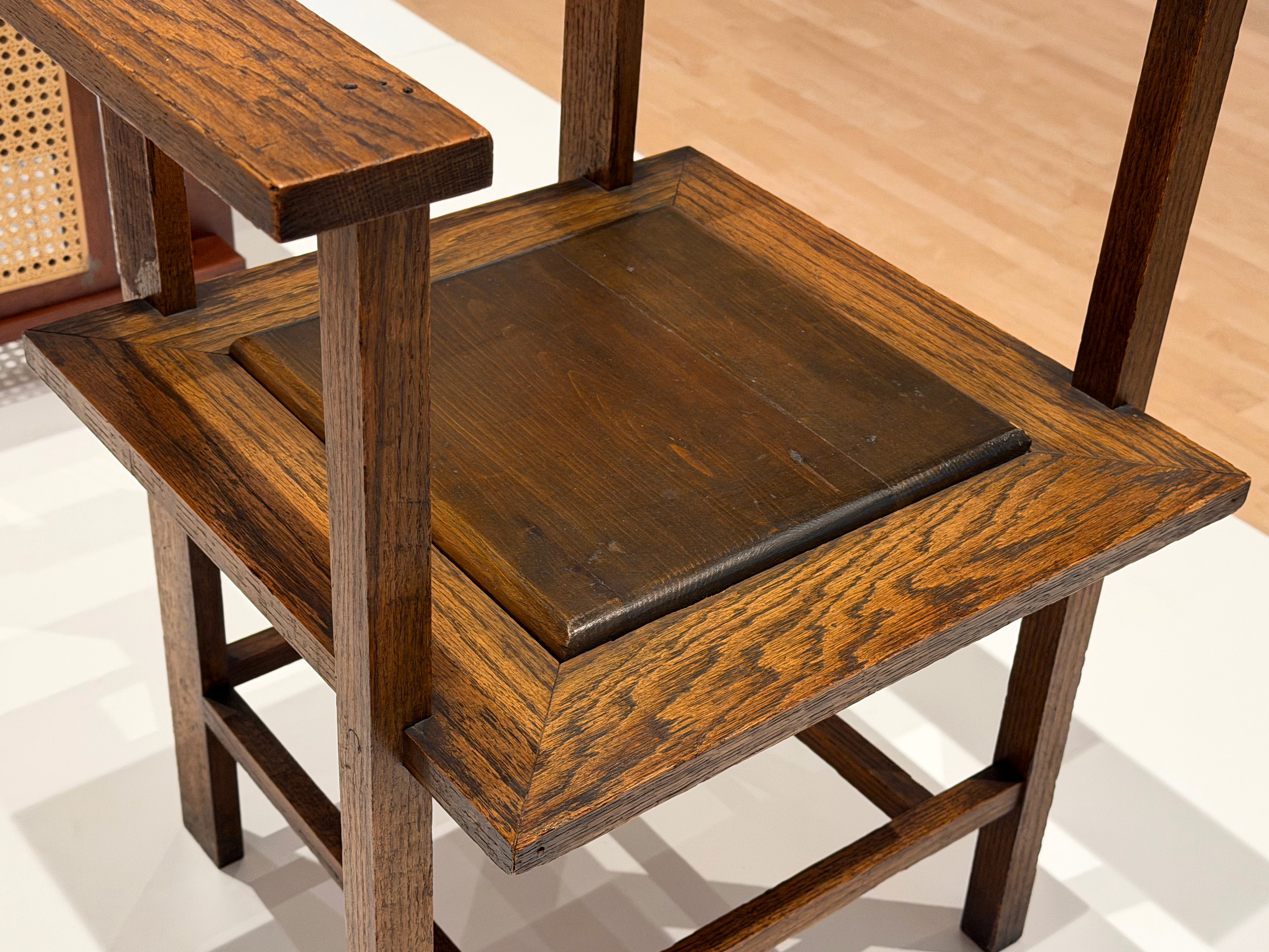
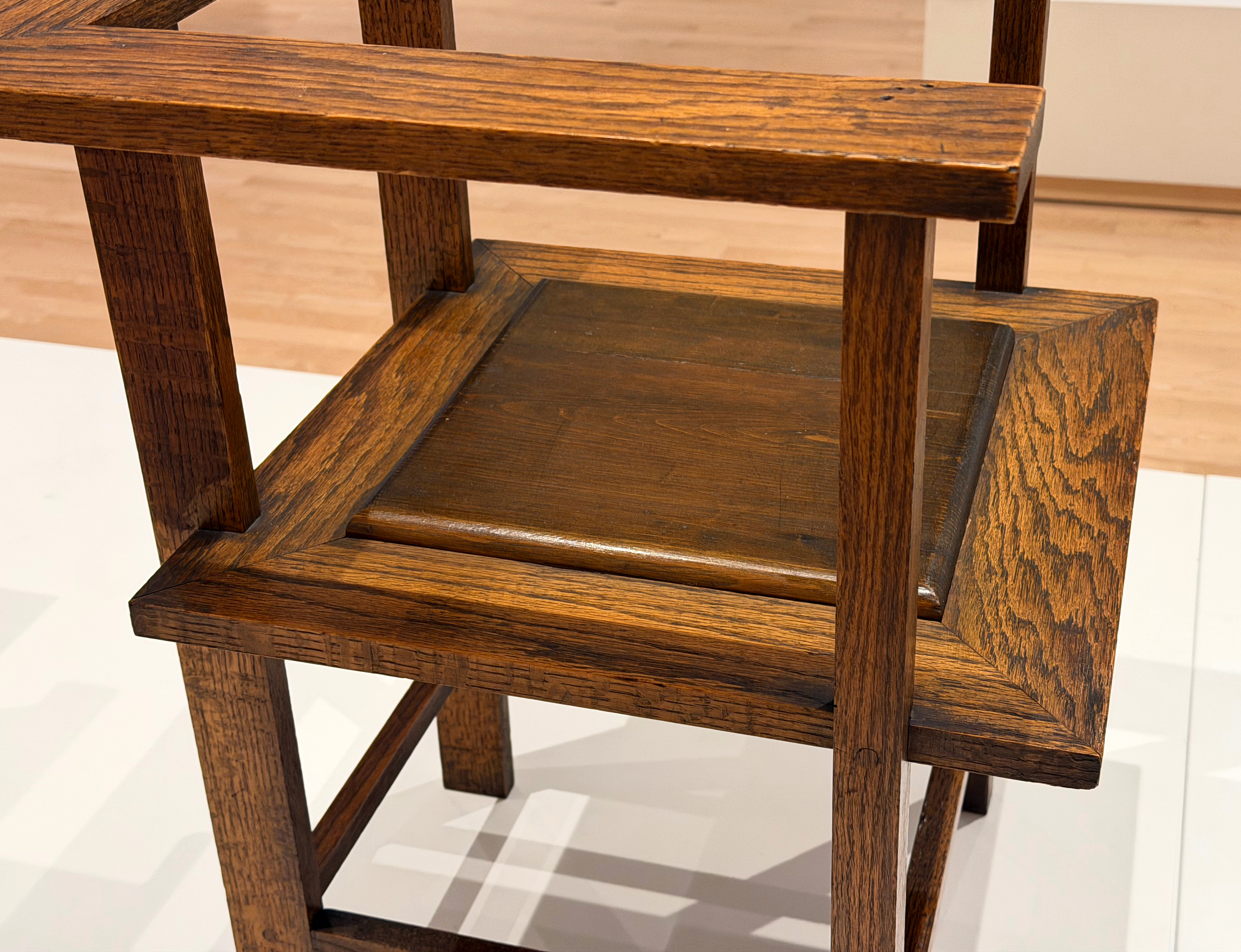
Right: Armchair for Taliesin, Spring Green, designed c. 1929, and second from right, and below, “Mori” Chair for the S. Mori OrientalArt Studio and Japanese Print Shop, Chicago, designed c. 1914
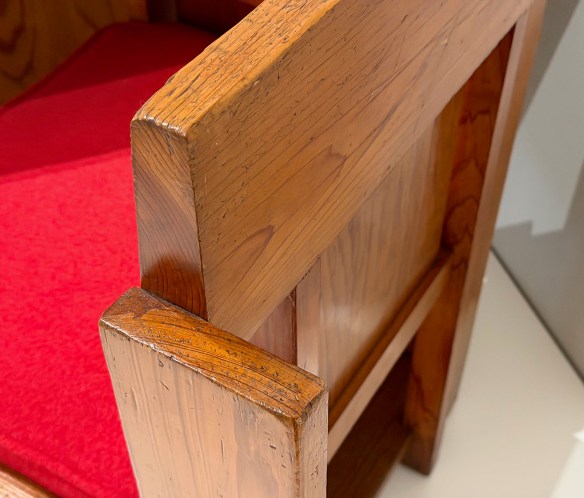
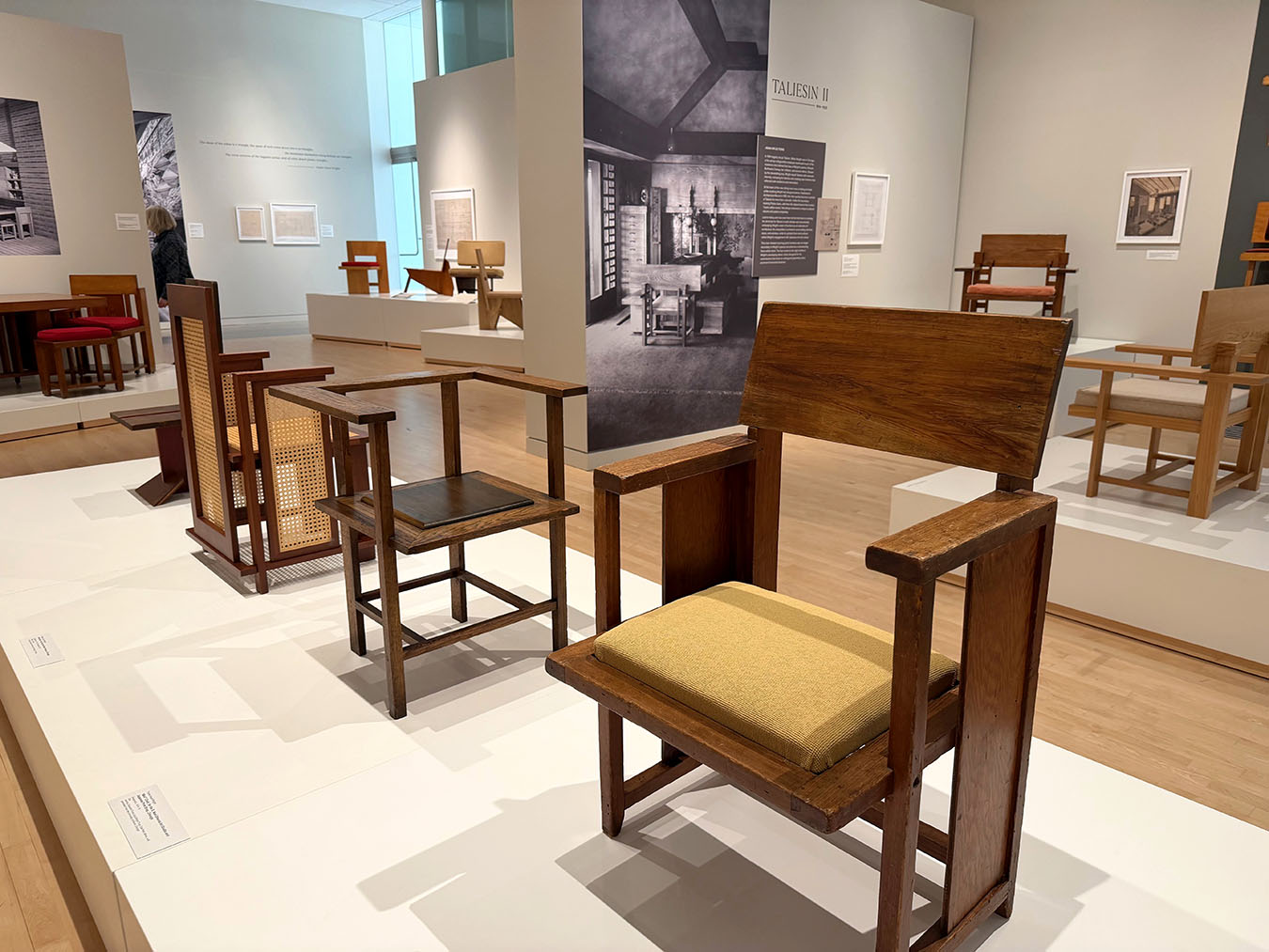
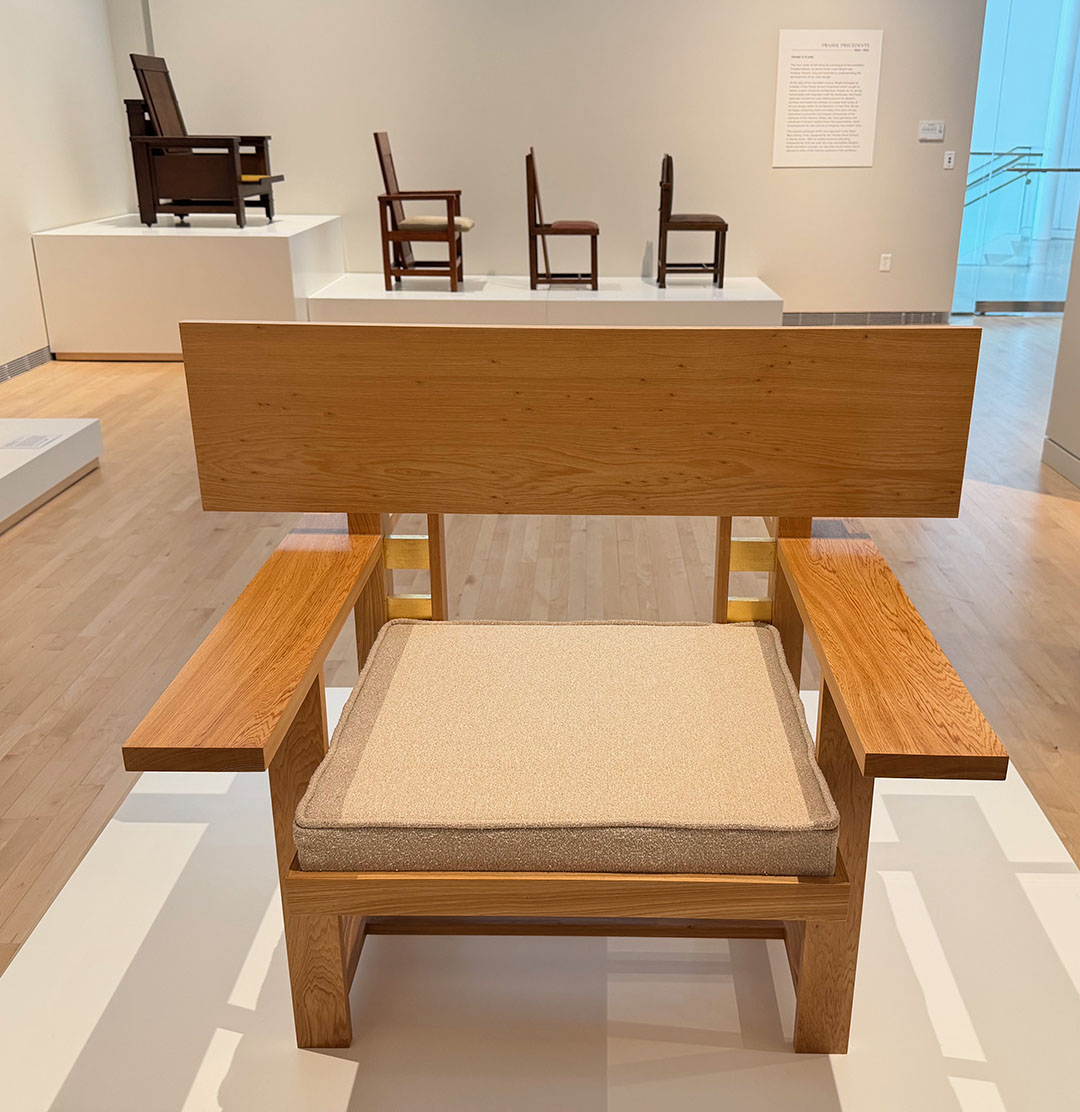
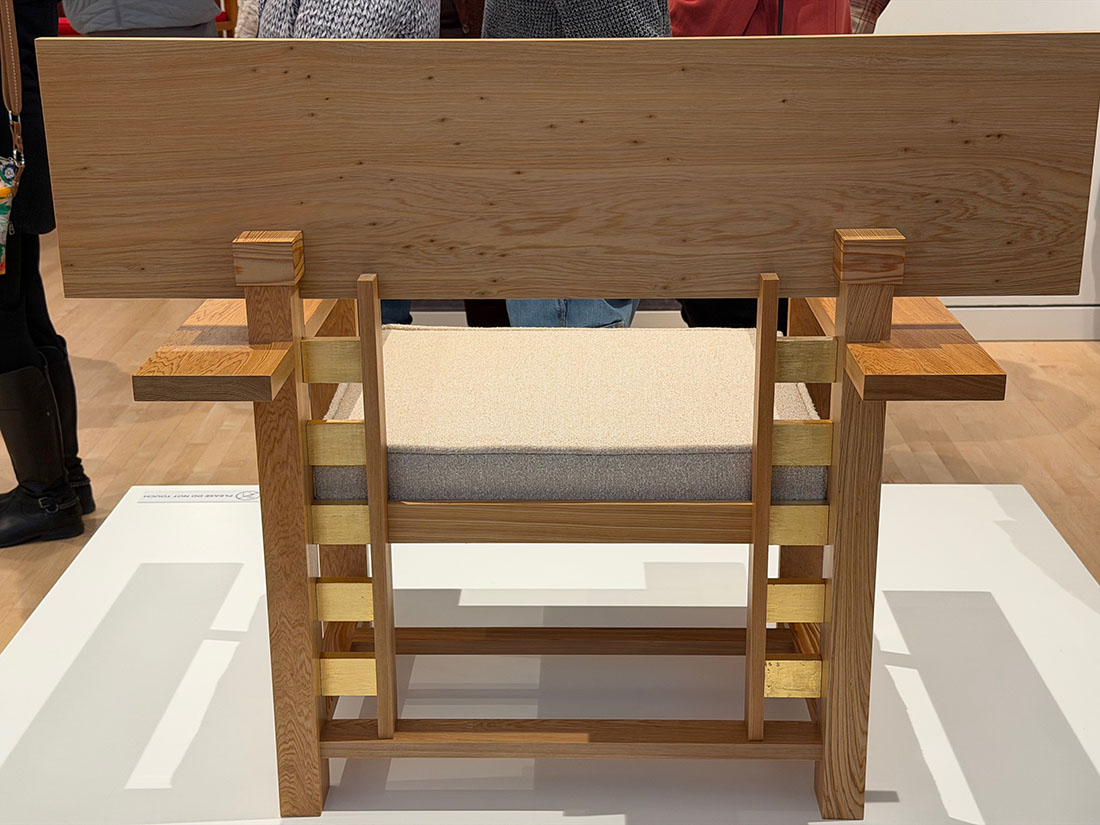
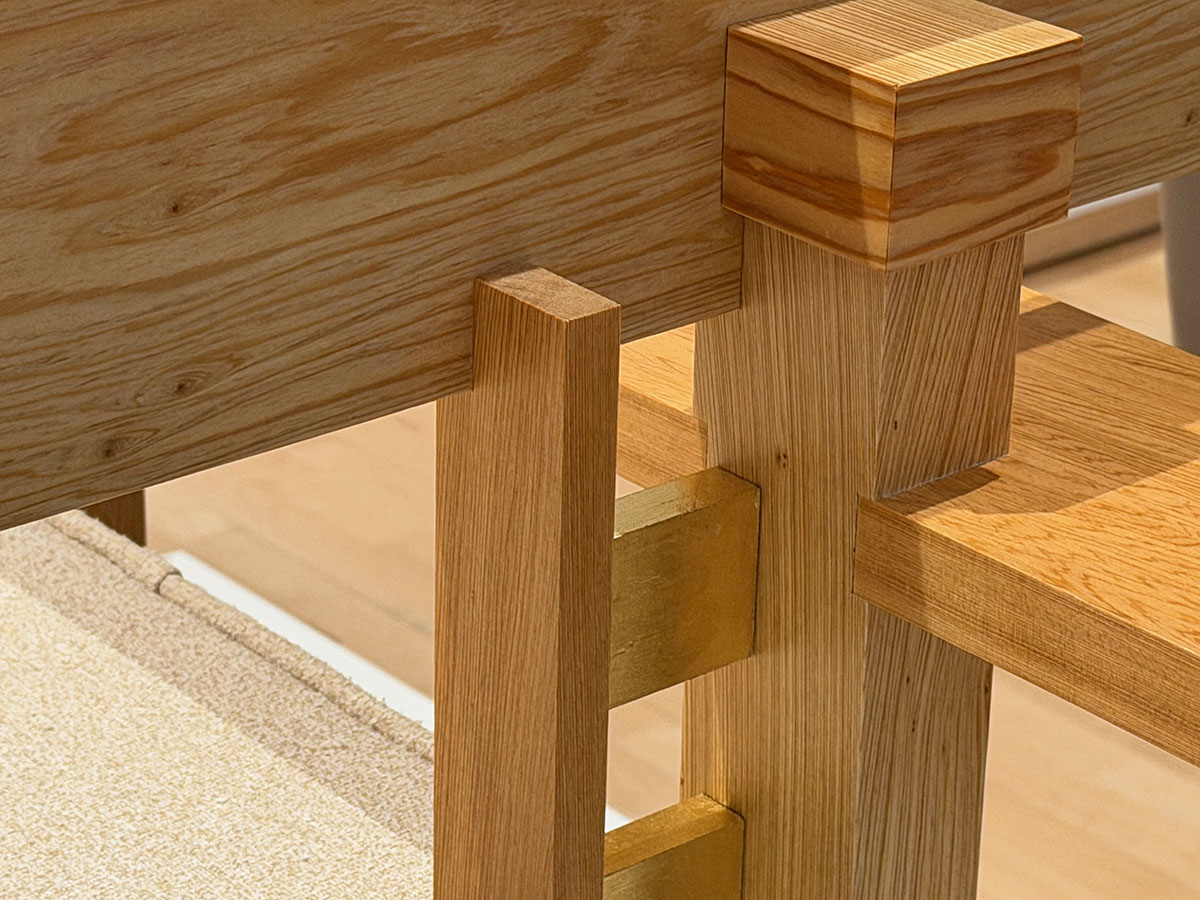
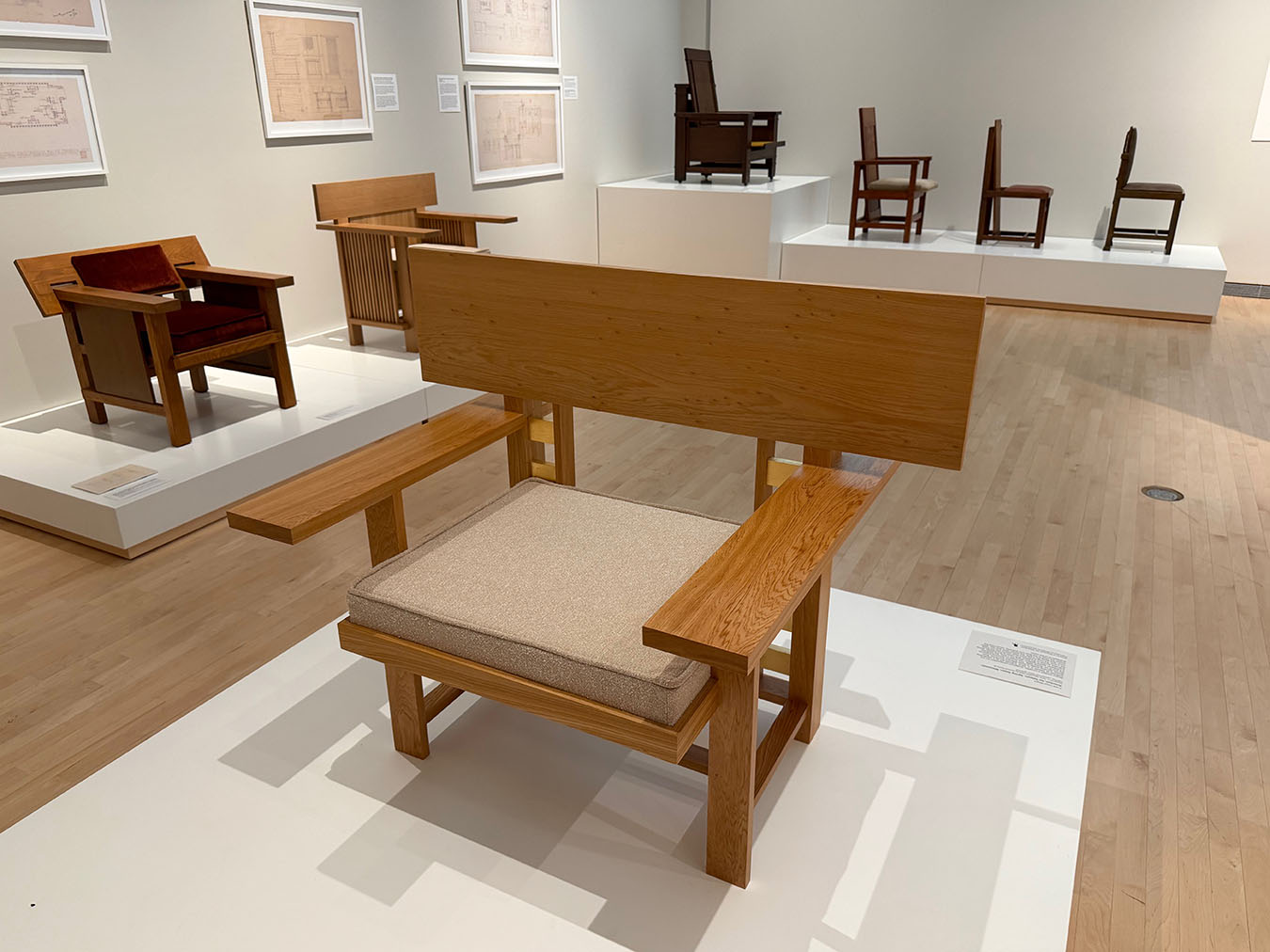
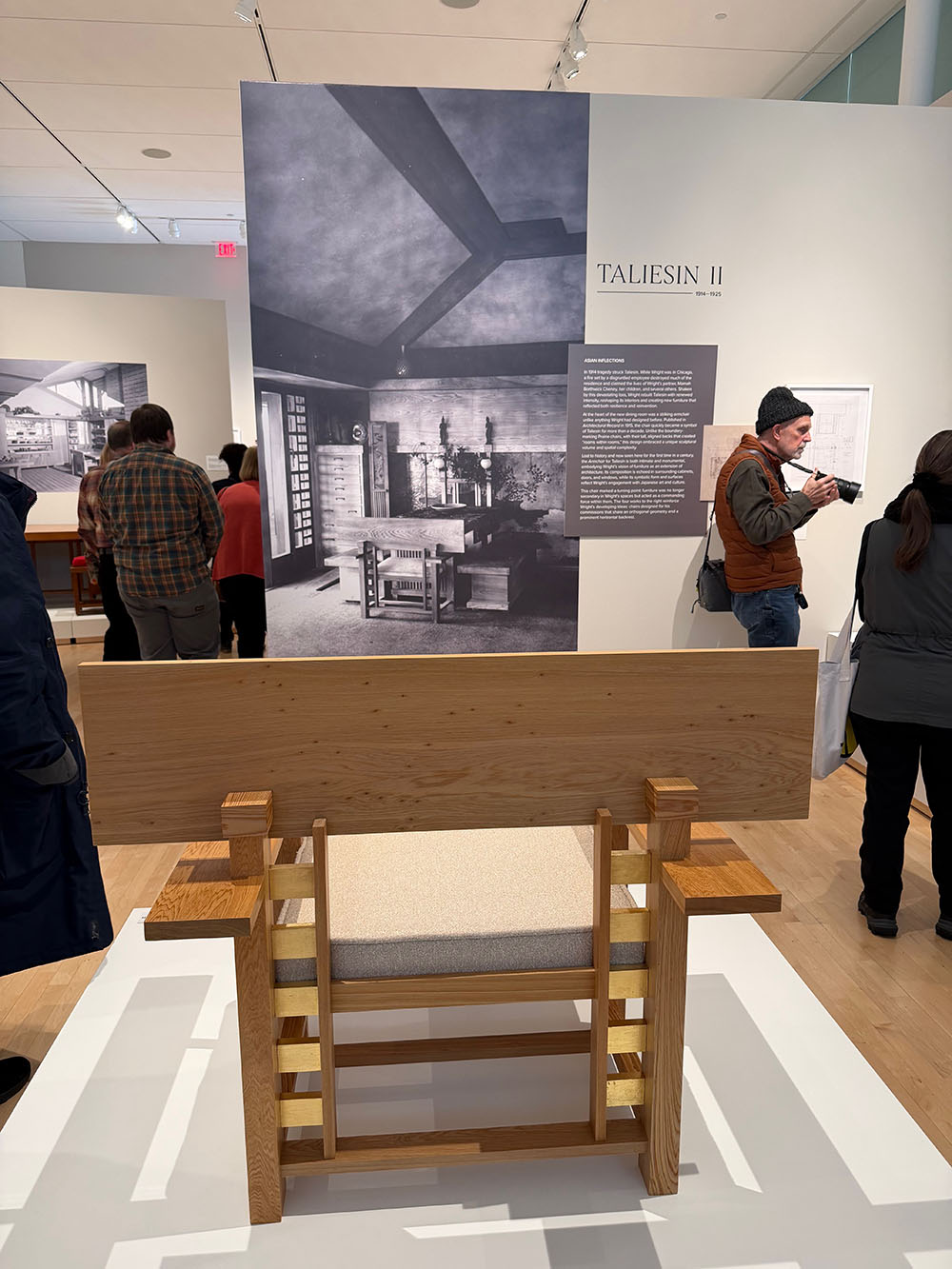
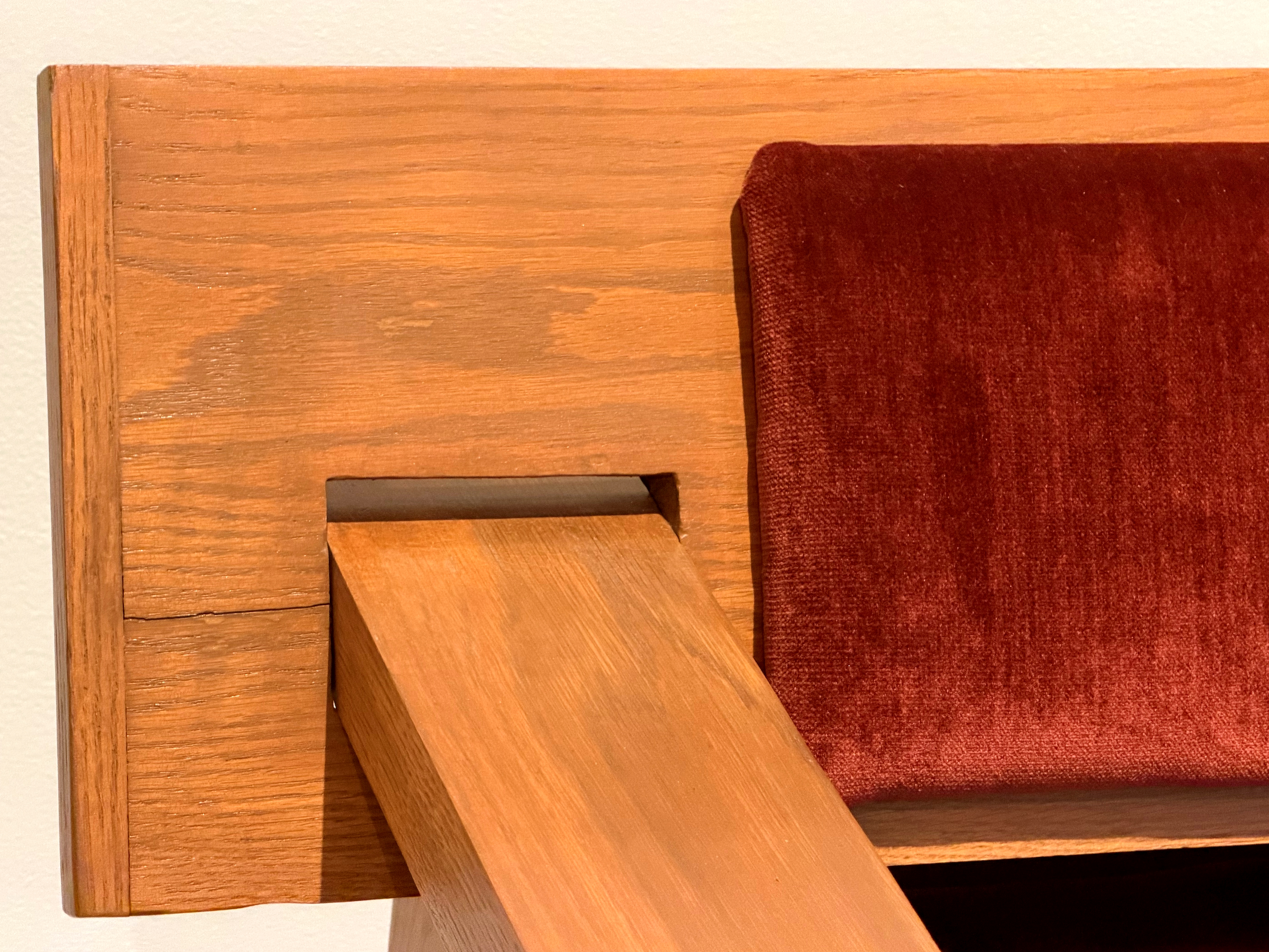
Above and below: Armchair for Taliesin, designed c. 1914; fabricated 2025 by Stafford Norris III
Szolwinski noted how details of the chair echoed the windows at left.
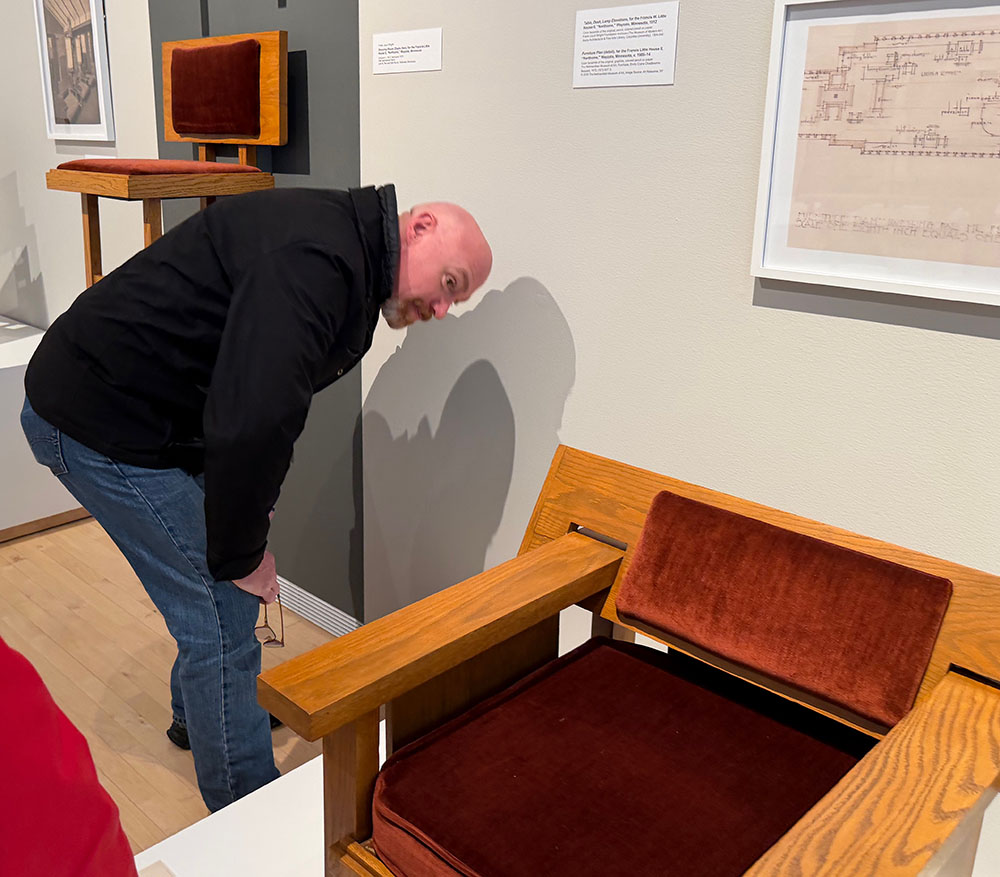
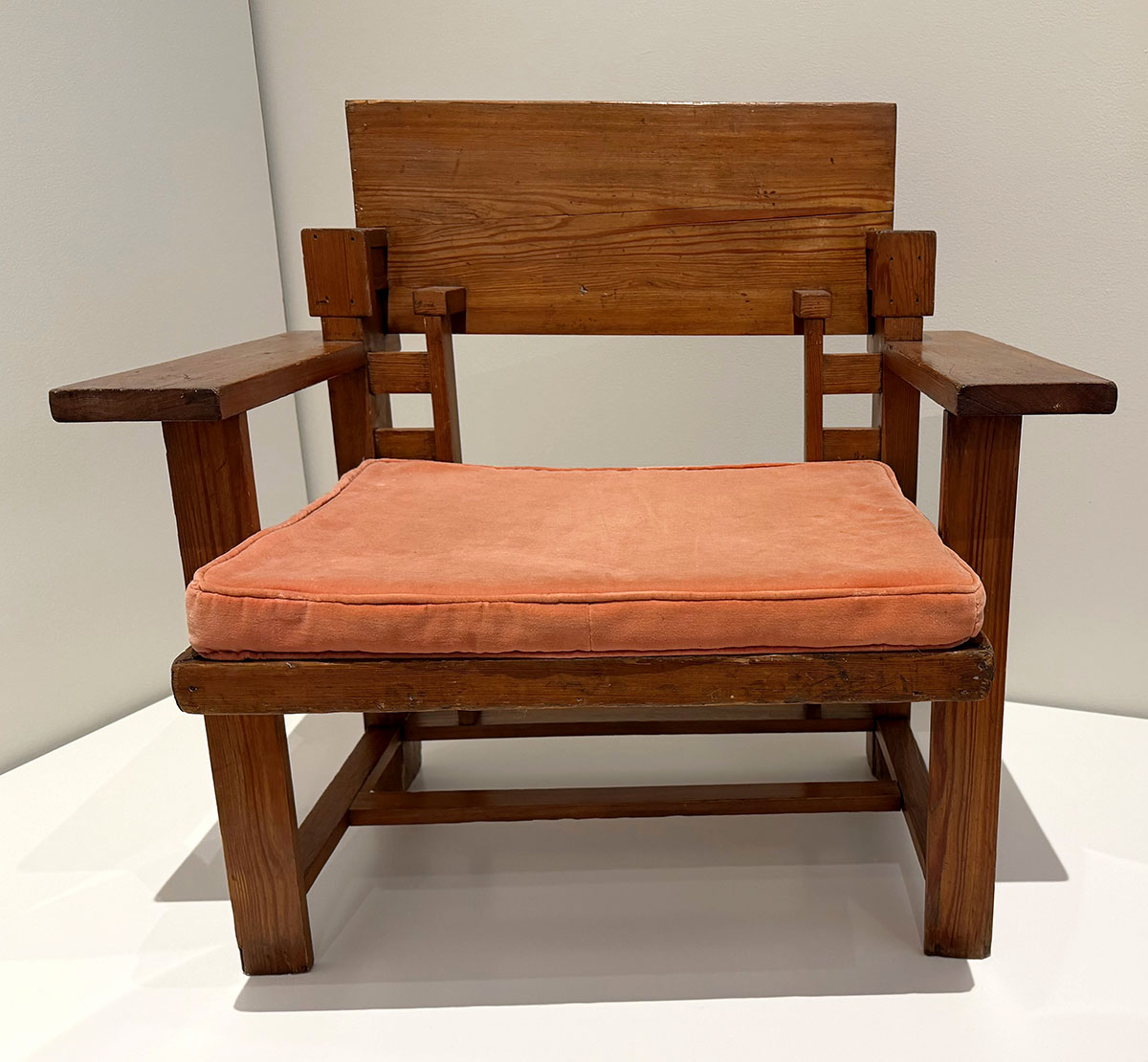
Above: Armchair for Taliesin, designed 1914
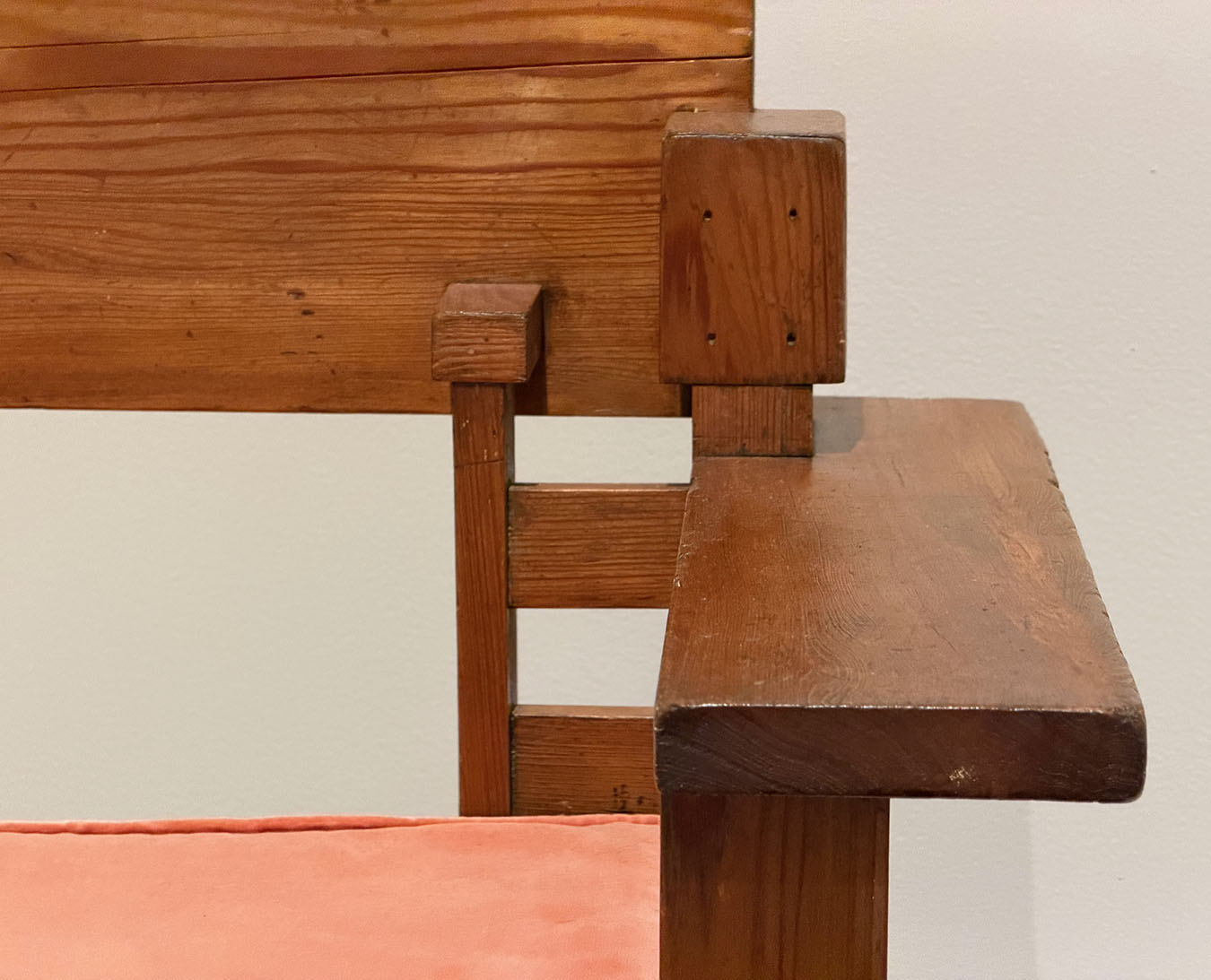
Above: Armchair for the Francis Little House II, “Northome,” Wayzata, Minnesota, designed c. 1913; fabricated 1970
Chair for the A. D. German Warehouse, Richland Center, Wisconsin, designed c. 1935; fabricated 2025 by Current Projects
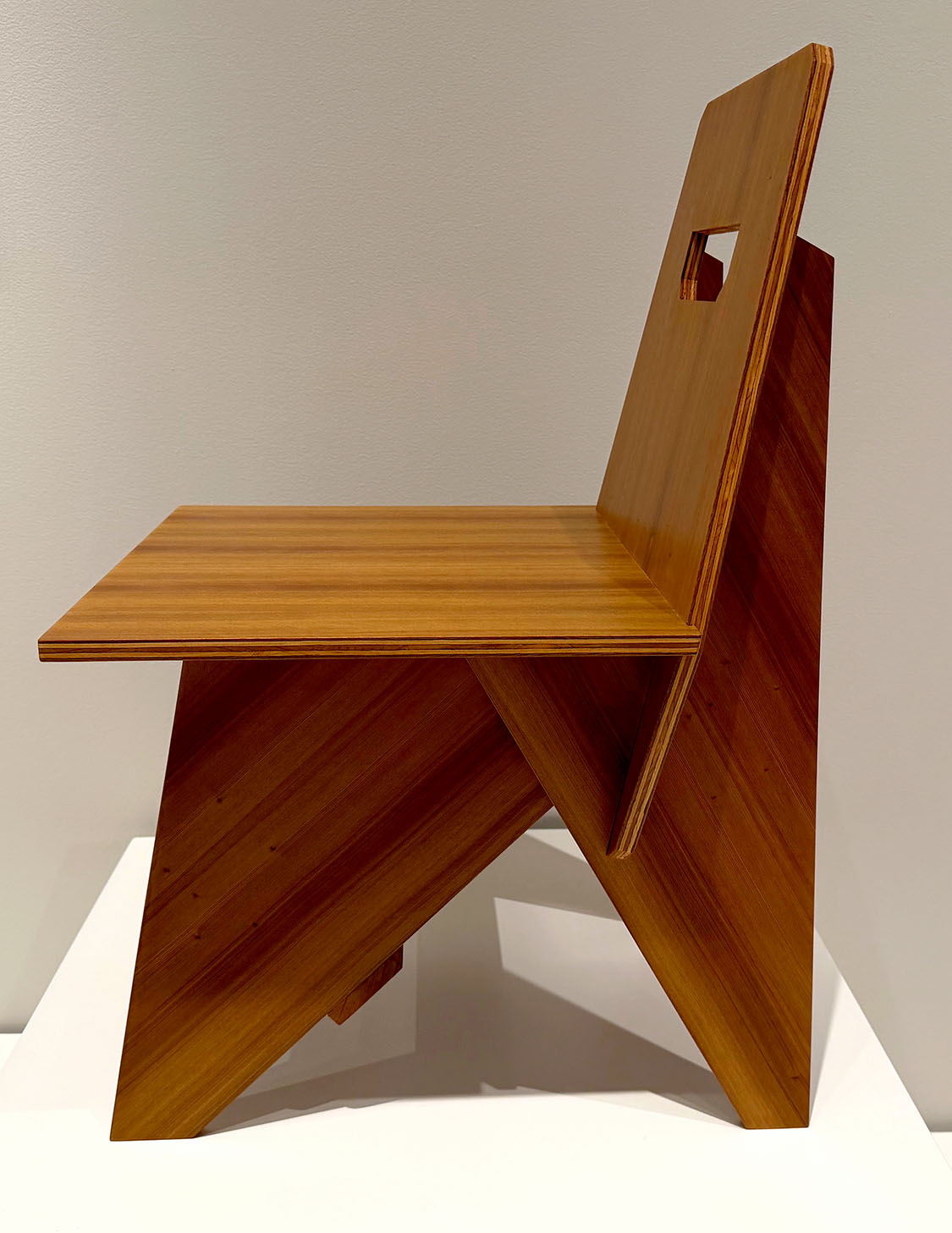
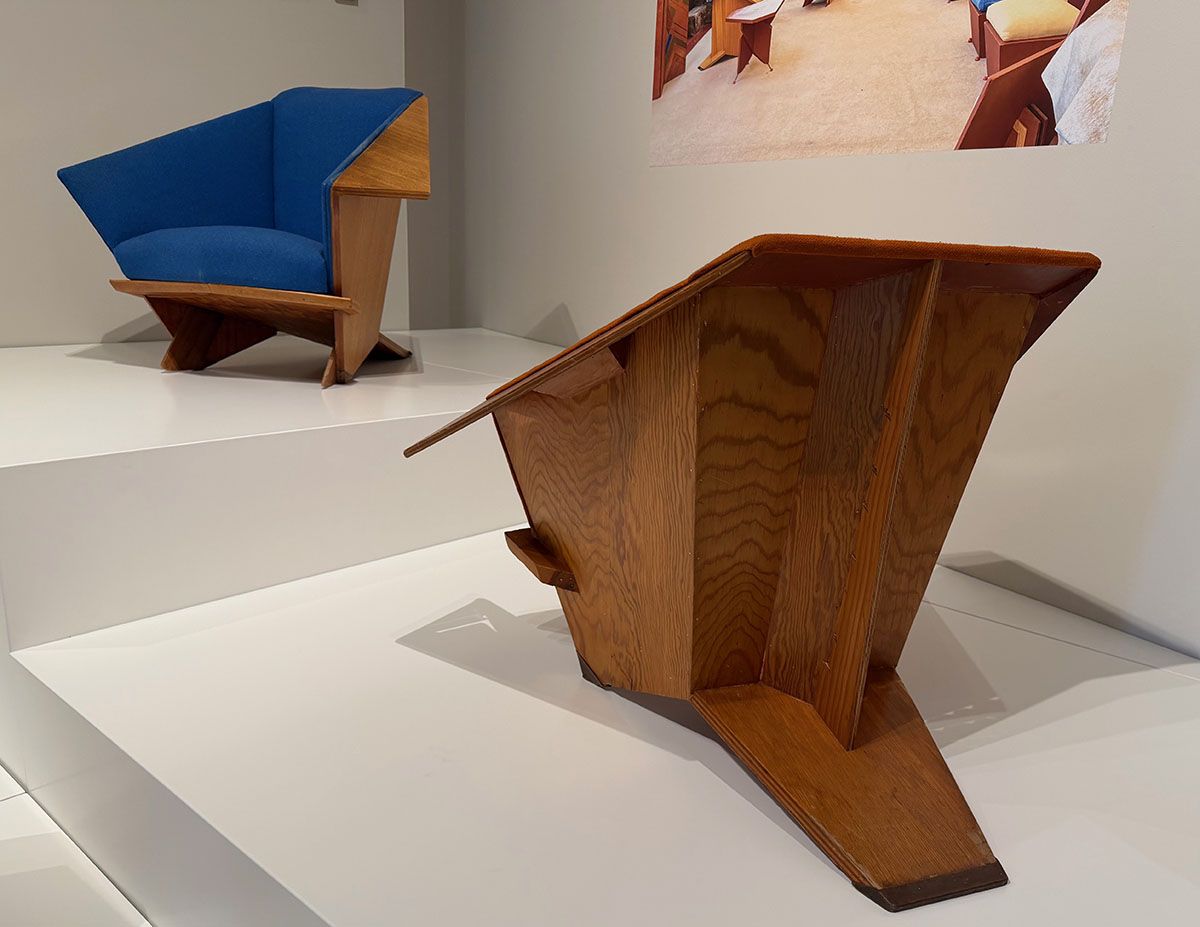
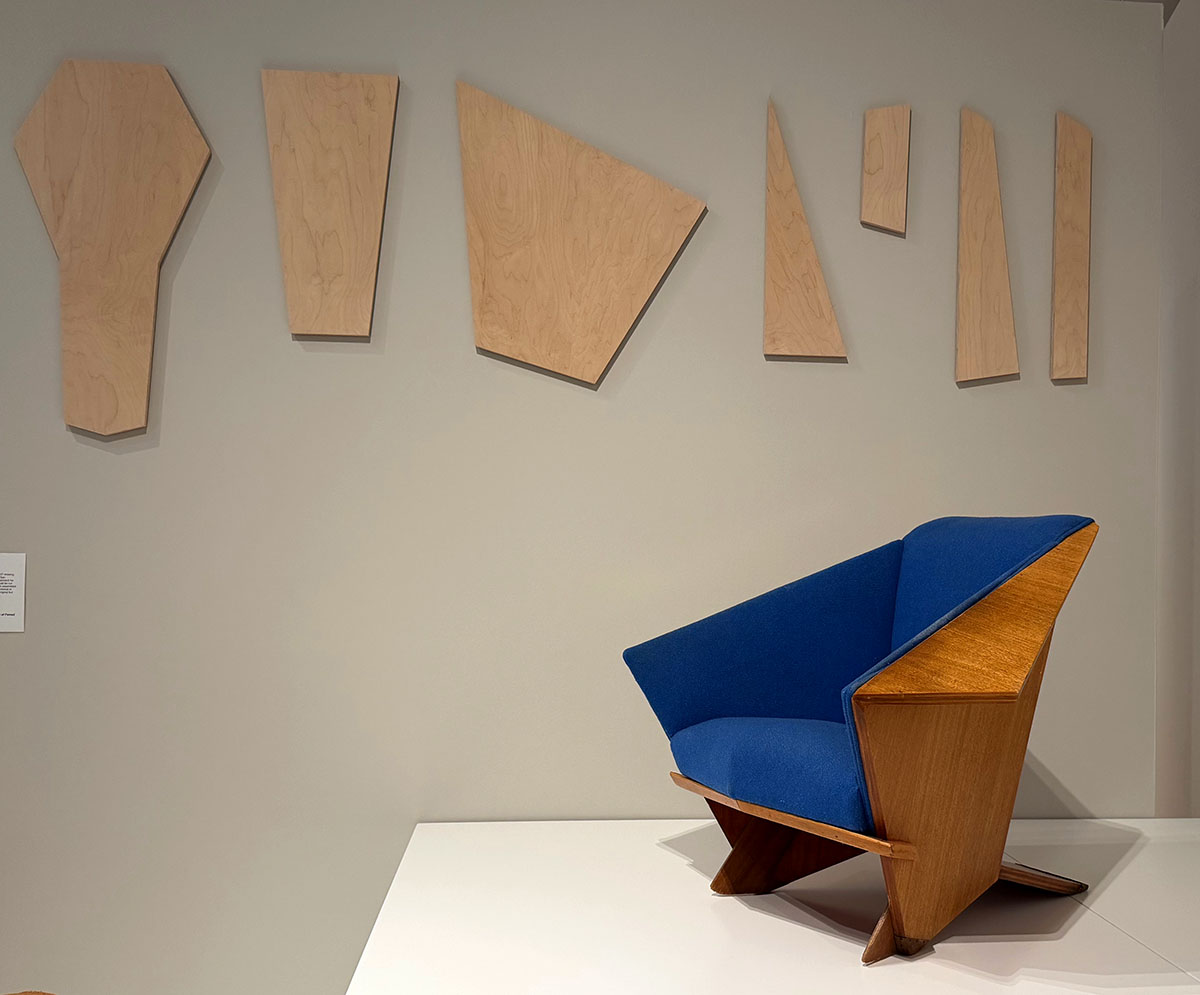
Above, Ten pieces make up the famous “Origami” Armchair for Taliesin West, Scottsdale, Arizona, designed 1946
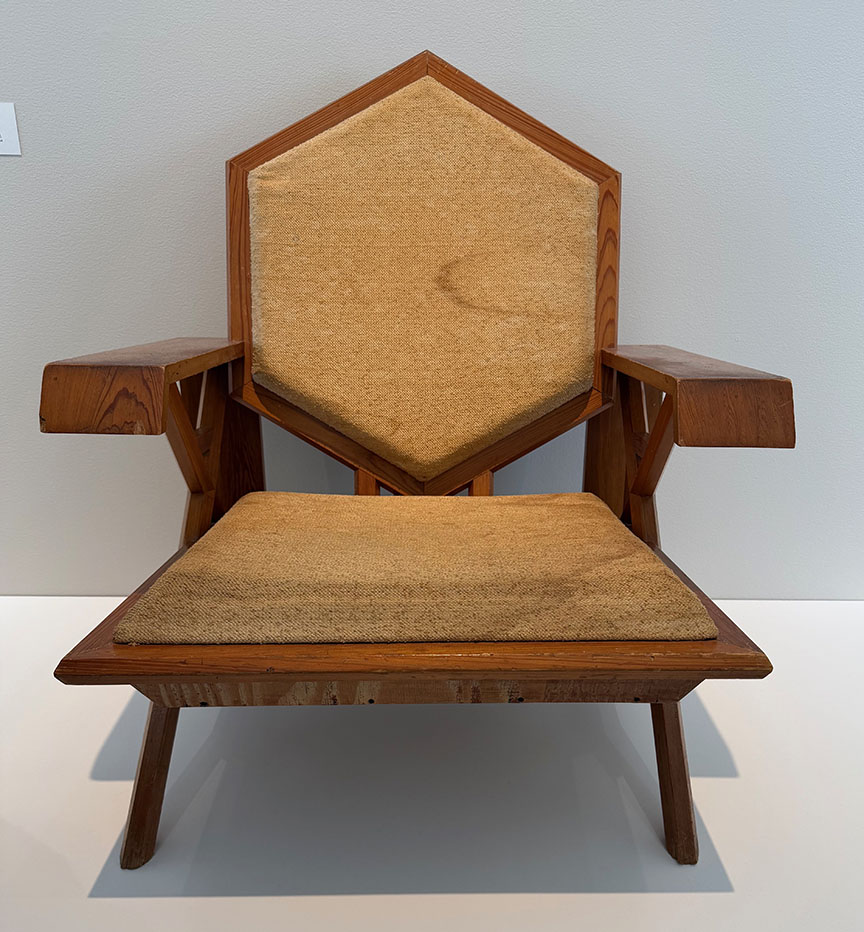
Honeycomb Lounge Chair, Prototype for Heritage–Henredon, Henredon Furniture Co., Morganton, North Carolina, designed c. 1955
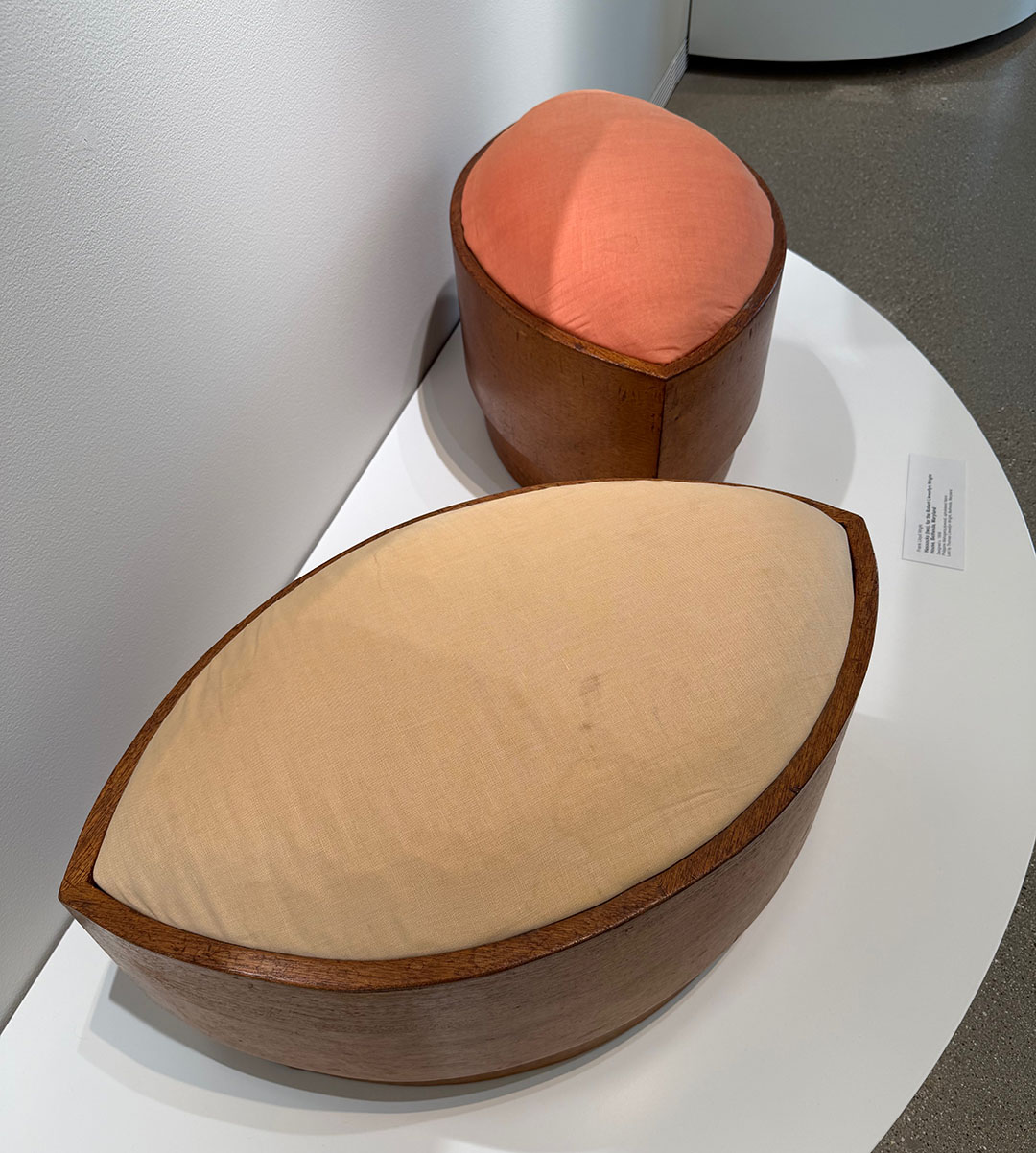
Again, furniture echoes the design of the house…here are hassocks for the Robert Llewellyn Wright House, Bethesda, Maryland, designed c. 1957–58
Café Chairs and table for the Solomon R. Guggenheim Museum, New York, designed c. 1957; fabricated 2025 by Butler Metal Spinning Corp.
The museum partnered with the Frank Lloyd Wright Foundation to develop the exhibition. The 30 extant pieces were lent by 15 institutions and homeowners, integrating Wright’s furniture with his architecture. Szolwinski said there were three obstacles faced by the curators, “Time, money, and space.” The fabricators of the new pieces were sometimes challenged by ambiguities in the drawings. Using Taliesin as “a lens to see what [Wright] did” the curators looked for lesser known designs, eschewing, for example, the well known pieces designed for the Larkin Building and the SC Johnson Administration Building. Wright designed more flexible furniture beginning in the 1930s, as his house designs became smaller with the leap from Prairie-style to the Usonian designs. This was also some of the earliest use of construction plywood, “It was thin, but strong, and affordable.”
Further reading: I have presented only an overview of this important exhibition. I highly recommend the exhibition book published by MOWA. It is written by Szolwinski and Vogel, with the assistance of Jennifer Gray of the Frank Lloyd Wright Foundation. She is Vice President of the Foundation and Director of the Taliesin Institute:
The Winter 2025 issue of the Frank Lloyd Wright Quarterly is devoted to “The Evolution of Frank Lloyd Wright’s Furniture: and has four important articles. The Quarterly is available only to members of the Frank Lloyd Wright Foundation. Follow this link to join: https://franklloydwright.org
Please scroll down for earlier posts on this website.
Frank Lloyd Wright had a commission from H.F. Johnson Jr. to design a new YWCA building in Racine, Wisconsin in 1949. I first wrote about it in 2004 in my book Wright in Racine (Pomegranate). It came to mind again last week when http://www.racinecountyeye.com, a local news website published a news story about a zoning controversy involving the non-Wright building which is now for sale again. The zoning controversy involves a social services agency that wants to buy the building that was last used as a church. I told them about the Wright angle to the story, and they published my piece, updated. I am posting a link to the story because that way you can see two of Wright’s drawings. I cannot independently post the drawings to this website because of copyright considerations, which cannot be addressed during the holidays. The Frank Lloyd Wright Foundation and the Avery Library kindly gave permission for these two drawings to be used with the piece on Eye:
This essay begins with a confession. In 1999 Cindy and I went to Fallingwater. I was interested in Frank Lloyd Wright’s work, but I had not done any research about it. I had photographed his work in Racine, Wisconsin, where we live, and I had, of course, heard about Fallingwater. So, why not a road trip there? We saw a brochure for something called “Kentuck Knob” but didn’t pay any attention to it. Neither our docent or ticket – seller at Fallingwater asked if we knew that there is another house by Wright in the neighborhood. And so it was until our next visit to Fallingwater in March 2010 that we knew I blew it in 1999 by not picking up that Kentuck Knob brochure from one of those ubiquitous racks with myriad travel brochures that I tend to just walk past at highway rest stops and in hotel lobbies.
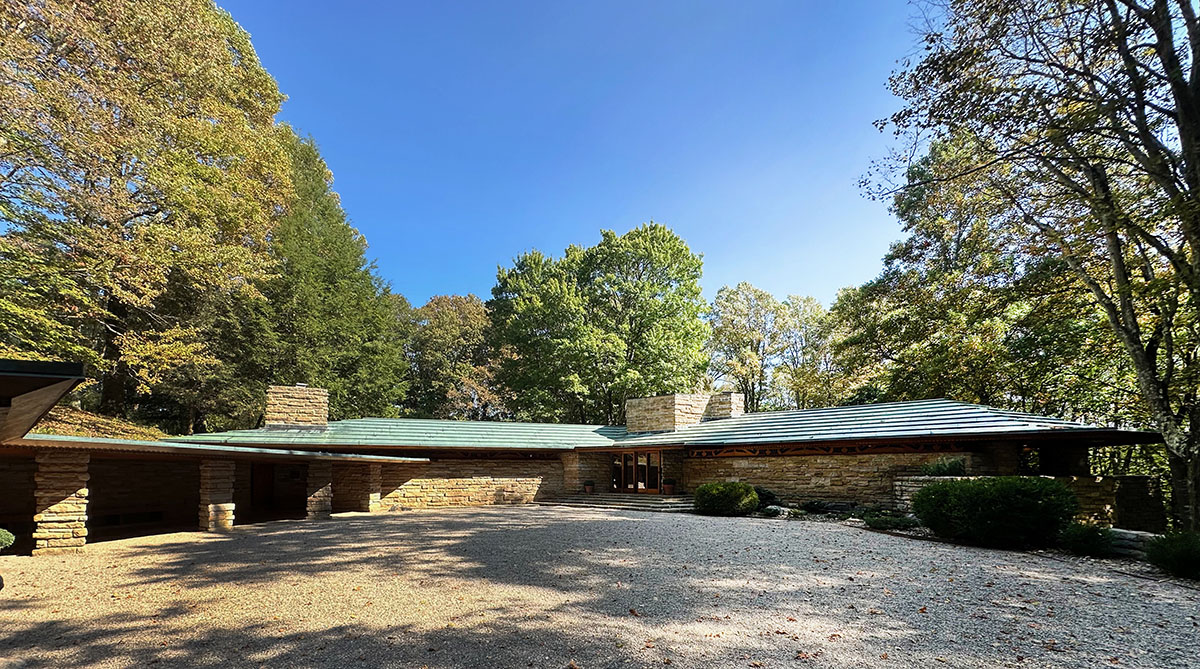
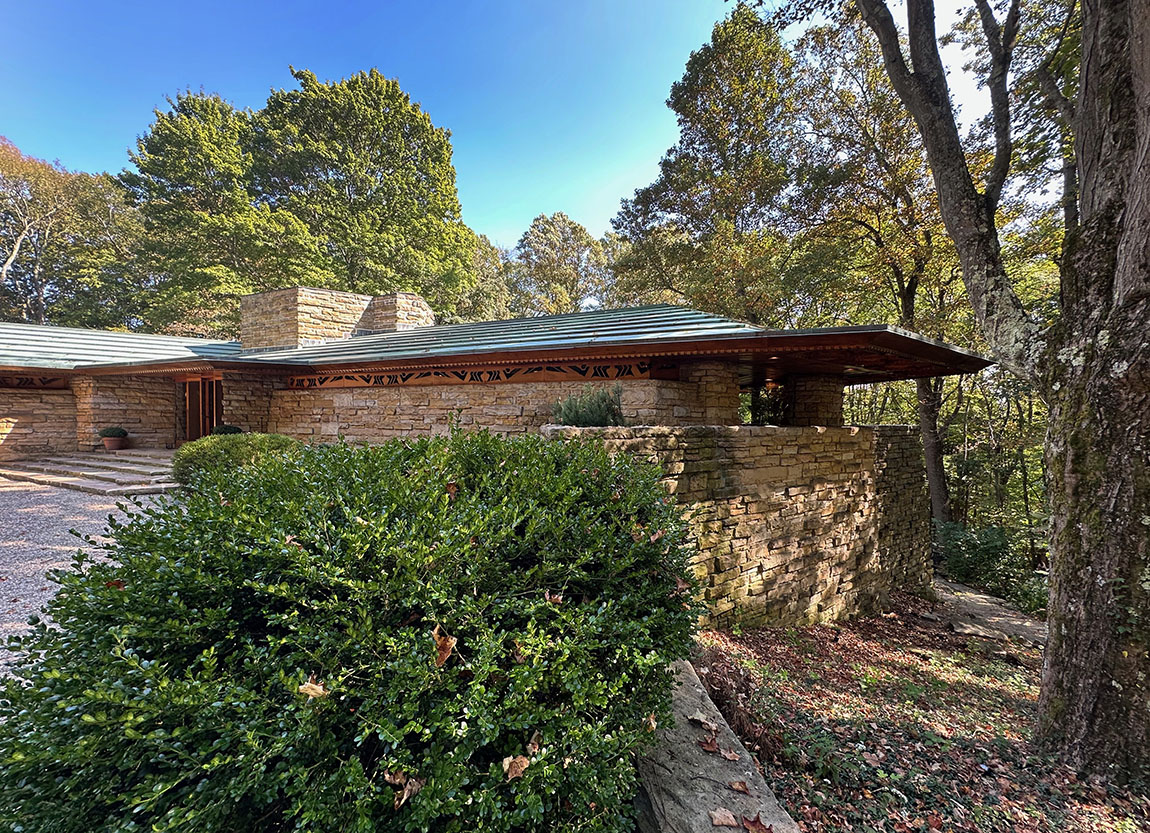
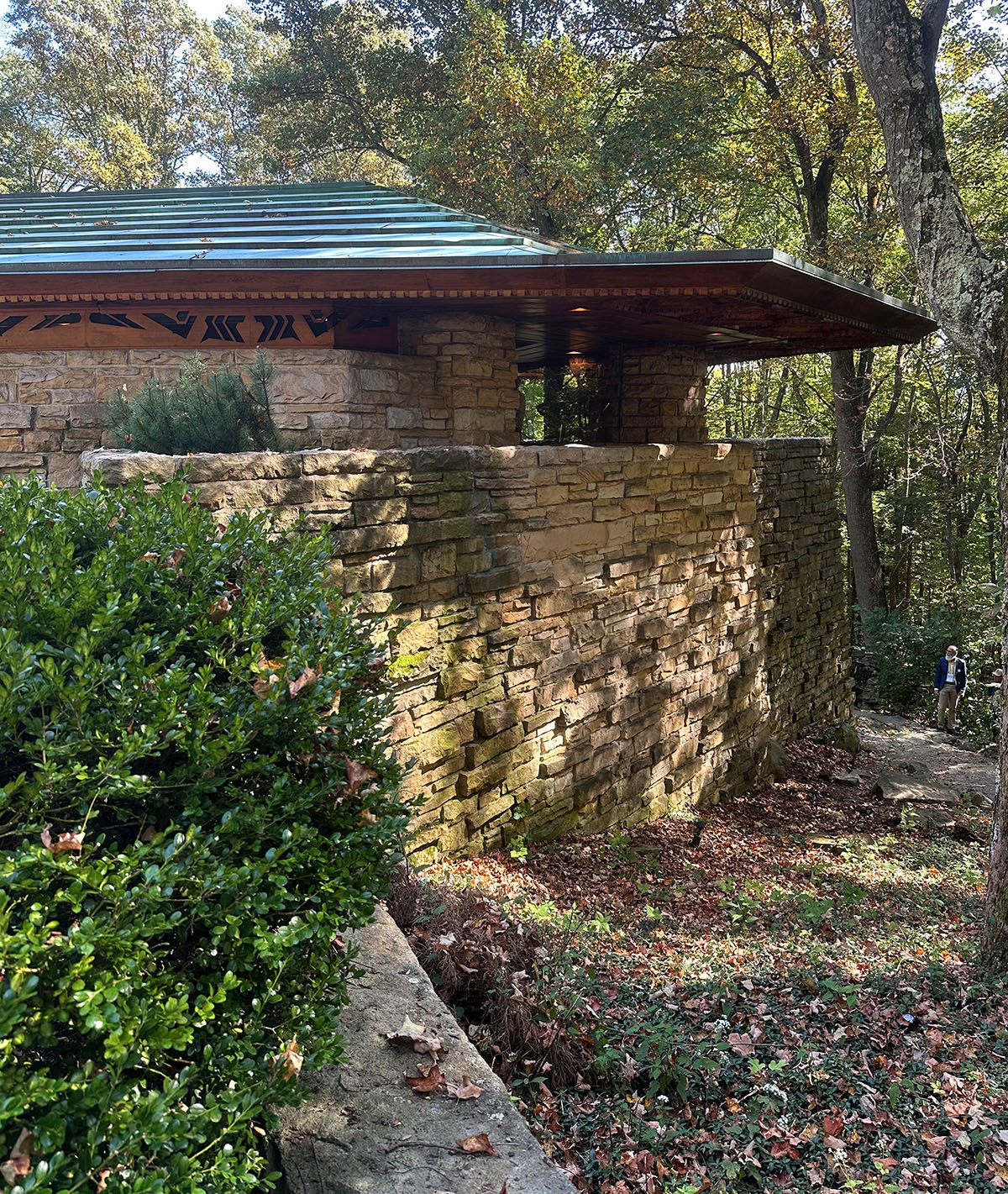
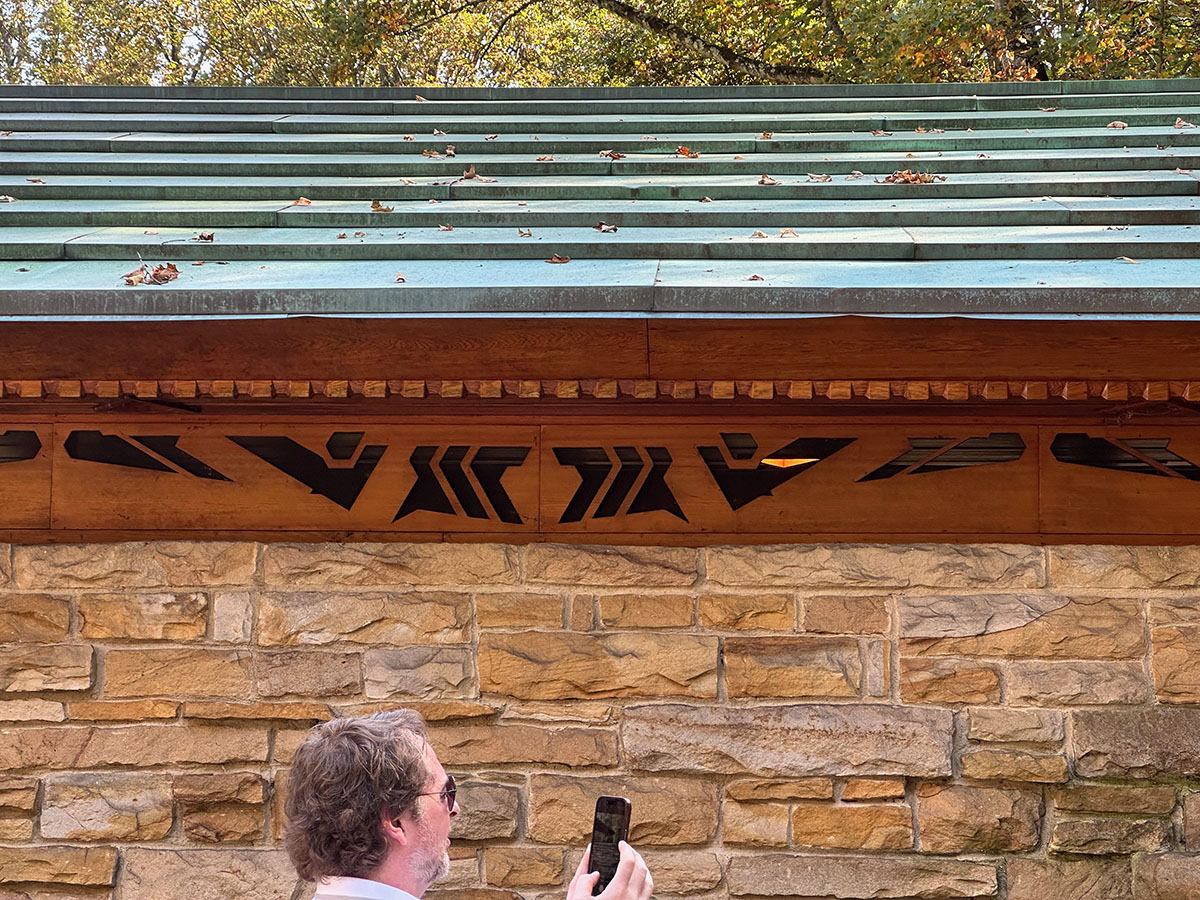
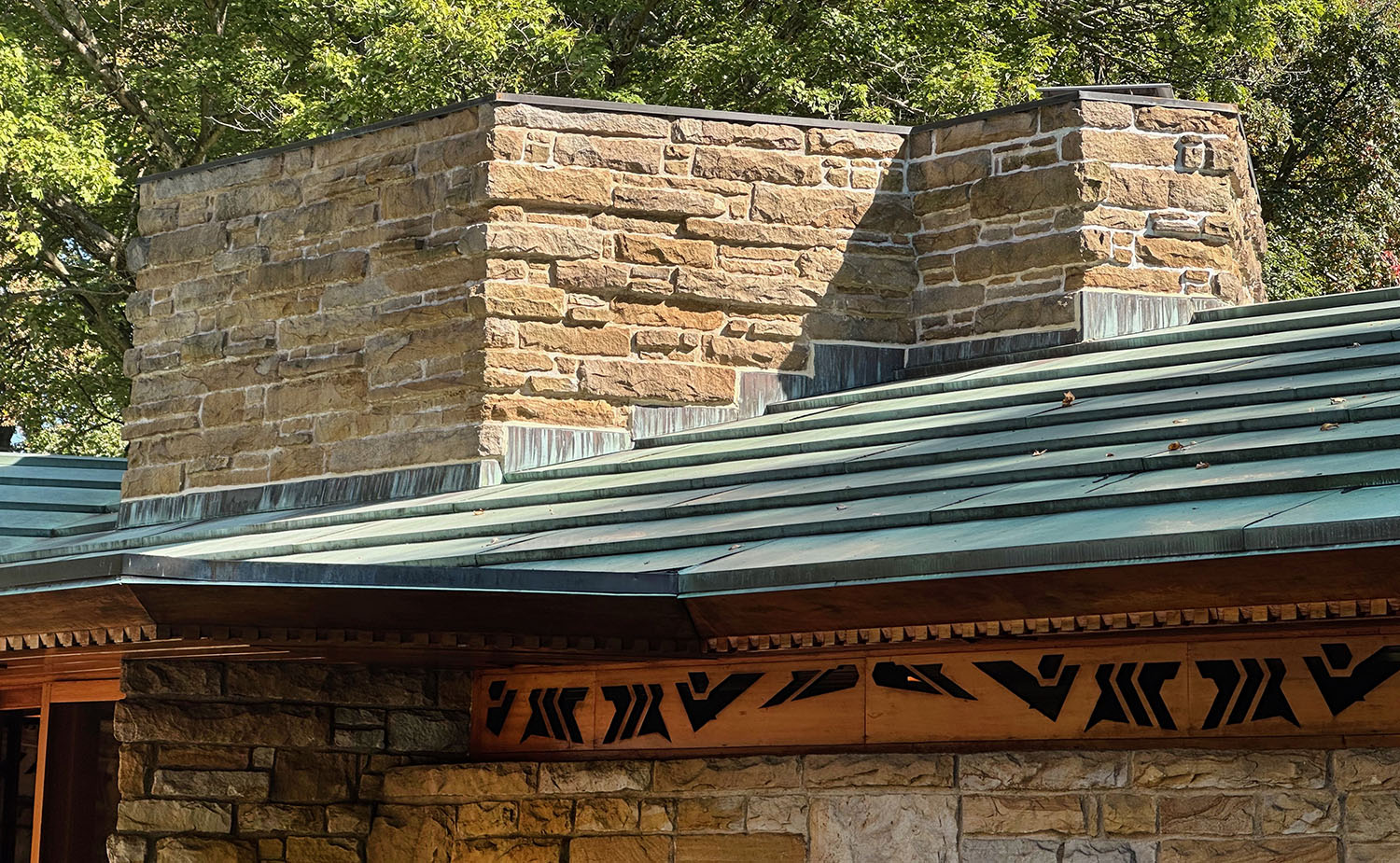
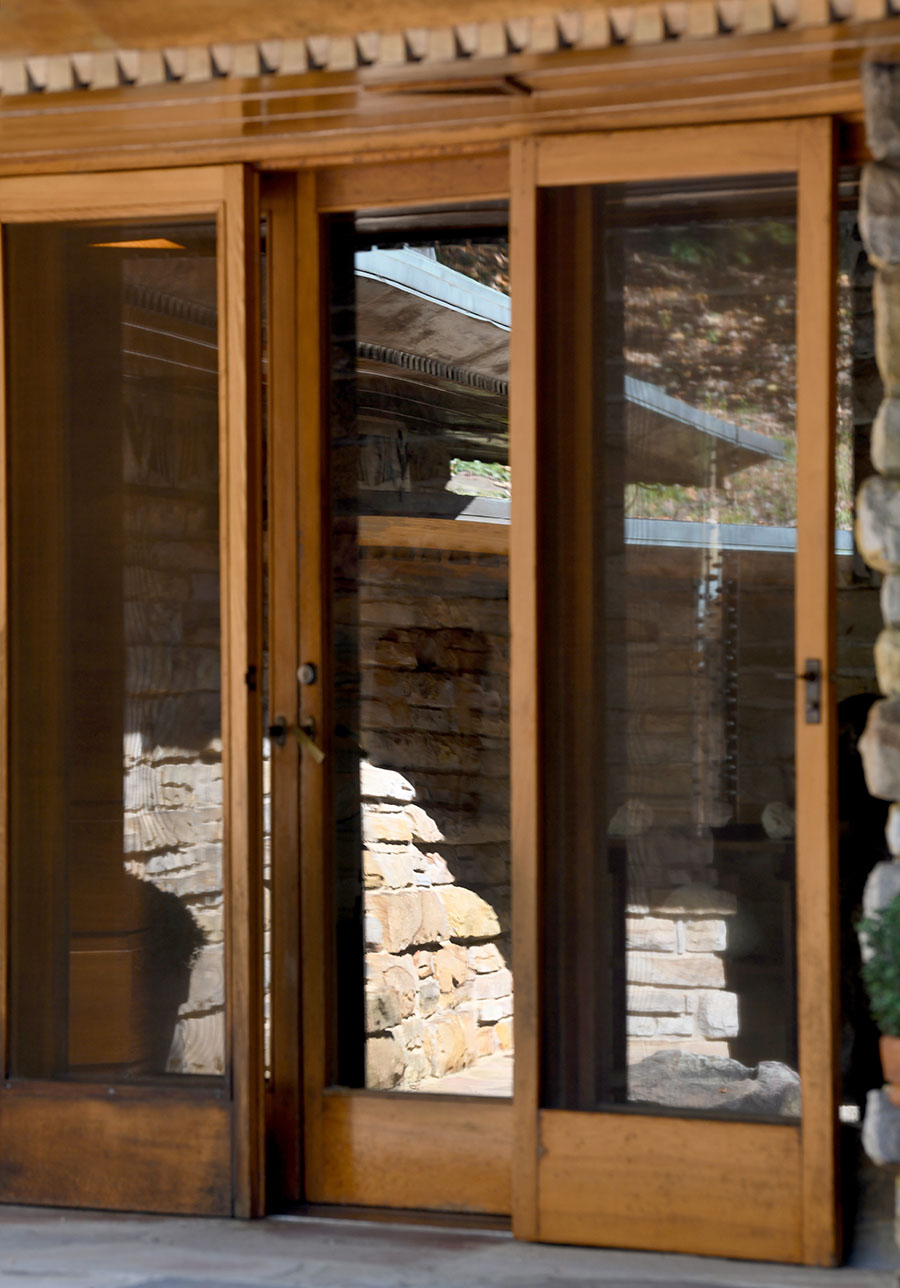
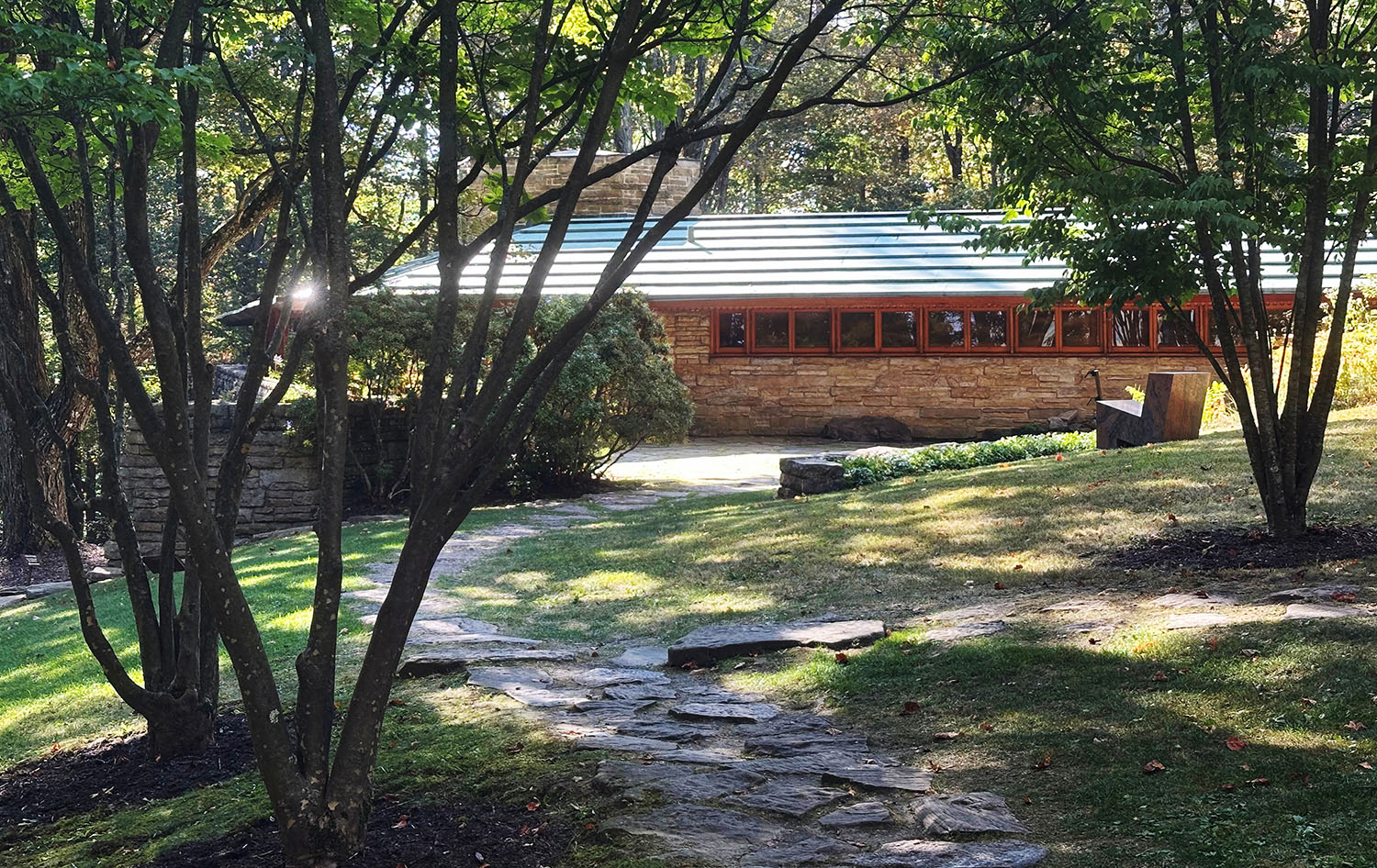
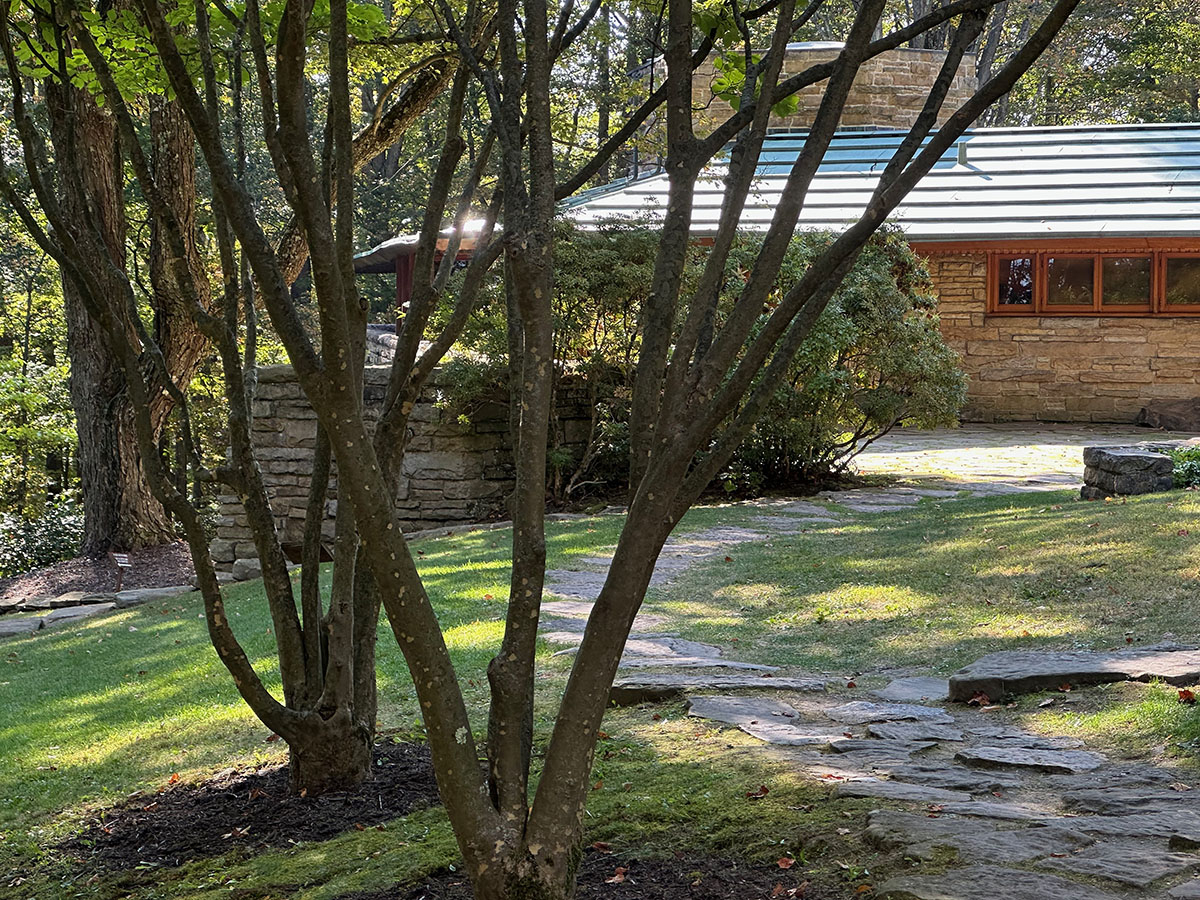
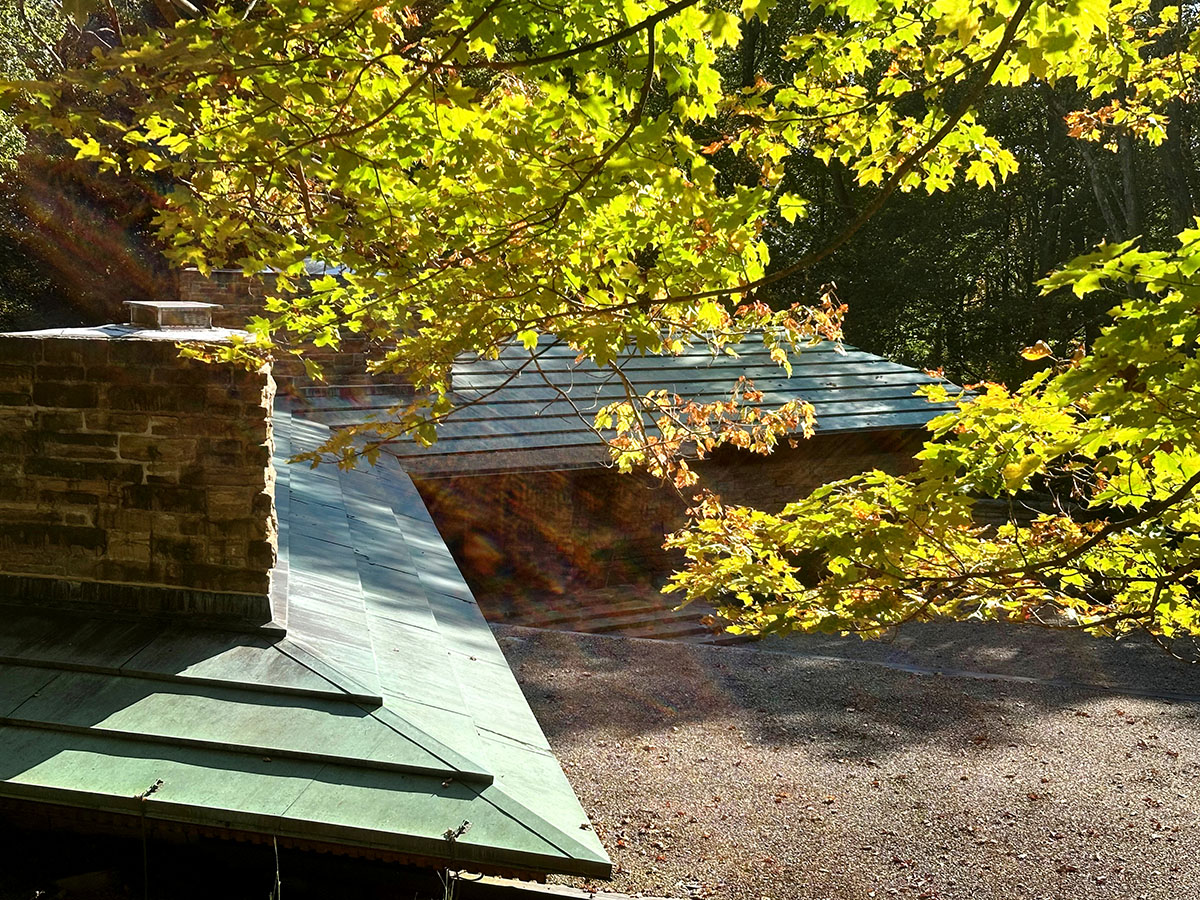
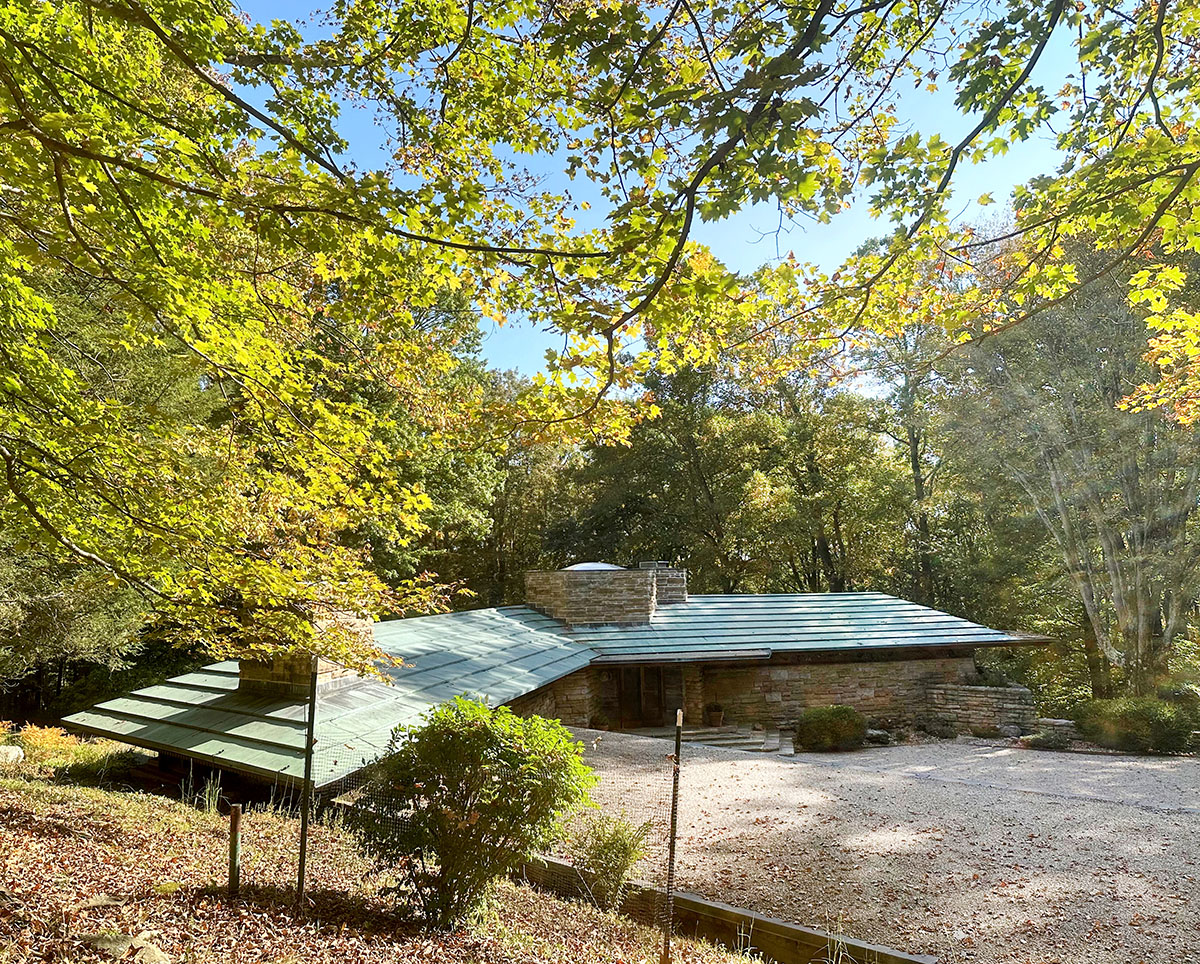
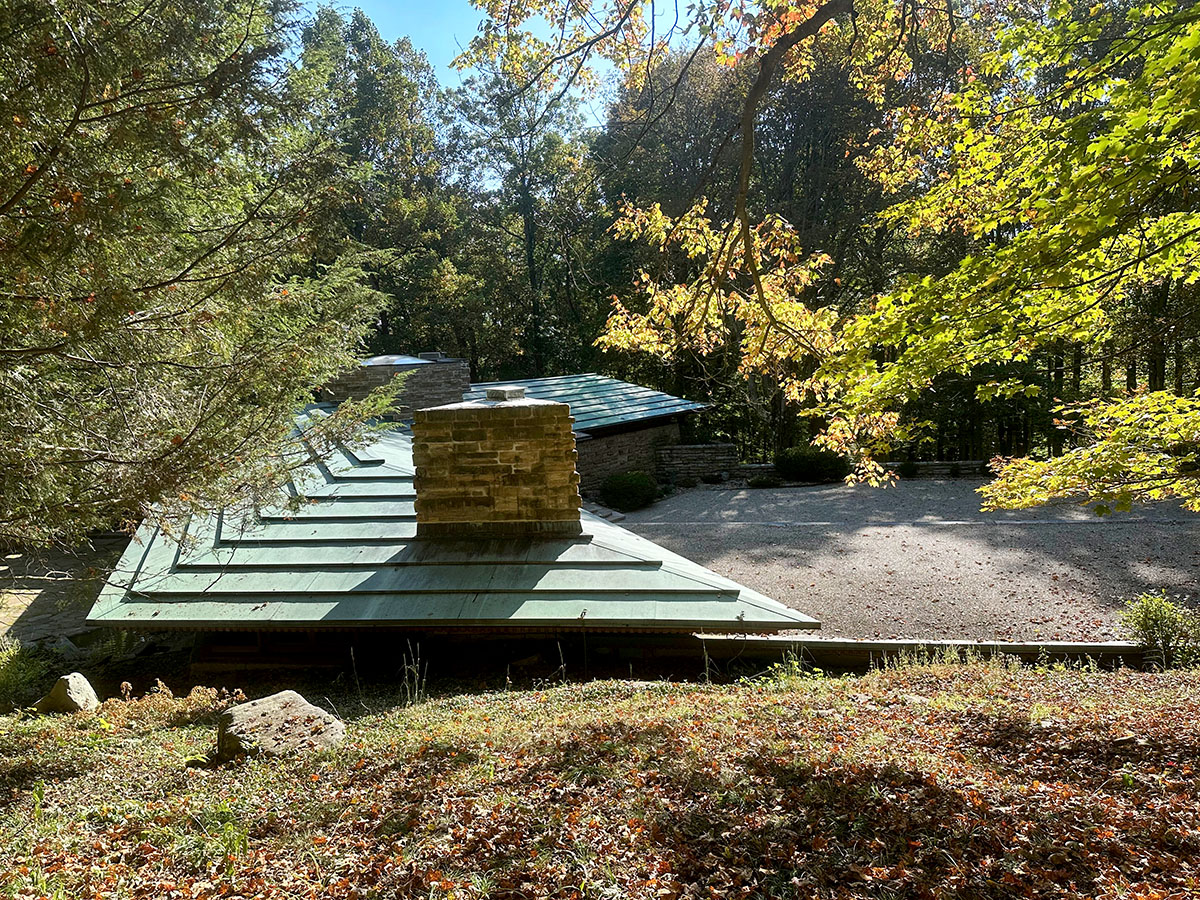
I had the pleasure of an in-depth tour of Kentuck Knob this fall during the Frank Lloyd Wright Building Conservancy’s annual conference which was based in Pittsburgh. It is a special place. Here, then, is my photographic interpretation of what is formally known as Wright’s Isaac Newton and Bernardine Hagan House. The photos start with literal photos of the exterior (interior photos were not permitted), the fun stuff comes further down the page.
Ken Dahlin of Genesis Architecture photographs the house.
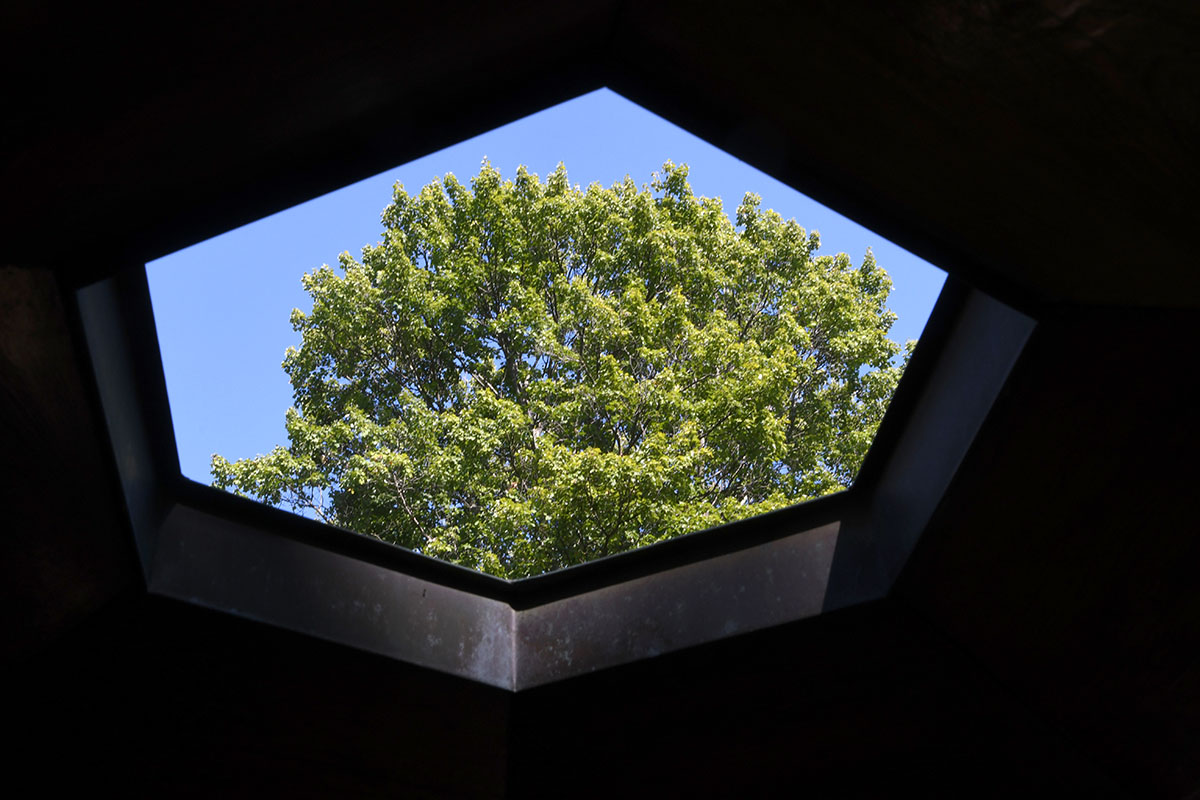
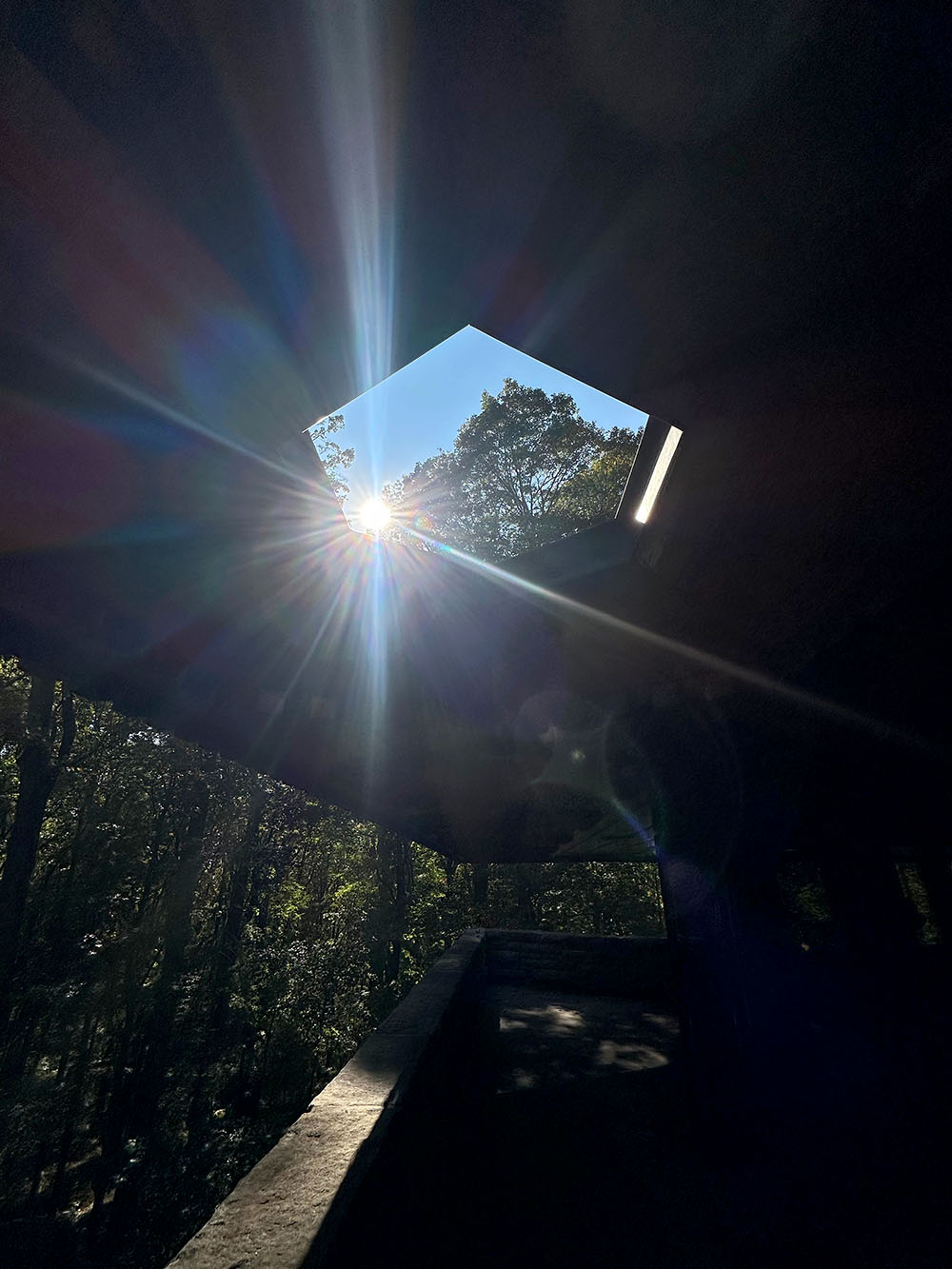
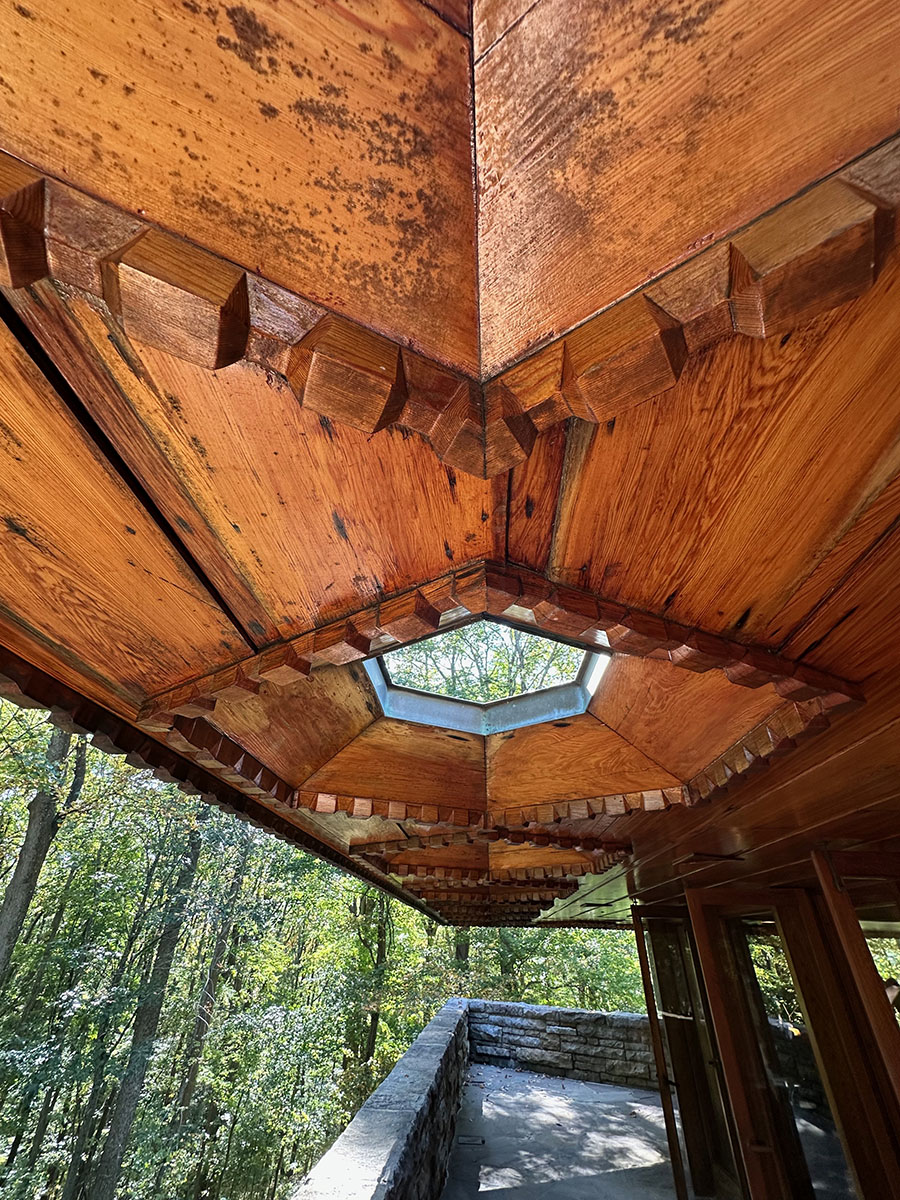
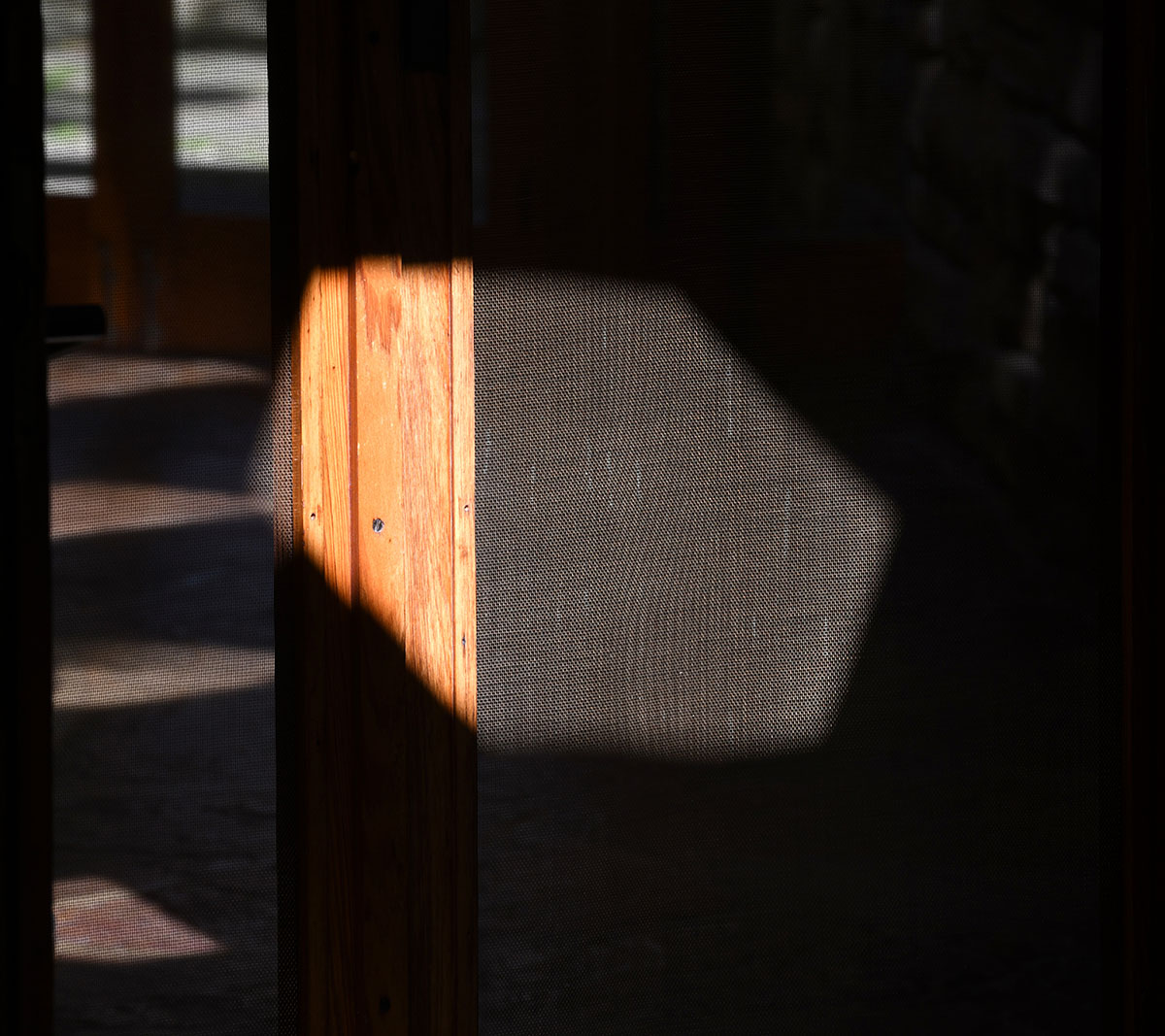
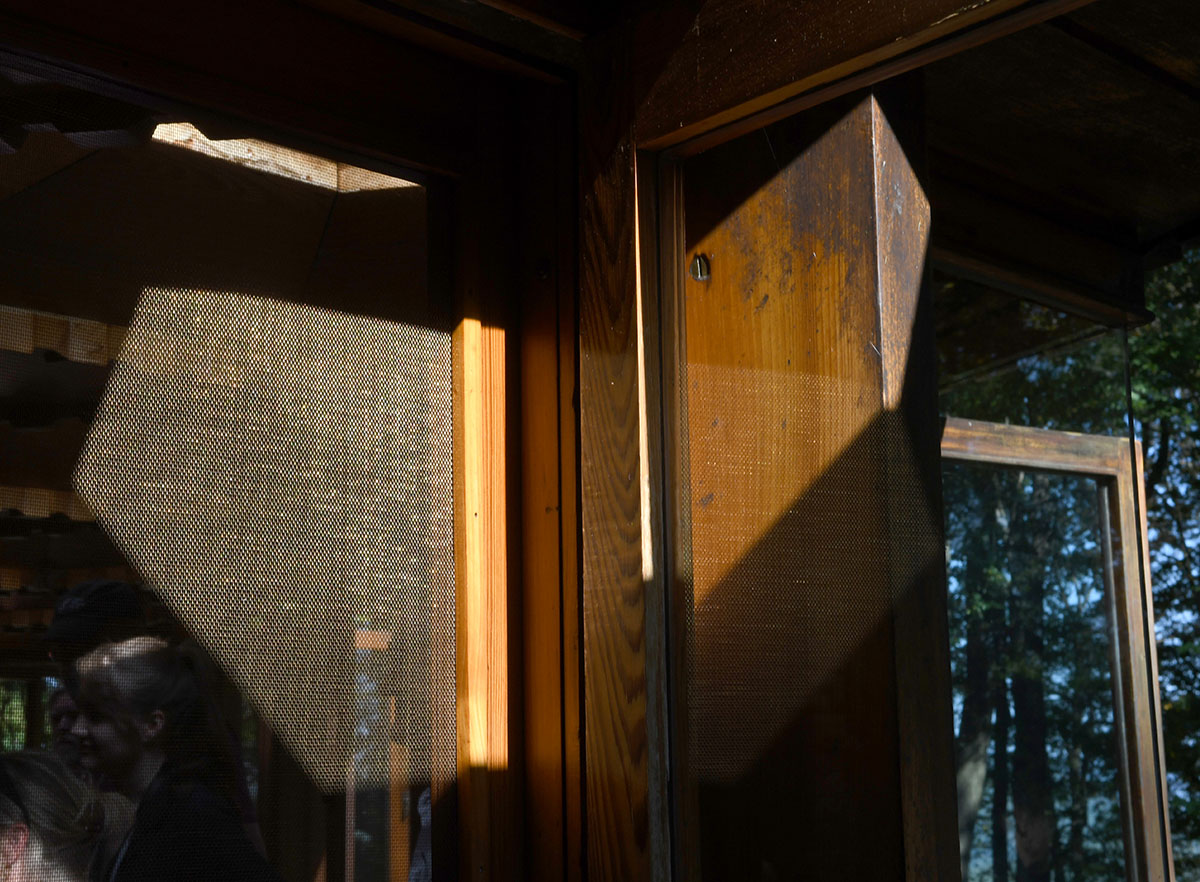
I wondered what I could do with the hexagons in the terrace roof:
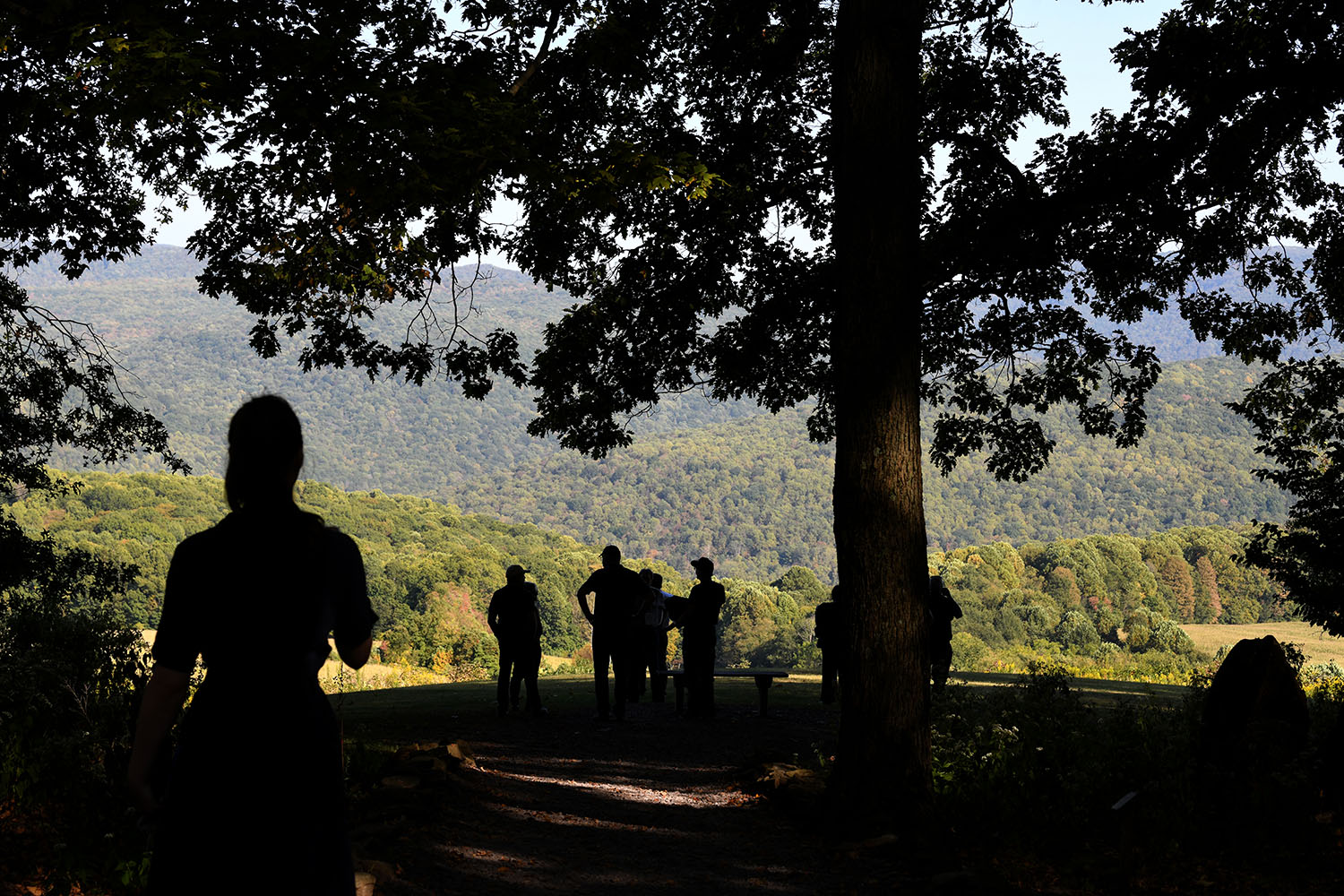
After the tour we wandered through the knob to gaze at the Laurel Highlands:
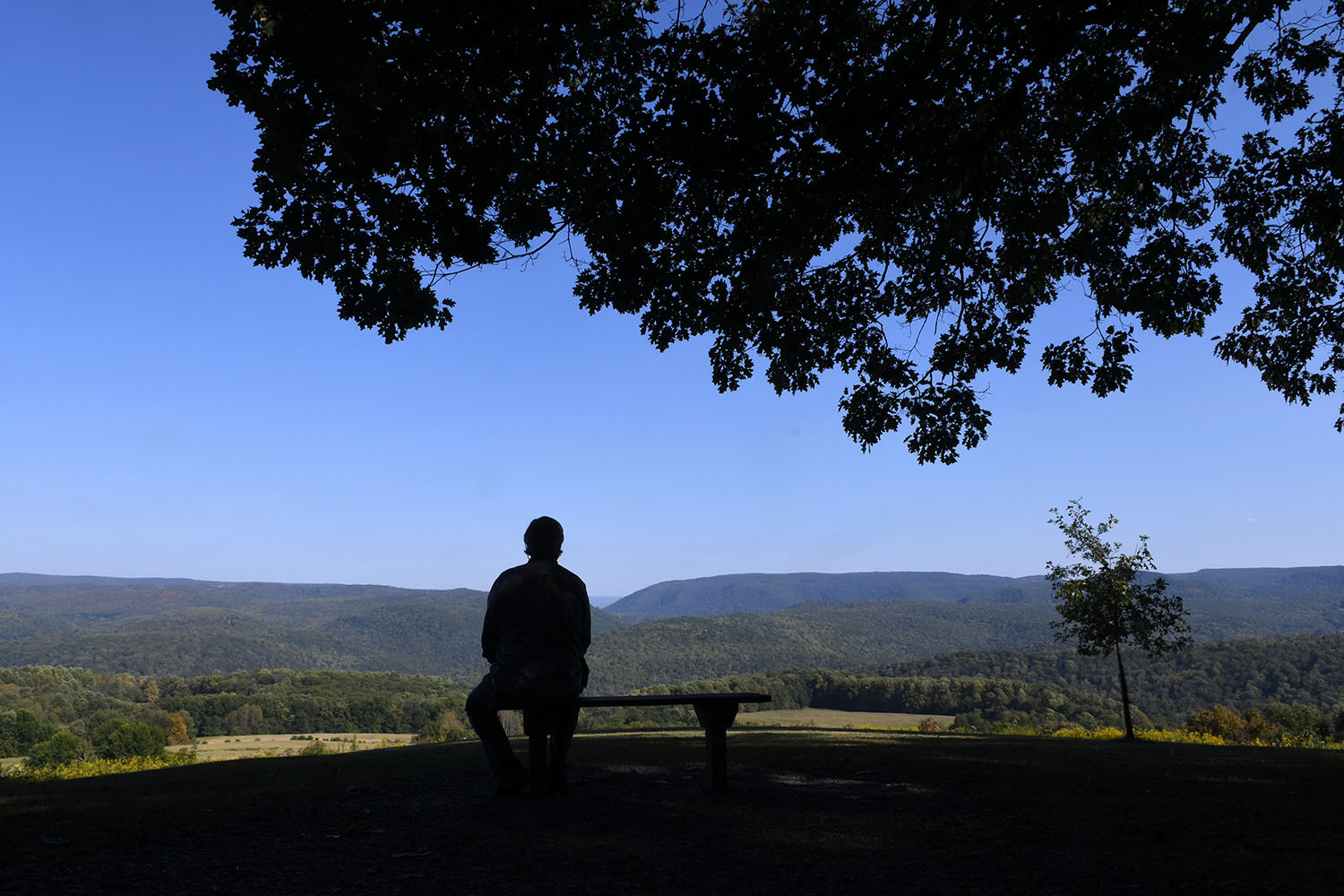
Michael Desmond, one of my dear friends lingered on a bench, not knowing that I was taking his picture:
Regrets in life: Not having been able to take a class of his at Louisiana State University. I have tried to make up for it in conversations as we are usually bus seat mates during Building Conservancy conferences. I think this portrait embodies what must have attracted the Hagans to ask Frank Lloyd Wright to build them a house on Kentuck Knob.
As for the name I had blown off in 1999, it is thought that David Askins, an eighteenth century settler, named this knob in Pennsylvania’s Laurel Highlands “Kentuck” in honor of Kentucky which he had considered moving to.
Postscript:
Lord Peter Palumbo became the second steward of Kentuck Knob in 1985 and opened it to the public in 1997. A link to a summary of his distinguished background in architecture and the arts – including once having been steward of Mies van der Rohe’s Farnsworth House – is below. His son Philip Palumbo accepted the Building Conservancy’s prestigious Wright Spirit Award given to Lord and Lady Palumbo at the Pittsburgh conference. Philip is director of Kentuck Knob.
Barbara Gordon, Jeffrey Herr, and Scott Perkins present the Wright Spirit Award to Philip Palumbo, on behalf of his parents.
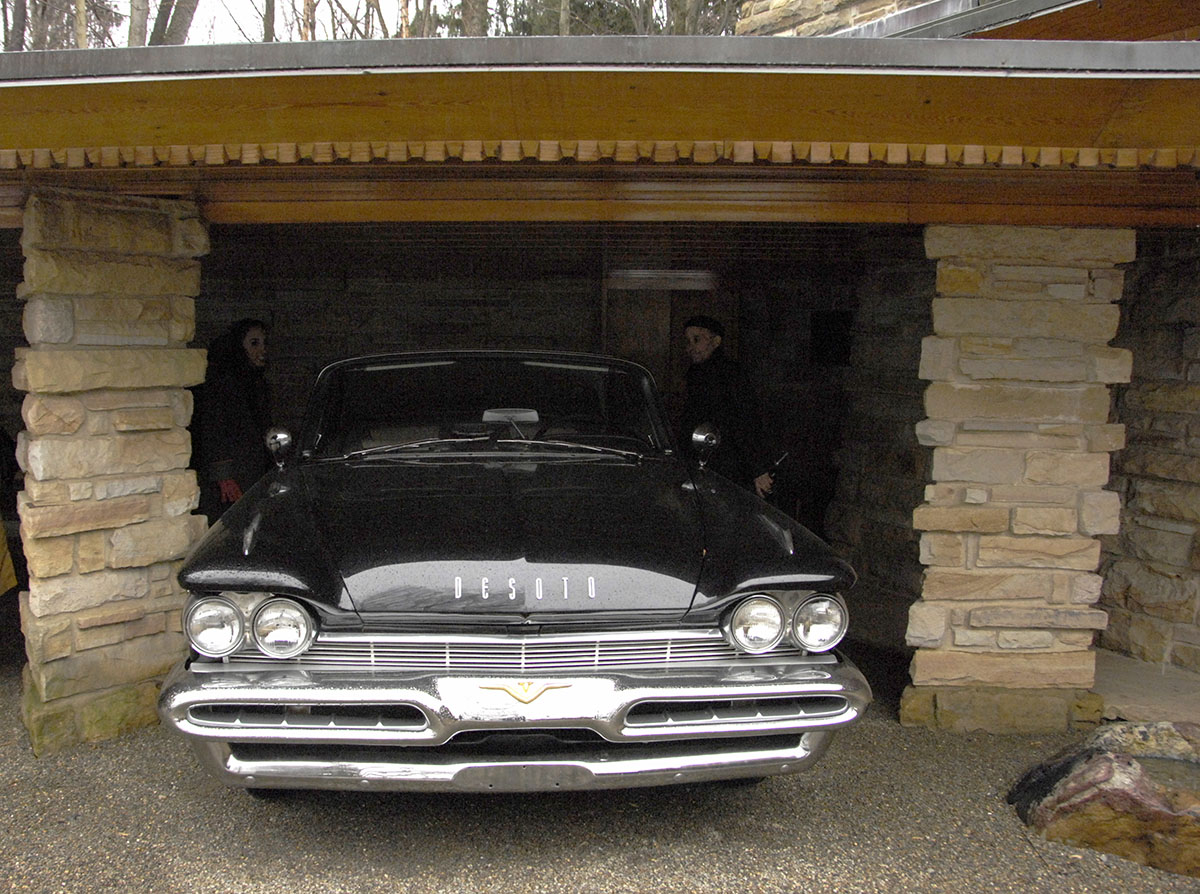
I am a bit of a mid-century car enthusiast so I was interested to read in the Pittsburgh Post-Gazette article linked to below that the Palumbos are considering having a transportation museum on the grounds of Kentuck Knob. Therefore I will close with a photo I took of Lord Palumbo’s 1959 DeSoto in the carport in 2010. Wright was a lover of fine automobiles…the DeSoto’s liberal use of chrome, as was the trend in the 1950s, may have been over the top for Wright:
Bit by bit, parcel by parcel, the American System-Built homes in the 2700 block of W. Burnham Street in Milwaukee are coming together for their parent organization, Frank Lloyd Wright’s Burnham Block. Burnham Block is steward of five of the six structures: the two single family homes, and three of the four duplexes.
On November 3 the City of Milwaukee’s Historic Preservation Committee unanimously approved plans for restoration of the Model C3 at 1835 N. Layton (at the corner with Burnham Street), and demolition of a shed that was built on the property in 1977. Burnham had already received its third (!) Save America’s Treasures (SAT) grant from the National Park Service in the amount of $407,000 for the work. A matching amount has to be raised from donors for the entire amount to be released.
This photograph shows one of the two single family homes (the Model B1) and the four duplexes. The Model C3 single family home, below, sits to the right of the B1.
Docent Bill Schumacher leads a tour of the Burnham Block, including the C3
The C3 is sometimes referred to as the “Pizza Hut” house because of the mansard roof which came from two Pizza Hut restaurants in the 1970s. Its stucco was covered with a “Perma-Stone” veneer in 1958, and the open porch was enclosed.
The Burnham Block adventure started in 2005 with the purchase of the Model B1 at 2714 W. Burnham by the Frank Lloyd Wright in Wisconsin Tourism Heritage organization. A Save America’s Treasures grant and 28 major gifts including support from the Barbara Meyer Elsner Foundation enabled its restoration as a house museum.
Wright in Wisconsin board members discuss their purchase of the B1 in April 2005. Mike Lilek, the driving force behind the Burnham projects, is left. Barbara Meyer Elsner is third from right.
There were many difficult discussions at board meetings about what it would mean for the organization to become a steward of a Wright property rather than only fulfilling its founding mission of promoting Wright tourism and awareness and education about Wright’s work in Wisconsin. Then came the purchase of the Two Family Flat C duplex at the end of the block. And then came the purchases of two more of the duplexes (one of which is the world’s only aluminum sided Frank Lloyd Wright structure…the siding was added in 1968). The fourth duplex is independently owned. It was converted into a single family home in the 1980s and is available for overnight rentals through Vrbo.
Lilek reflects on the discussions at board meetings, “The board meetings became increasingly focused on the Burnham Block, to the detriment of the organization. Then-president George Hall likened it to ‘Your teenager growing up and needing their own space.'”
He recalls, “In 2017 Frank Lloyd Wright Wisconsin was reorganized to better support two distinguished missions. Out of the reorganization came Wright in Wisconsin, Inc. to carry forward the original focus on Frank Lloyd Wright tourism and Frank Lloyd Wright’s Burnham Block to focus exclusively on on the Burnham Block historic site in Milwaukee.”
George Hall, left, and Mike Lilek sign the reorganization papers August 3, 2017.
Below are period advertisements of the 1835 N. Layton house and photographs of what the house looks like today:
The next three photos show where some of the original furnishings – seen in the drawing above – were originally placed. It is not known when they were removed, or where they ended up.
The original open porch was enclosed, possibly when then exterior veneer was added:
Bedroom and bathroom photos:
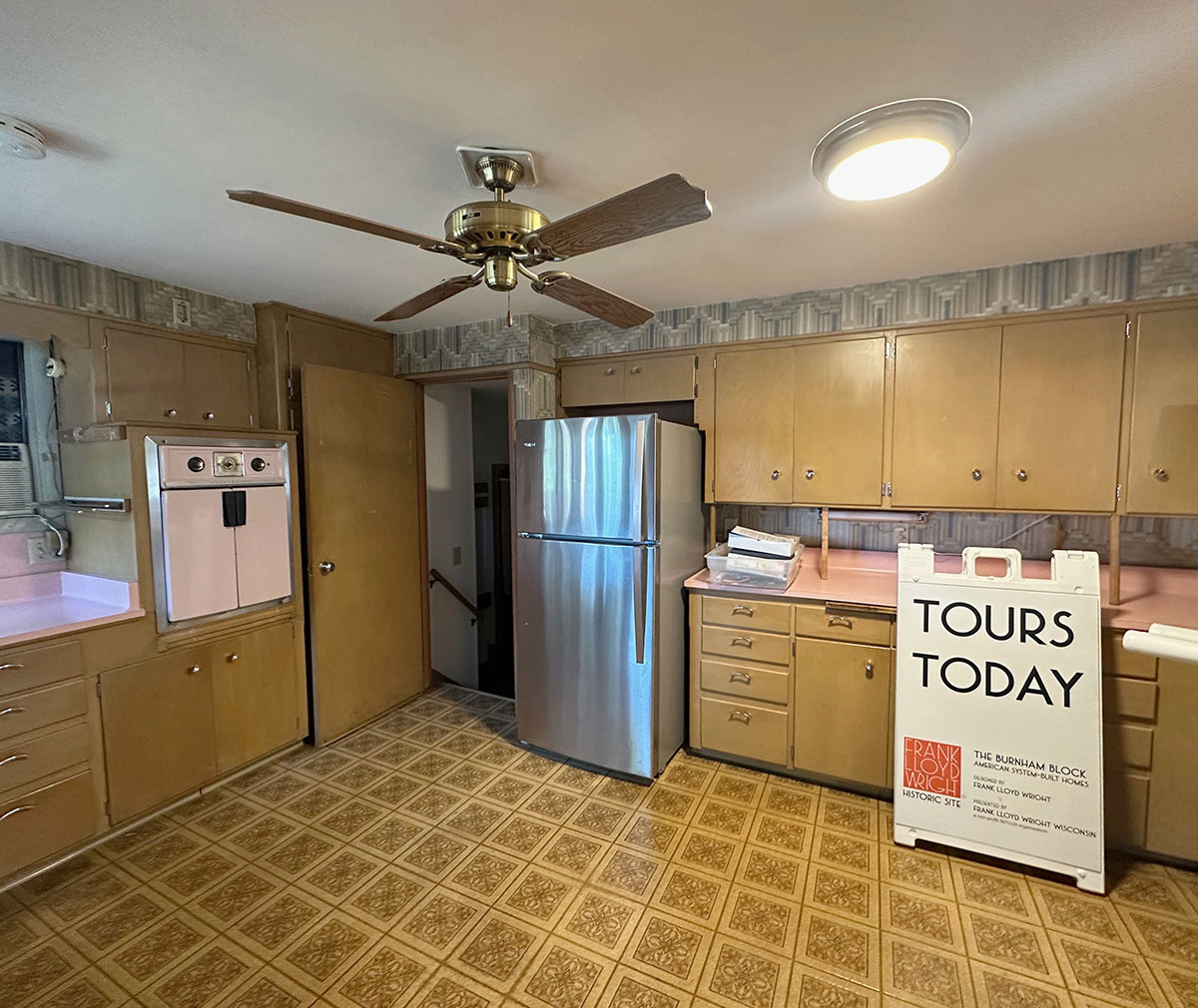
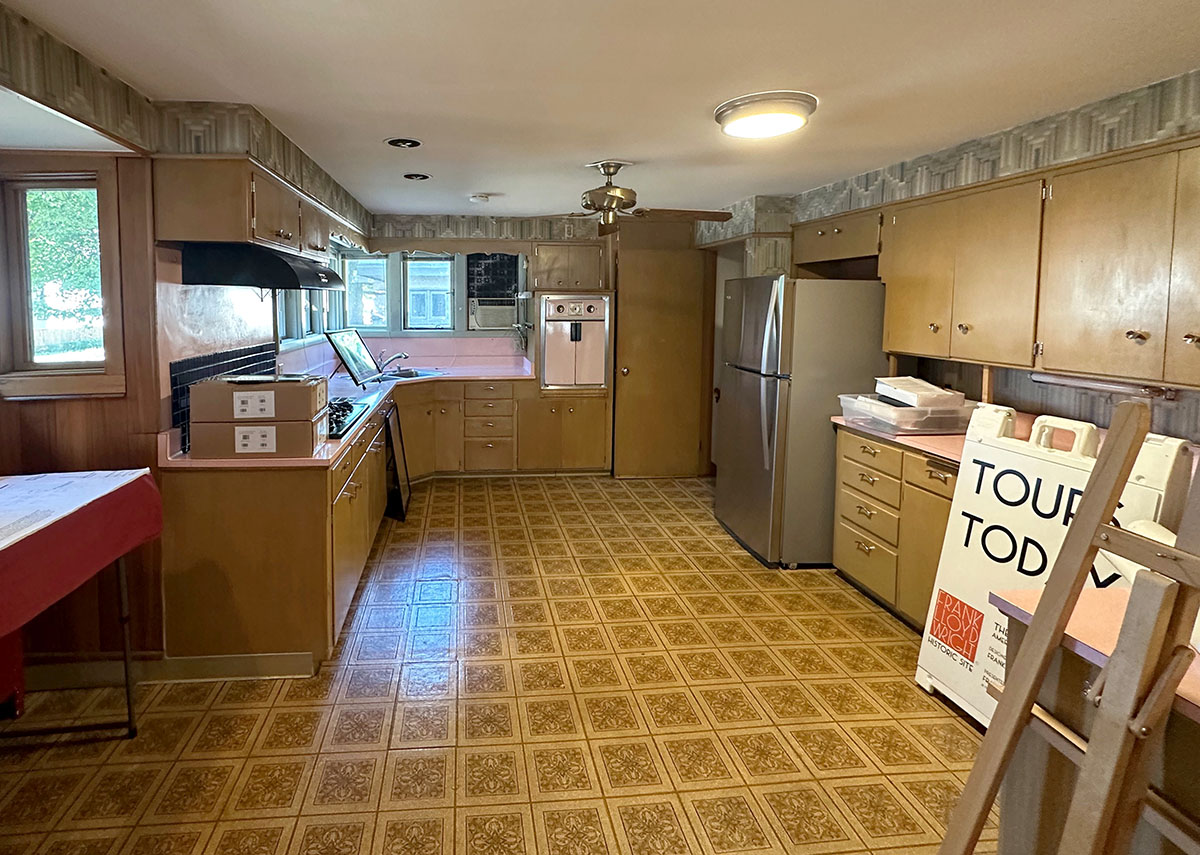
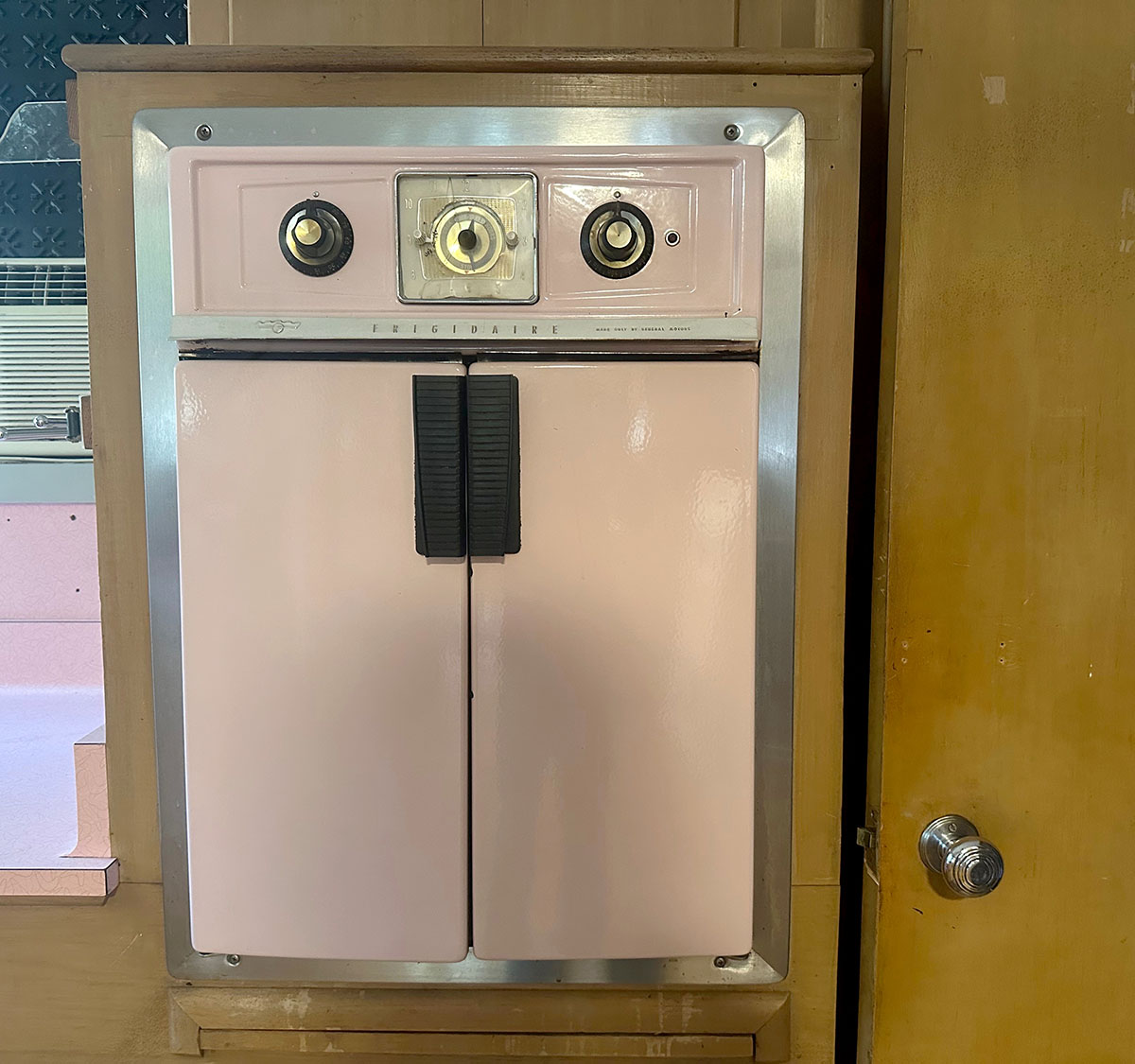
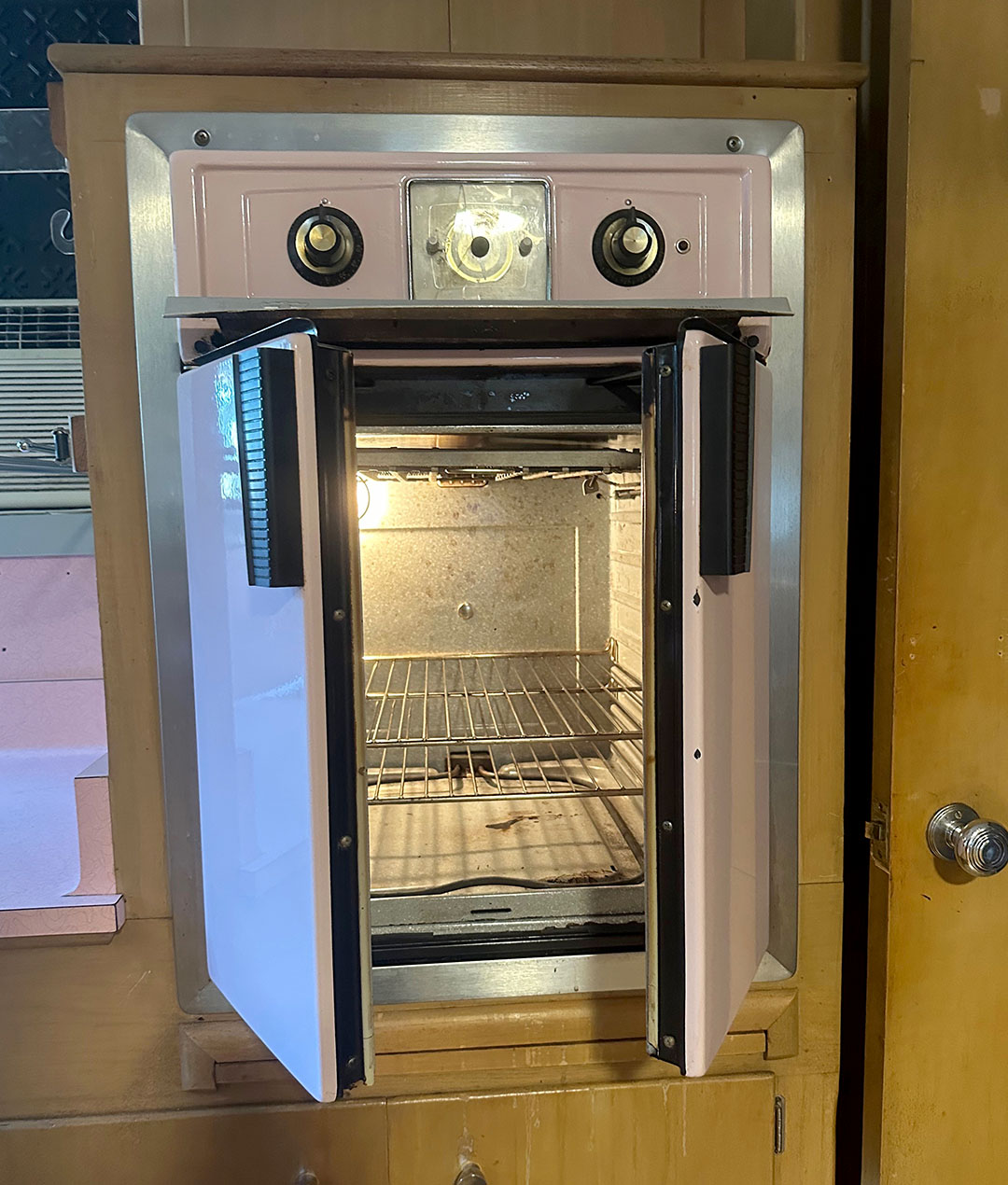
The kitchen:
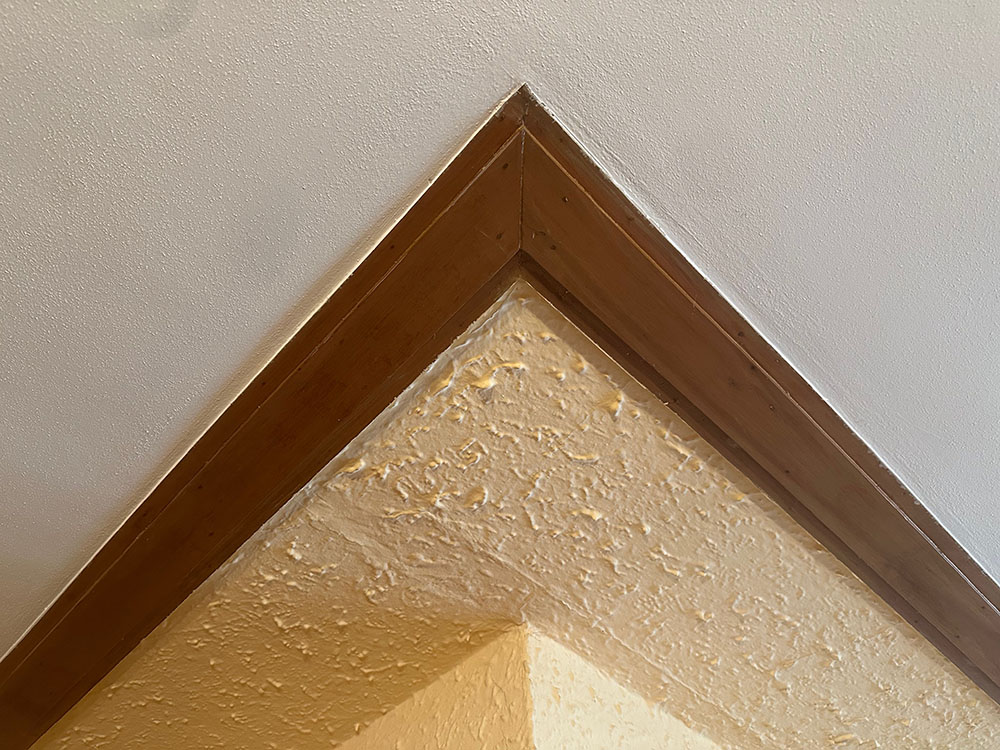
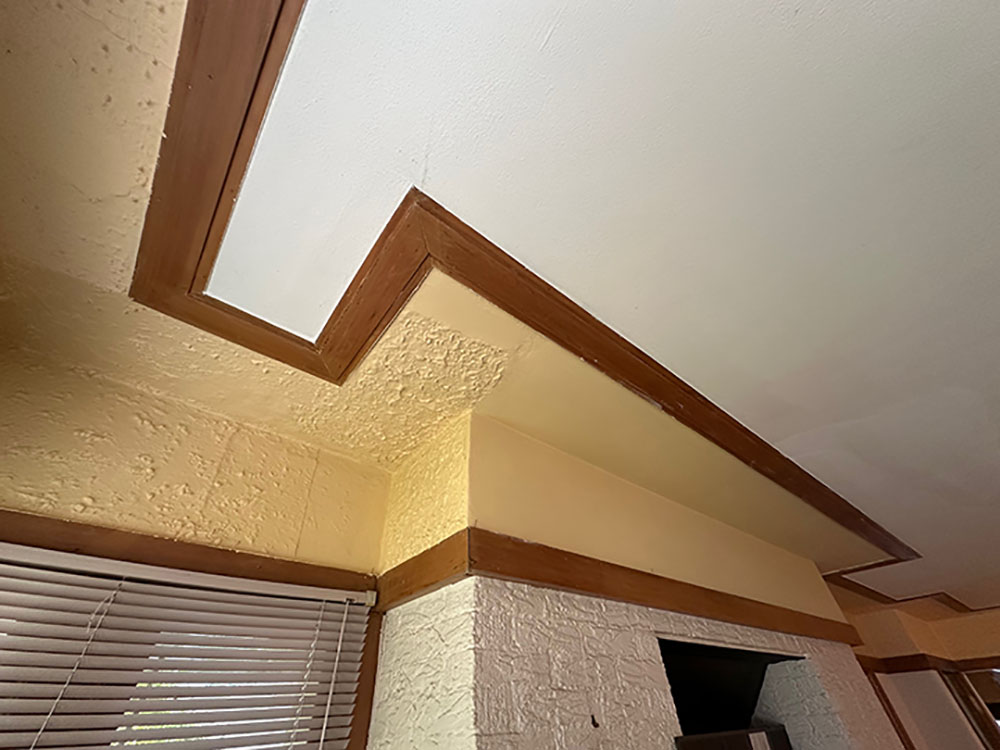
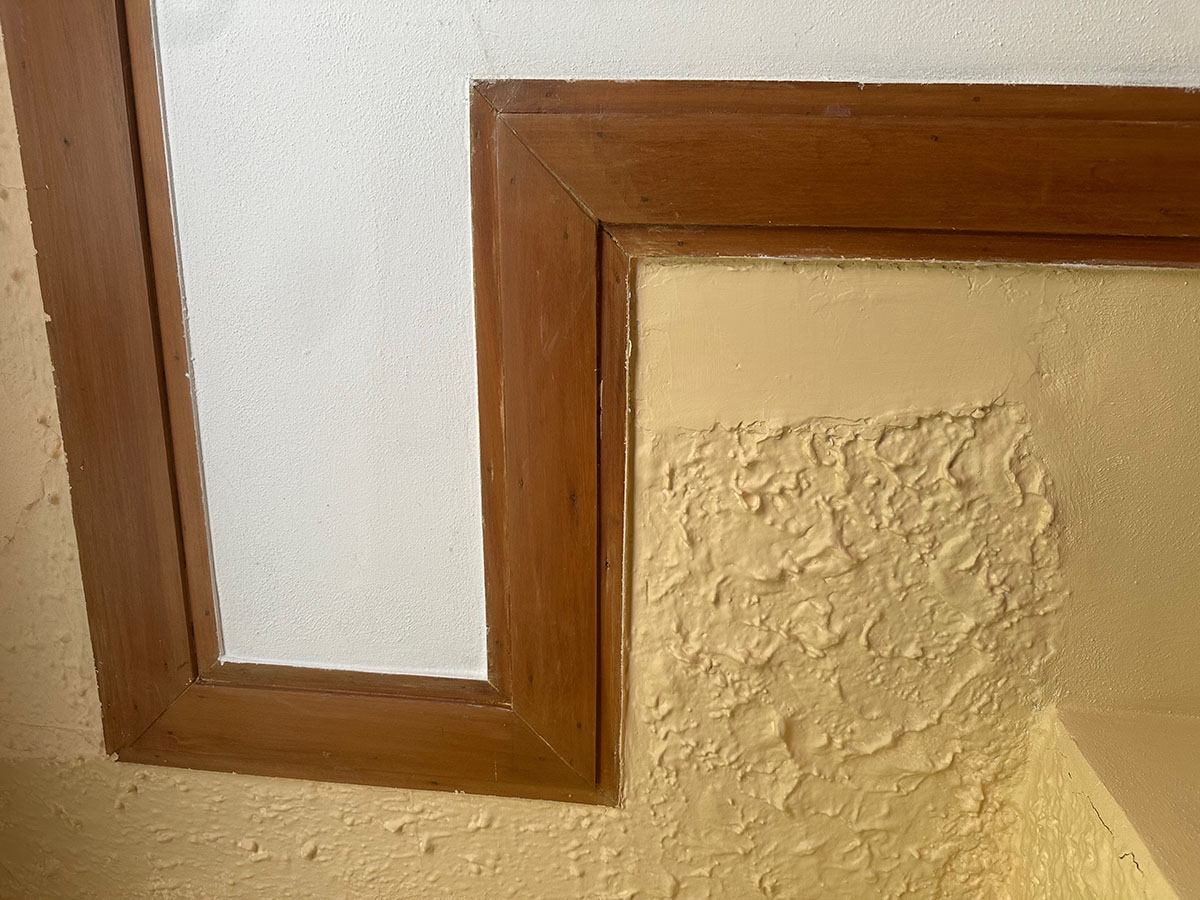
The ceiling trim:
The Burnham Block is working with Ramlow / Stein Architecture and Interiors on the restoration. The National Park Service and the Wisconsin State Historic Preservation Officer have already signed off on the restoration project. Now that the city has given its approval, contractors are being interviewed, and it is hoped that work will begin “soon,” according to Lilek. Contributions are welcome to match the SAT grant.



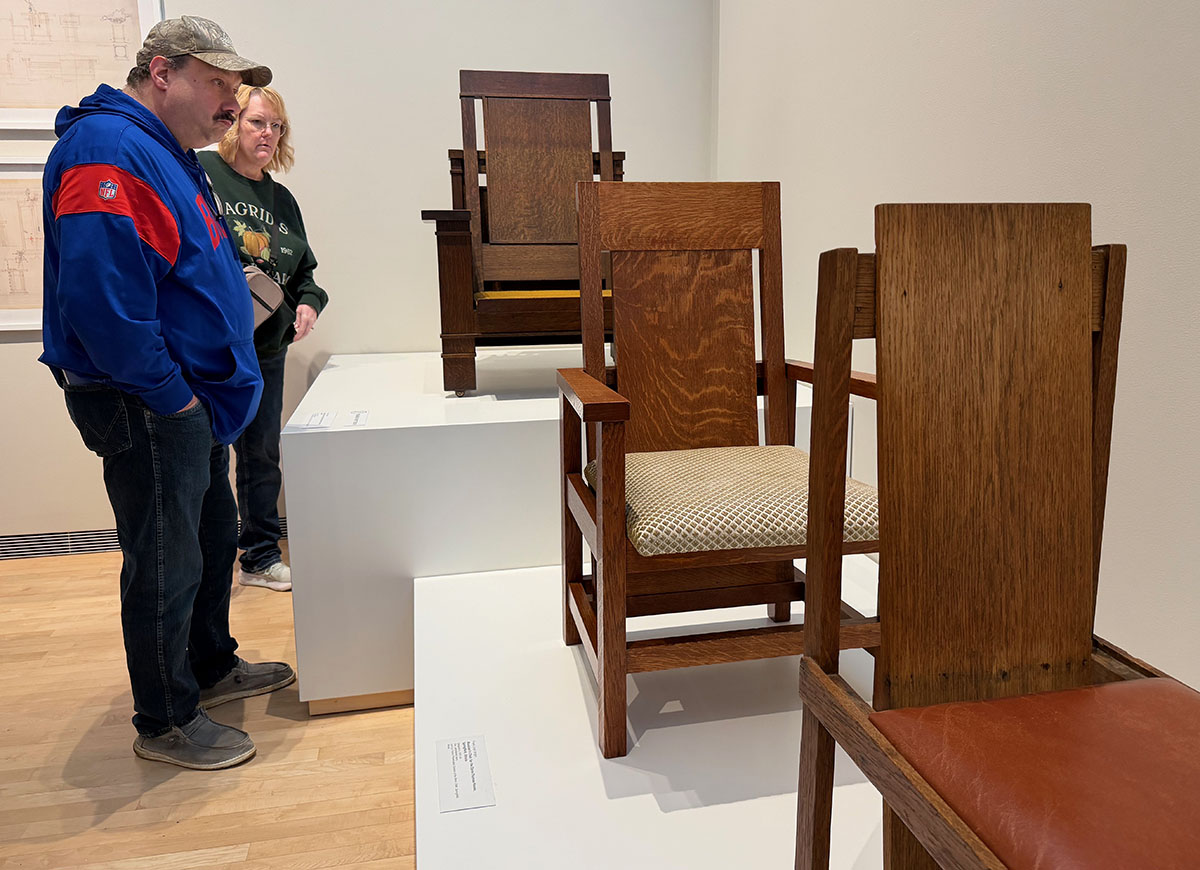

 The dining room set from the Malcolm and Nancy Willey House in Minneapolis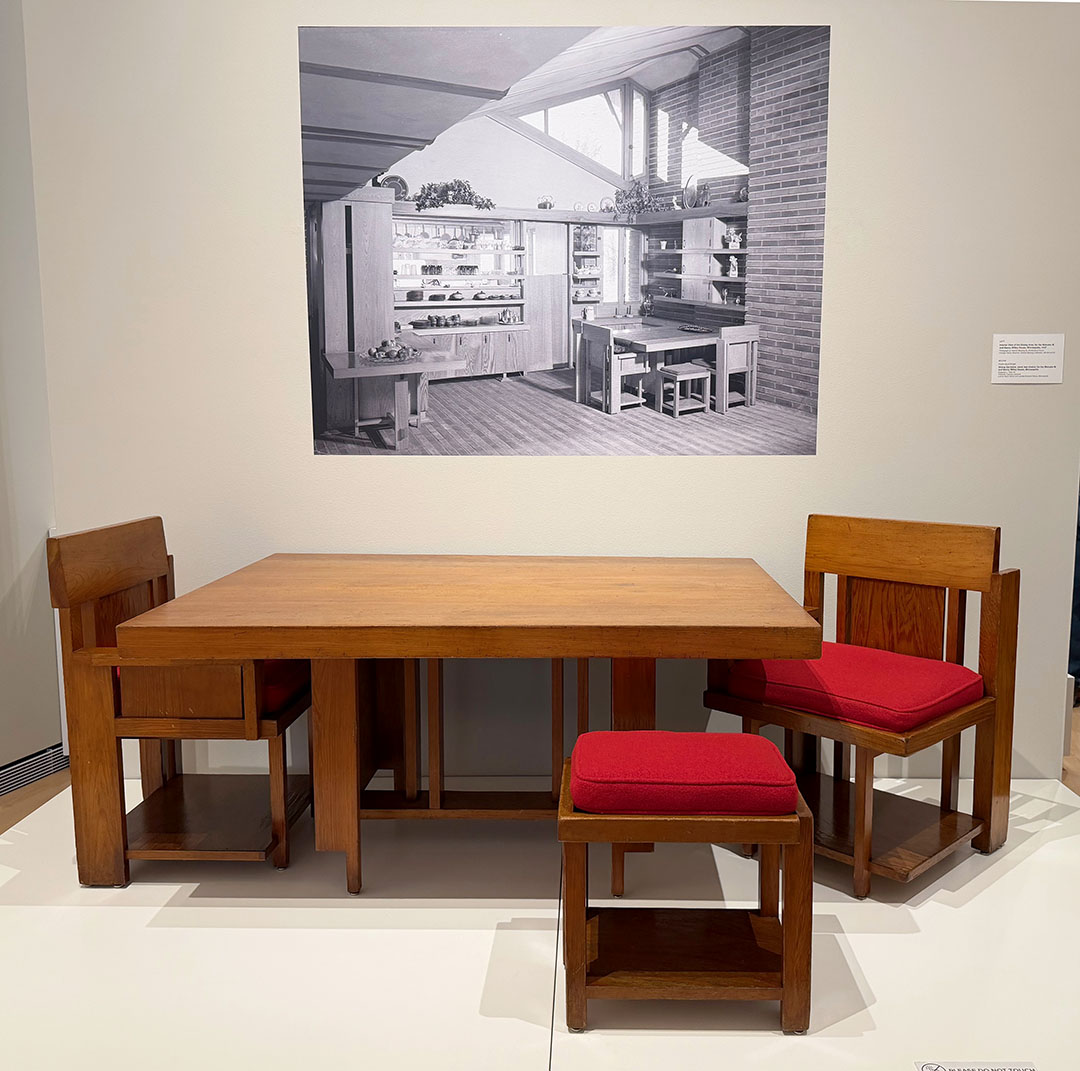
 Ken Dahlin of Genesis Architecture photographs the house.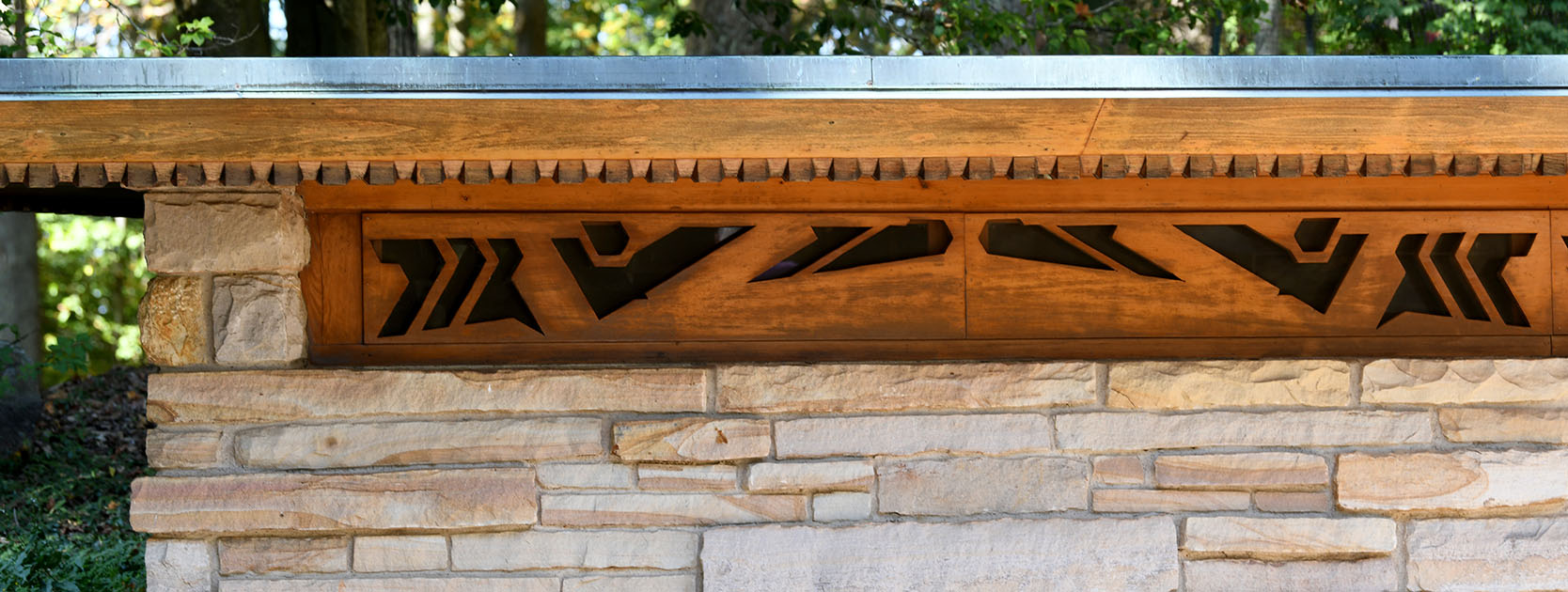


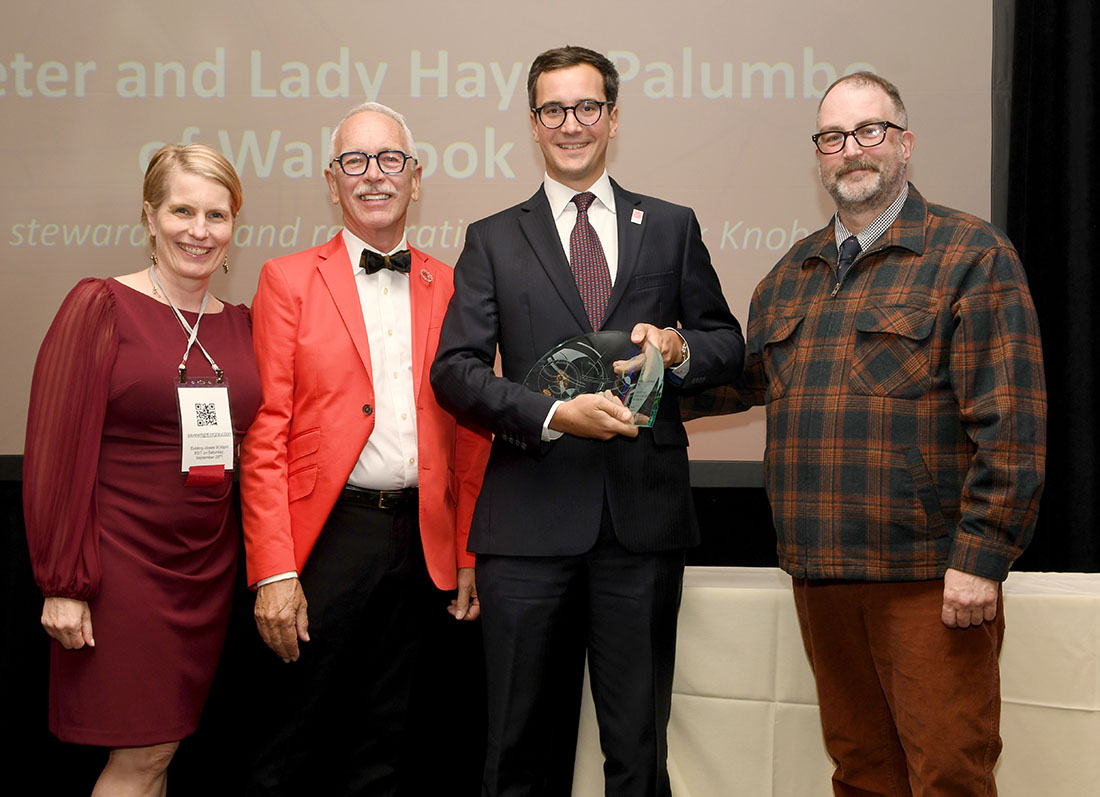 Barbara Gordon, Jeffrey Herr, and Scott Perkins present the Wright Spirit Award to Philip Palumbo, on behalf of his parents.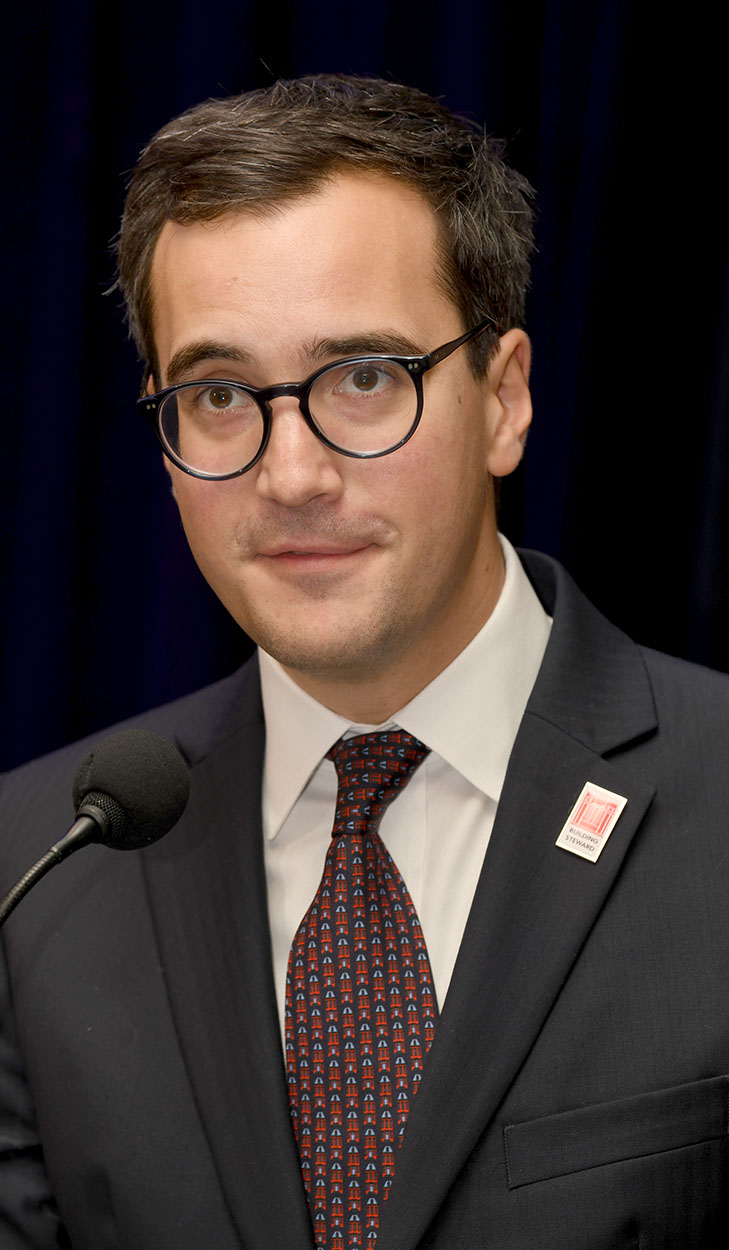
 This photograph shows one of the two single family homes (the Model B1) and the four duplexes. The Model C3 single family home, below, sits to the right of the B1.
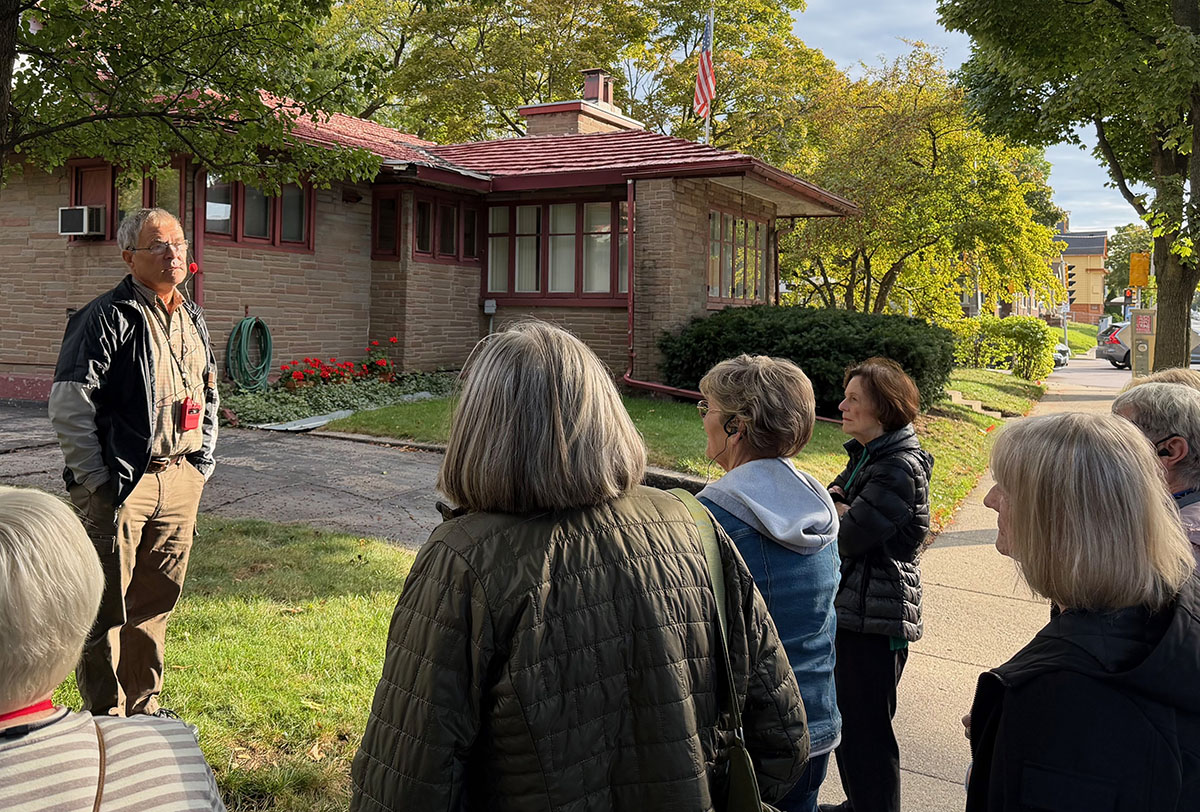 Docent Bill Schumacher leads a tour of the Burnham Block, including the C3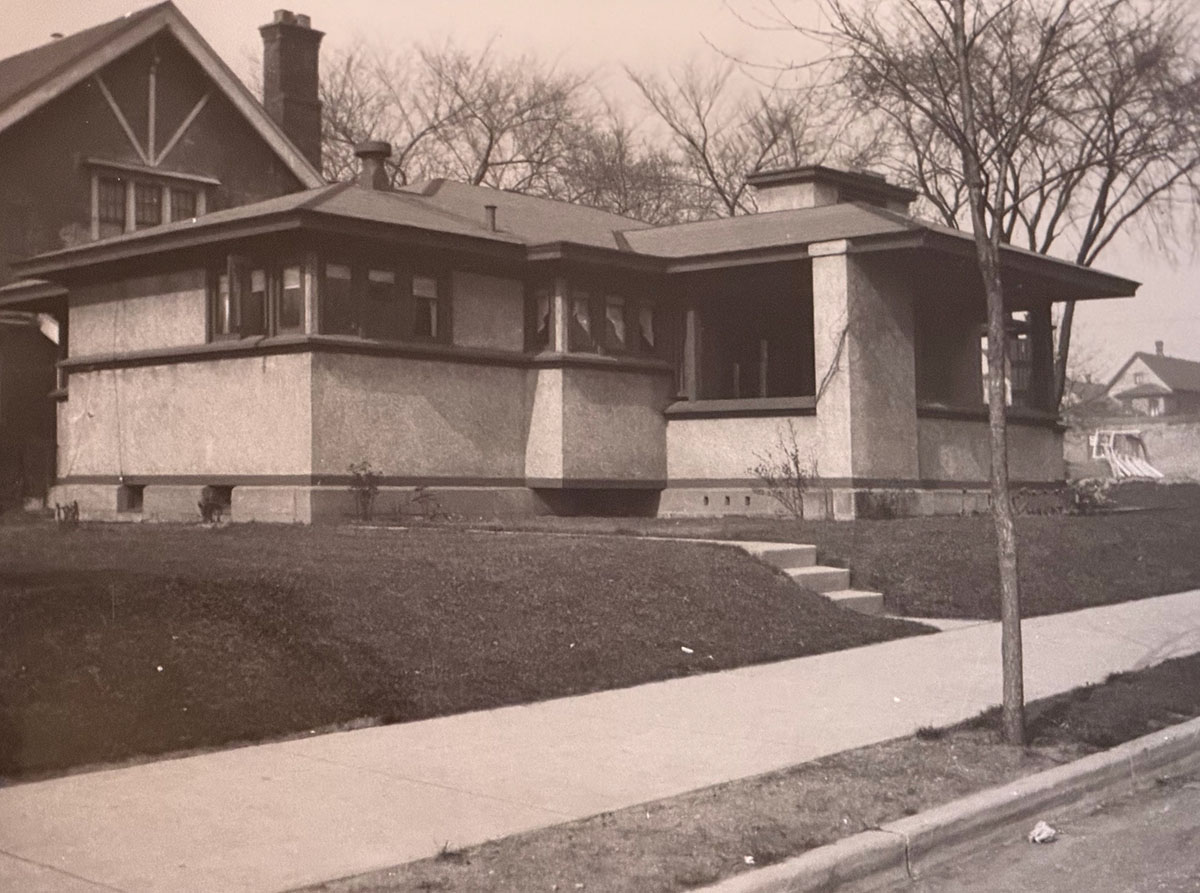
 Wright in Wisconsin board members discuss their purchase of the B1 in April 2005. Mike Lilek, the driving force behind the Burnham projects, is left. Barbara Meyer Elsner is third from right.
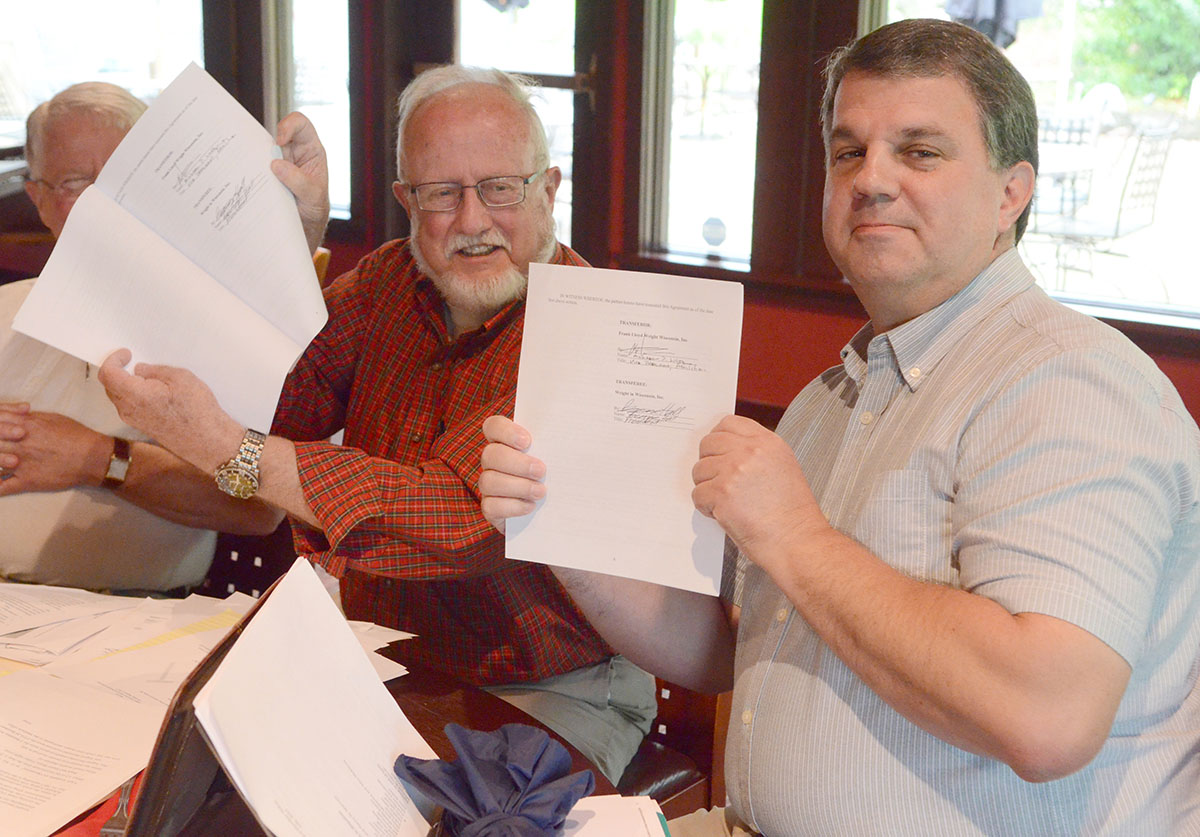 George Hall, left, and Mike Lilek sign the reorganization papers August 3, 2017.









 Wright in Racine